Inventus Mining Advances Pardo, North America's Sole Paleoplacer Gold Project Near Sudbury
Key Takeaways
- •Pardo would represent the first paleoplacer gold operation in North America if successfully developed, a deposit type responsible for some of the world's most prolific historical gold production.
- •The deposit features flat-lying mineralization within approximately six meters of surface, contrasting with deeper, angled paleoplacer deposits at established mines like Jacobina and Tarkwa.
- •Bulk sampling from the 007 North target alone produced 427 ounces grading 3.04 grams gold per tonne, generating $2.3 million in revenue and positioning the project as largely self-funding.
- •An initial NI 43-101-compliant mineral resource estimate is expected in the fourth quarter, marking a key transition from early exploration to advanced development.
- •Rob McEwen holds a 16% stake and Eric Sprott holds 15% in Inventus Mining, which trades on the TSX Venture Exchange with a market capitalization of $50.8 million.
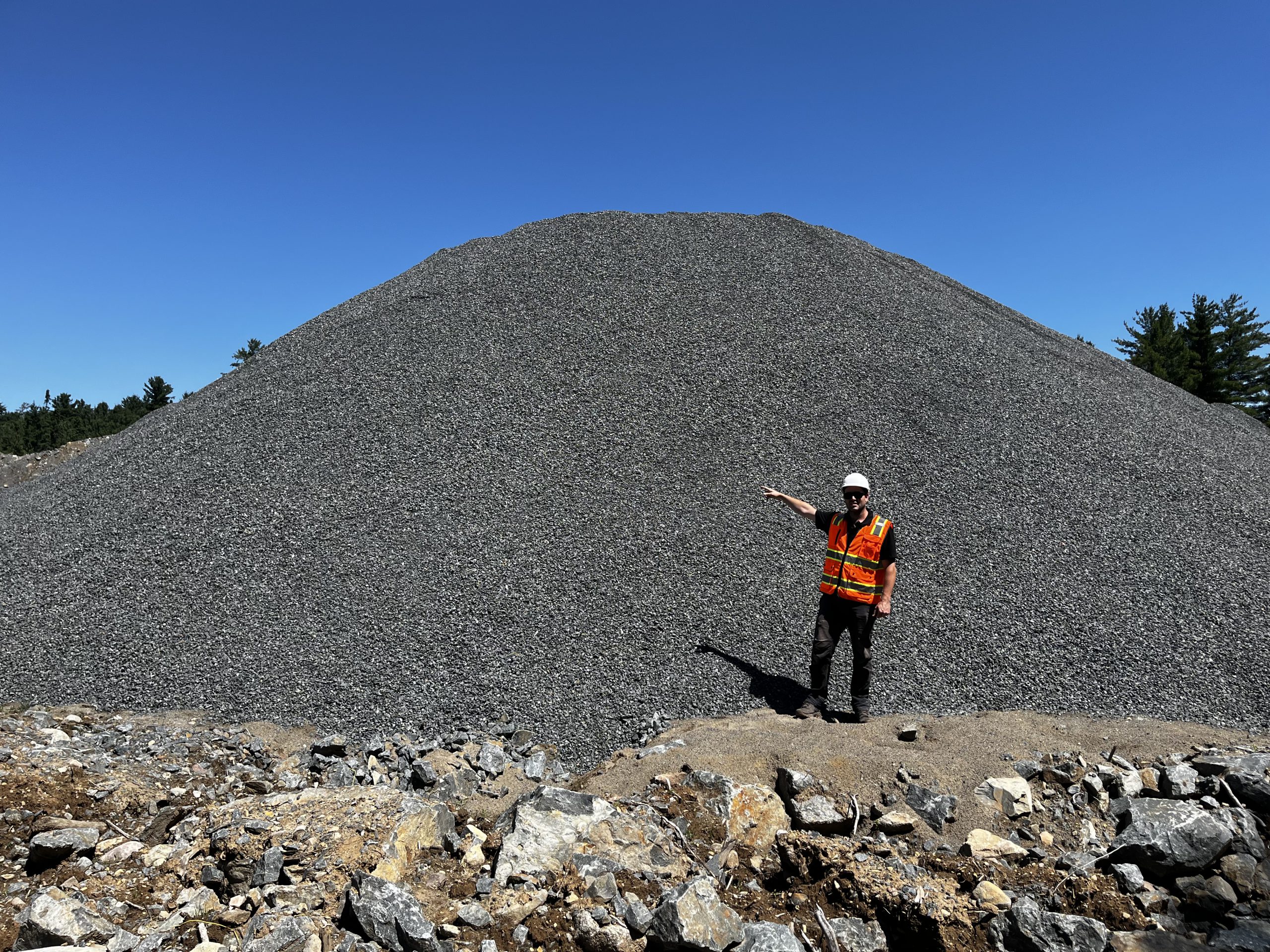
Sudbury, Ontario — Inventus Mining's (TSXV: IVS) Pardo gold project could be the largest deposit of its kind in North America, emerging as the latest geological surprise from the Sudbury region. Backed by prominent investors Eric Sprott and Rob McEwen (TSX, NYSE: MUX), Inventus is advancing a paleoplacer deposit — an ancient alluvial-type gold occurrence situated close to surface that could carry significantly lower mining costs than conventional open-pit or underground operations.
Located 65 km northeast of Sudbury, Pardo is accessible via a 90-minute drive.
"The cost of mining is extremely cheap, and not only the cost of mining, but any reclamation of the land as well," Inventus CEO Wesley Whymark told The Northern Miner during a July site visit. "Even during the construction period…you can direct ship the ore to a third-party processing facility, and if you're making money doing it then you're not so reliant on capital markets to provide the necessary capital."
If successfully developed, Pardo would represent the first paleoplacer gold operation in North America. This deposit type has yielded some of the world's most prolific gold mines, but Pardo went unnoticed for over a century as explorers focused on the Sudbury region's vast copper and nickel resources.
Paleoplacer Gold's Global Pedigree
Paleoplacer deposits differ from the placer gold deposits that fuelled the Klondike rush in Yukon. They are slightly deeper and far older — over billions of years, their gold has been consolidated into hard rock rather than remaining dispersed among riverbed gravels.
Globally, paleoplacer mines have demonstrated extraordinary production. Pan American Silver's (TSX, NYSE: PAAS) Jacobina mine in Brazil has produced 2.8 million oz. of gold since 1983. Dozens of operations in South Africa's Witwatersrand Basin have yielded more than 1.5 billion oz. of gold since the late 1880s. The Tarkwa mine in Ghana, now operated by Gold Fields (JSE, NYSE: GFI), has produced over 10 million oz. since the 1870s.
However, the deposits at Jacobina and Tarkwa are angled and extend to significant depths, Whymark noted, making them more technically challenging to mine.
"We're just fortunate here at Pardo that the deposit is still flat and wasn't subject to any faulting or folding," he said.
How Sudbury Overshadowed Pardo
While the Sudbury Igneous Complex has produced 30 million tonnes of nickel and copper since 1886, the neighbouring Huronian Supergroup package of sedimentary rocks was long considered uneconomic, Whymark explained. The notable exception was paleoplacer uranium discovered in Elliot Lake in the 1950s.
"This led to a search for more uranium throughout the Huronian basin, and that exploration work was never assayed for gold," he said. "The entire eastern part of the Huronian, where Pardo is located, was withdrawn from staking in the 70's until the late 90's."
Endurance Gold (TSXV: EDG; US-OTC: ENDGF) discovered the Pardo paleoplacer deposit in 2007 and advanced it through drilling before optioning it to Mount Logan Resources in 2009. Ginguro Exploration subsequently acquired Mount Logan and rebranded as Inventus Mining in 2015.
Inside the 007 Pit
Whymark led the site tour into the expansive 007 pit, flanked by two high walls of outcrop with blasted rock on the remaining sides. The pit's name pays tribute to the nephew of James Bond creator Ian Fleming, who purchased shares in the company several years ago.
Pardo's principal Trench 1 and 007 pits feature remarkably shallow mineralization for a gold project.
"The grade control drill holes that define those pits were about eight meters deep, and the zone was about two meters thick," Whymark said. "It was within six meters of surface."
Despite its shallow depth, mining at Pardo would follow conventional methods — ore is blasted, crushed, and transported to a mill. Inventus has already been shipping crushed ore for bulk sampling to McEwen's Stock mill in Matheson, approximately 200 km northwest of Pardo. These samples were sourced from what Whymark describes as the "main layer" at Pardo, roughly 2 metres thick and grading 2 to 3 grams gold per tonne, with grades reaching up to 8 grams gold.
Drill Results: Strong but Narrow
Results from the company's stage-two, 7,000-metre drill program have returned encouraging grades, though mineralization tends to occur in narrower intervals compared to the hard-rock orogenic gold deposits that characterize most Canadian gold projects.
For example, results from hole PD-26-297 in early July cut 2.43 metres grading 2.82 grams gold from 20 metres depth within the Matinenda layer, including 4.27 grams gold over 1.43 metres and 10.51 grams gold over 0.5 metres.
"We're drilling and expanding the footprint and determining how far and how thick these layers can be," Whymark said.
The current drill program is also intended to support an initial mineral resource estimate for Pardo, which is expected to be released in the fourth quarter. A maiden resource estimate would provide the first formal, NI 43-101-compliant quantification of the deposit's gold inventory — a milestone that typically marks a project's transition from early exploration to a more advanced stage of development.
Bulk Sampling Generates $2.3 Million
Returns from Inventus' ongoing bulk sampling program are already offsetting costs — a rare position for a junior explorer at this stage, when most peers rely entirely on equity financings to fund drilling and studies. Bulk sampling from the 007 North target alone produced 427 oz. grading 3.04 grams gold, generating $2.3 million in revenue and covering $1.2 million in costs.
"The gold value from one bulk sample actually helped pay for the entire next bulk sample, and a little bit of extra cash on top," Whymark said. "Once we scale that, the margins will get even better and it's essentially self-funding."
For the remainder of the bulk sampling program, Inventus plans to process 10,000 tonnes of stockpiled material and extract an additional 20,000 tonnes of permitted ore.
Bulk sampling could also help finance a stage-three drill program scheduled to begin later this year. Inventus may release a preliminary economic assessment (PEA) sometime next year, though Whymark emphasized that the bulk sampling program has already significantly de-risked the project.
"It's worth putting a PEA out just to state those realistic numbers," he said.
Underground Vision
While still in early stages, the company's long-term vision includes building an underground mine and an on-site processing facility, contingent on proving mineralization at depth. In the interim, Inventus is pursuing permits to transition from bulk sampling to mine production, while drilling continues to define a larger system that could potentially host up to 2 million oz. of gold.
"[Paleoplacer deposits] can be very big, and we've got the only one in North America, and it's at a stage where we don't really know how big it could be, and it's going to take a lot more exploration, a lot more drilling to define how big this system is going to be," Whymark said.
Rob McEwen holds a 16% stake in Inventus, and Eric Sprott holds 15%. Inventus shares traded at 23¢ on Tuesday in Toronto, giving the company a market capitalization of $50.8 million. The stock has traded in a 12-month range of 18¢ to 38¢.

