OnePlanet says it can recover silicon above 95% purity from recycled solar panels
Key Takeaways
- •PRISM completed engineering testing and is scheduled for deployment at OnePlanet's Florida facility in 2027.
- •The system is fully mechanical and does not use thermal or chemical separation steps.
- •OnePlanet said PRISM removed 99.5% of module glass at 99% purity before any size reduction step.
- •The process produced a silicon stream above 95% purity containing about 1% silver, plus separate copper and aluminum output streams.
- •OnePlanet has a $14.5 million 48C tax credit allocation for its River City industrial-scale facility, which will house the first fully integrated PRISM production lines.
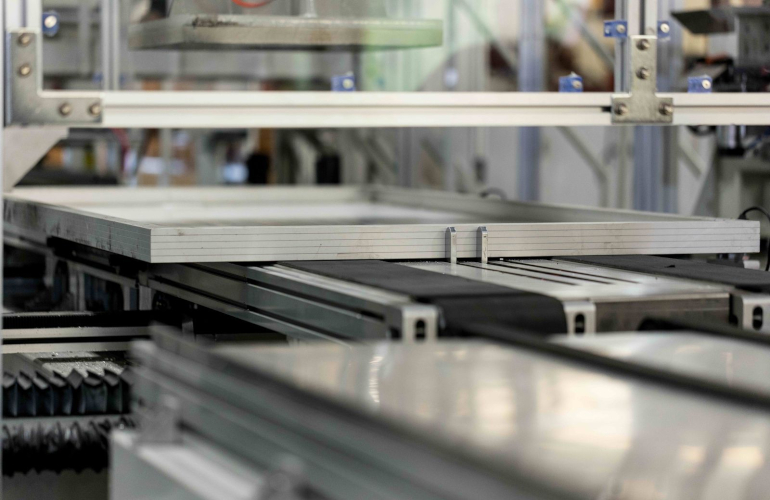
OnePlanet on Tuesday released details of its proprietary, fully automated recycling process that recovers copper, aluminum and high-purity silicon carrying ore-grade silver from end-of-life solar panels. The process, called Photovoltaic Recycling through Integrated Systems and Mechanics (PRISM), has completed engineering testing and is slated to be equipped at OnePlanet's Florida facility in 2027.
The announcement comes as the first large-scale wave of solar installations — panels typically rated for 25- to 30-year operational lifespans — begins reaching retirement age, intensifying industry focus on reclaiming the valuable and critical materials embedded in hundreds of millions of decommissioned modules globally.
PRISM is a redesign of the line operating at OnePlanet's commercial demonstration facility in Green Cove Springs, Florida, which has processed end-of-life crystalline-silicon modules for more than two years. Developed over the past 15 months, PRISM is fully mechanical and uses no thermal or chemical separation steps.
In repeated staged testing of the complete equipment configuration, OnePlanet said PRISM removed 99.5% of module glass at 99% glass purity before any size-reduction step. The company said this allows it to recover clean, saleable glass while keeping the silicon- and silver-bearing cell material concentrated rather than diluted through mixed, crushed streams. According to OnePlanet, the performance held for both monofacial and bifacial modules, whether intact or storm-damaged.
Proprietary downstream stages then concentrate that material into a silicon stream exceeding 95% purity carrying approximately 1% silver, as well as a 99% pure copper granulate stream and a 99.9% pure aluminum (6063) product.
"1% silver is not a trace amount. In metallurgical terms, that's a substantial grade, richer than most mined ore," said André Pujadas, CEO of OnePlanet. "Combined with silicon above 95% purity, you have a single feedstock that can feed both a metallurgical grade silicon and silver refinery under one roof. Achieving this level of purity for the silicon stream is a substantial milestone in our pursuit of entering the metallurgical grade market, while further diversifying the process to enable 5N silver."
Silver is a key material in crystalline-silicon photovoltaic cell manufacturing, where it is used for electrical contacts. Recovering it from spent panels rather than relying solely on mined supply aligns with broader U.S. policy efforts under the Inflation Reduction Act to strengthen domestic supply chains for critical minerals and clean energy components.
OnePlanet has been awarded a $14.5 million investment tax credit allocation under the federal Qualifying Advanced Energy Project (48C) program — expanded and re-funded through the Inflation Reduction Act — to support construction of its first industrial-scale facility, called River City. The site will house the first fully integrated PRISM production lines.
The company's next development program is the metallurgical-grade silicon (MGS) refining process itself, which is designed to recover the contained silver during the refining step so that silver emerges as a second finished product. That program is targeted for 2030.
OnePlanet said silicon above 95% purity requires far less upgrading to reach MGS specification, significantly reducing the energy and emissions intensity of the refining step compared with producing MGS from virgin quartzite. Once the refinery is online, the silicon output from PRISM would be consumed internally, completing OnePlanet's transition from materials recovery into the MGS and silver refining markets.

