Brent Crude Tops $100 as Trump Signals Imminent Massive Strike on Iran
Key Takeaways
- •Brent crude rose above $100 per barrel and US crude traded near $93 after President Trump signaled he is close to ordering a military strike on Iran that would exceed the scope of the previous Operation Epic Fury campaign.
- •US officials confirmed that no strike order has been issued and Trump has not set a deadline for a final decision.
- •The Strait of Hormuz handles approximately 20 million barrels of oil daily, nearly one-fifth of global supply, while Houthi attacks on Saudi vessels have placed a second critical route, the Bab el-Mandeb Strait, at risk.
- •Trump stated on Truth Social that the US would hold Iran responsible for further attacks conducted by Yemen's Houthis.
- •Bitcoin declined approximately 2% to around $64,755 as investors repositioned toward traditional safe-haven assets amid escalating Middle East tensions.
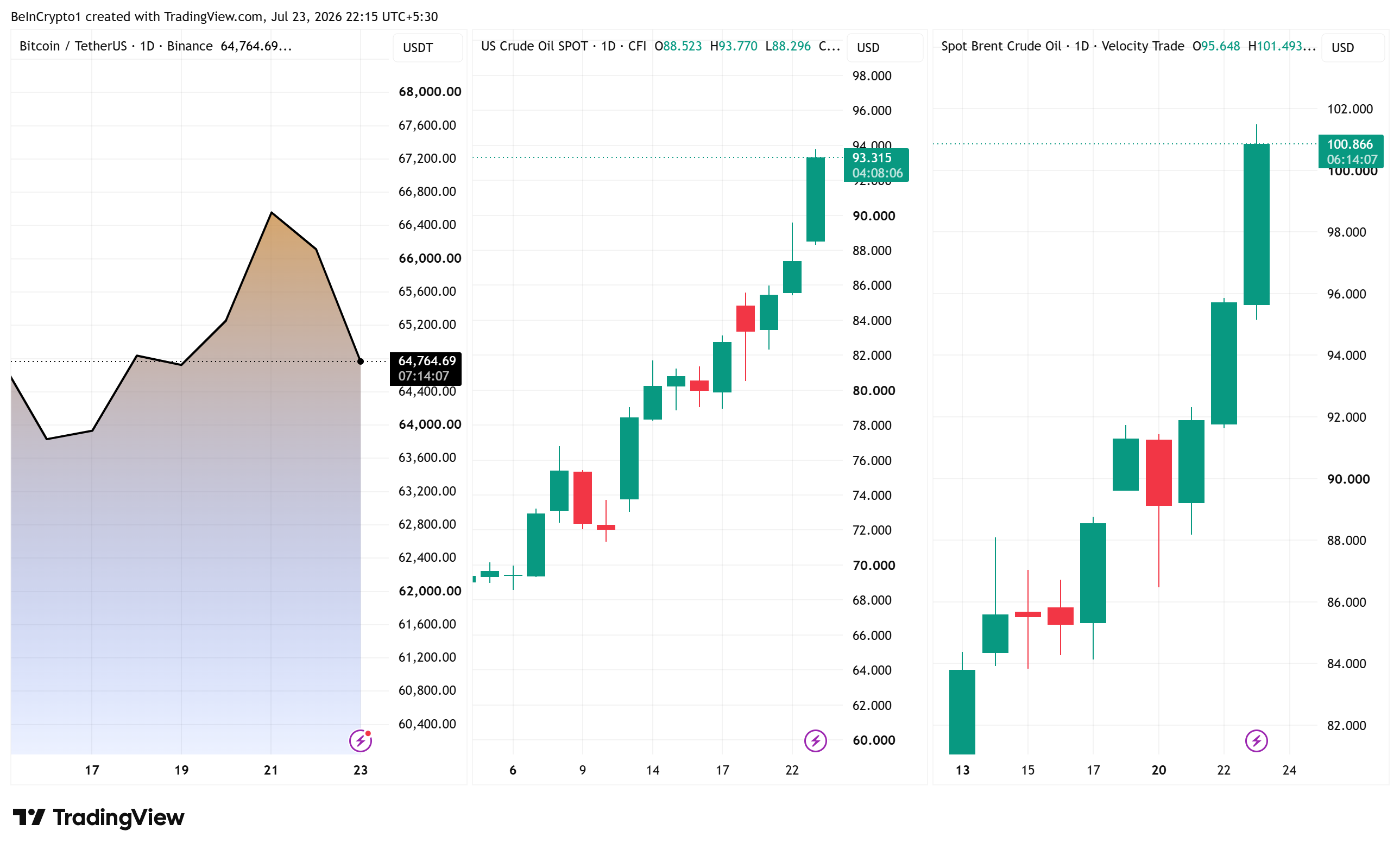
Oil prices surged on Thursday, with Brent crude climbing above $100 a barrel, after President Donald Trump indicated he is close to ordering a large-scale military strike on Iran.
In an interview with Axios, Trump stated that while he has not made a final decision, preparations are complete. "I am considering a massive attack. Bigger than ever before. I am close to making a decision. We are all set for it," Axios reported.
Potential Strike Would Surpass Previous Campaign
Trump noted that any new military action would exceed the scope of the prior US campaign, known as Operation Epic Fury. He emphasized that a decision is near but not yet finalized. US officials have confirmed that no strike order has been issued at this time.
Tensions have escalated over the past 12 days. The United States aims to deter Iran from targeting commercial shipping in the Strait of Hormuz, a critical chokepoint through which approximately 20 million barrels of oil pass daily — nearly one-fifth of global supply, according to the US Energy Information Administration (EIA). A sustained disruption at that volume would affect shipments to major importers across Asia and Europe.
The two sides had observed a truce since late June, but hostilities resumed this month.
Second Oil Route Under Threat
Iran-backed Houthi rebels in Yemen have begun attacking Saudi vessels in the Red Sea, placing a second critical maritime route at risk: the Bab el-Mandeb Strait. That waterway also handles millions of barrels of oil per day, according to EIA data. The simultaneous threat to both chokepoints marks a notable widening of risk to seaborne crude flows.
Trump wrote on Truth Social that the US would hold Iran responsible for further attacks.
BREAKING: President Trump says the US will "hold Iran responsible" for strikes conducted by Yemen's Houthis. Last night, the Houthis struck two Saudi Arabian vessels in the Red Sea. pic.twitter.com/URN74tlufl — The Kobeissi Letter (@KobeissiLetter) July 23, 2026
A major escalation could disrupt oil shipments through both straits, driving prices sharply higher. Brent's move above $100 places the global benchmark at a level closely watched by central banks for its potential to feed into fuel and transportation costs. A similar dynamic played out on July 8, when Bitcoin fell below $62,000 and oil prices jumped after Trump ended an earlier agreement with Iran.
Currently, US crude trades near $93 a barrel, while Brent, the global benchmark, remains above $100.
Bitcoin Slips as Risk Appetite Wanes
Bitcoin declined approximately 2% over the past 24 hours, trading near $64,755. The cryptocurrency has moved little over the past week, remaining range-bound around $65,000 for several weeks.
Digital assets frequently pull back when oil prices rise amid Middle East tensions, as investors reposition toward traditional safe-haven assets. Some traders had previously dismissed Iran-related risks earlier in July, but Thursday's developments shifted that sentiment.
Trump has not set a deadline for a decision, leaving markets to weigh indicators such as naval movements in the Persian Gulf, shipping insurance premium changes, and any diplomatic signals from Tehran for clues on timing and scope.

