Oil Climbs and Stocks Waver as Middle East Violence Resurges, Deepening Uncertainty
Key Takeaways
- •Brent crude rose 0.8% to $91.23 per barrel on Tuesday after the U.S. struck rocket launchers on an Iranian island and Iran fired missiles at U.S. sites in Jordan, which were intercepted.
- •Shein shares fell as much as 10% in their Hong Kong trading debut before recovering to a 5% decline by midday.
- •Strait of Hormuz disruption, a route that once carried about 20% of world oil shipments, has kept oil, freight, and insurance costs elevated.
- •Edison International dropped 23.1% and PG&E fell 20.1% after reports of potential California wildfire legislation allowing insurers to sue utilities over claims.
- •Elevated energy prices are keeping inflation well above the Federal Reserve's 2% target, and the U.S. will release August jobs data this week after July payrolls fell by 23,000.
BANGKOK (AP) — Oil prices extended their gains Tuesday while Asian shares traded mixed, as a renewed flare-up of violence in the Iran war — after more than a month without significant fighting — heightened uncertainty over the conflict's trajectory.
Shares of online fast-fashion retailer Shein fell as much as 10% in their Hong Kong trading debut on Tuesday before trimming the decline to 5% by midday. The listing was one of the most closely watched in Hong Kong this year, and its early slide came despite the exchange's broader efforts to revive large initial public offerings.
Brent crude rose 0.8% to $91.23 per barrel, building on Monday's 2.7% advance. The move followed a U.S. strike on Sunday against rocket launchers on an Iranian island, which Washington said were being prepared to launch mines into the Strait of Hormuz. Iran responded by firing missiles at U.S. sites in Jordan, all of which were intercepted.
The war has curtailed traffic through the Strait of Hormuz, which once carried about 20% of the world's oil shipments. After an initial surge earlier in the conflict, oil prices have remained elevated, driving up costs for everything from gasoline to shipped goods. U.S. benchmark crude was up 1% at $86.62 per barrel. The strait is also a key route for liquefied natural gas exports from the region, and sustained disruption there has kept freight and insurance costs for tankers elevated as well.
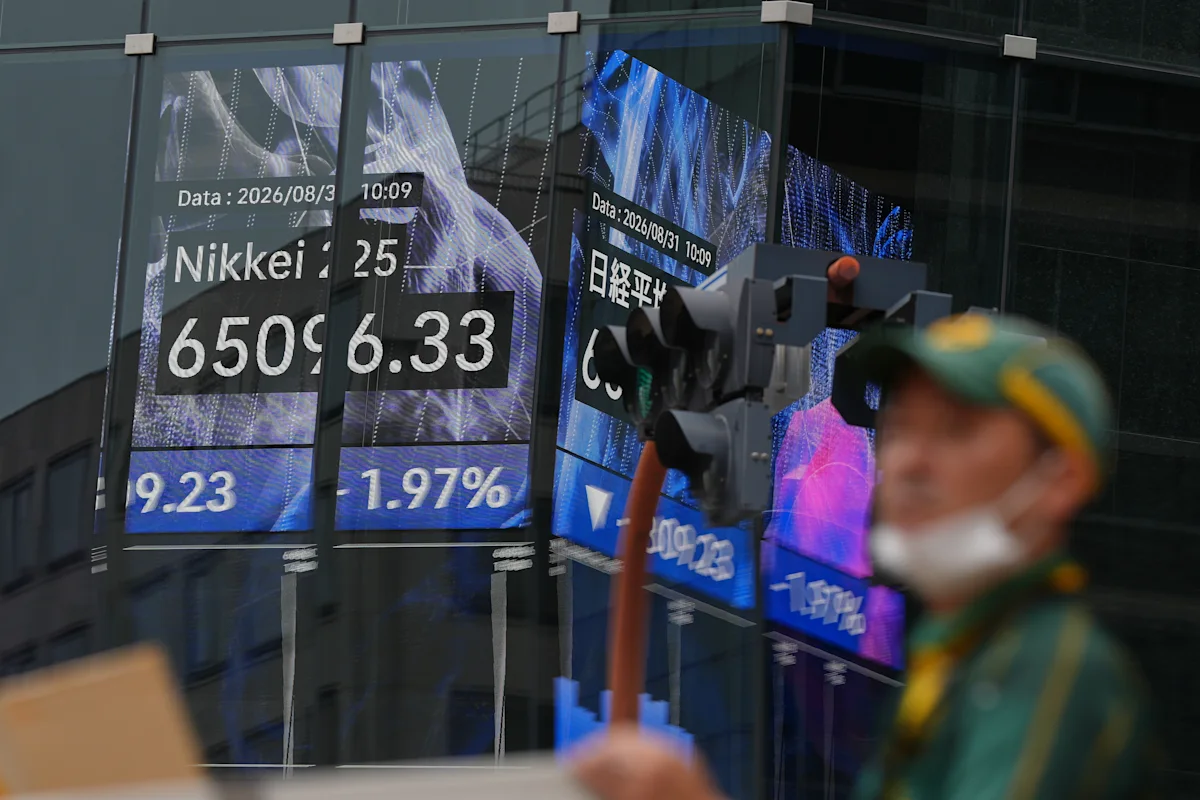
In Asian trading, Hong Kong's Hang Seng fell 0.9% to 25,332.10 and the Shanghai Composite index was nearly unchanged at 3,985.93. Tokyo's Nikkei 225 edged 0.2% higher to 66,420.26, while South Korea's Kospi added more than 0.2% to 6,835.51. Australia's S&P/ASX 200 slipped 0.1% to 9,066.40. Taiwan's Taiex picked up 0.2% and India's Sensex gained 0.3%. U.S. futures were 0.1% higher.
Wall Street closed out August on a downbeat note Monday. The S&P 500 fell 0.3%, the Dow Jones Industrial Average dropped 0.7% and the Nasdaq composite slipped 0.1%. The losses were broad, with nearly every sector in the benchmark S&P 500 finishing in the red.
Edison International slumped 23.1% and PG&E fell 20.1%, the two steepest declines, following reports about potential California wildfire legislation that would allow insurers to sue utilities over related claims. Both utilities have faced billions of dollars in wildfire liabilities in past years, making any change in liability rules a key issue for investors in the sector.
Energy stocks, by contrast, notched gains, with Exxon Mobil rising 2.7% and Chevron advancing 2.1% — a pattern seen repeatedly during the conflict, as elevated crude prices lift producer revenues even as they squeeze fuel-consuming businesses such as airlines and shipping firms.
Higher energy prices have fueled already stubborn inflation, which remains well above the Federal Reserve's 2% target. That has weighed on household spending and consumer confidence while complicating the Fed's interest rate policy path.
The yield on the two-year Treasury, which closely tracks expectations about Fed moves, held steady Monday at 4.34%, unchanged from late Friday and up significantly from about 3.50% at the beginning of 2026. The 10-year Treasury yield rose to 4.75% from 4.73% late Friday, returning to roughly the level of two weeks ago, when the Trump administration took the unusual step of announcing it would intervene in the bond market.
Any interest rate increases aimed at cooling inflation also risk hurting the jobs market. The U.S. is scheduled to release August jobs data later this week, a report investors will watch for signals on how the economy is holding up under the pressure of higher energy and borrowing costs. In July, the job market stalled unexpectedly as employers cut 23,000 jobs, and Labor Department revisions removed another 103,000 jobs from May and June payrolls.
In other dealings early Tuesday, the U.S. dollar rose to 159.94 Japanese yen from 159.74 yen, while the euro slipped to $1.1604 from $1.1619.
AP Business Writers Alex Veiga, Damian Troise and Michelle Chapman contributed to this report.
