Oil Prices Jump Around 2% After US Strikes Iran and Iran Retaliates
Key Takeaways
- •US oil futures rose around 2% at the Globex reopen after the US struck two Iranian launchers near the Strait of Hormuz and Iran retaliated with missiles fired from four provinces.
- •The Strait of Hormuz is a key transit route through which roughly a fifth of global oil consumption typically moves, making military activity nearby a source of shipment disruption concerns.
- •Strikes near Larak Island, close to the Strait, have repeatedly raised fears about potential disruption to global oil and LNG flows dependent on the same route.
- •US equity index futures opened little changed, showing energy markets price Middle East geopolitical risk more directly than stock benchmarks.
- •Traders are watching further exchanges around the Strait of Hormuz, tanker traffic through the chokepoint, and statements from either side for signs of escalation or restraint.
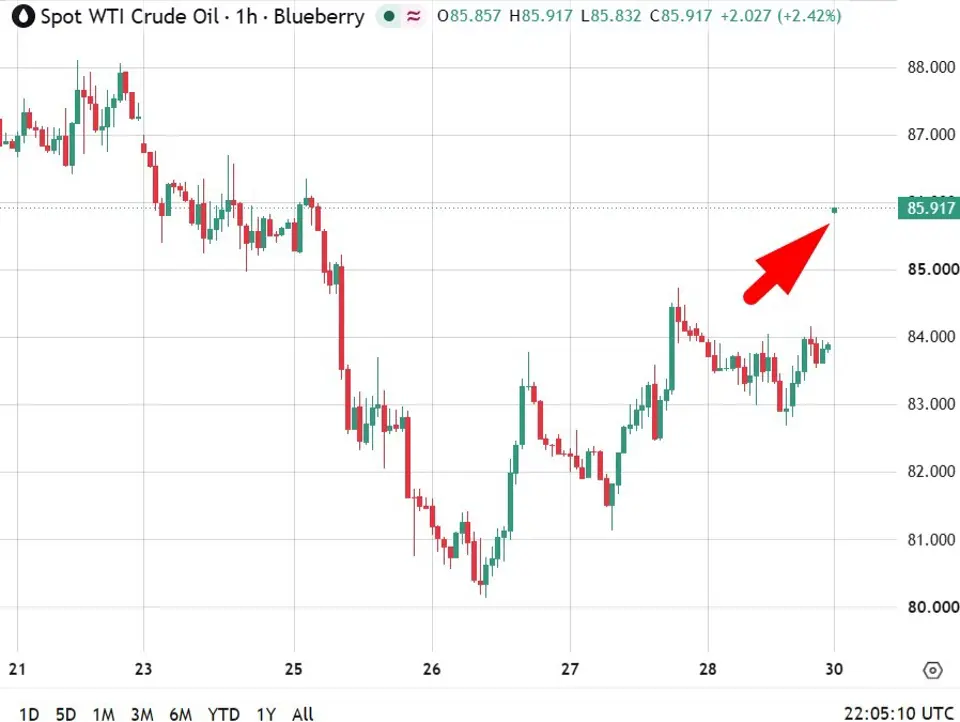
Oil prices have surged higher after the United States attacked Iran and Iran retaliated, driving a sharp move in energy markets at the start of the new trading week.
US oil futures leapt higher on the Globex reopen, with oil up around 2%. The escalation in the Middle East conflict has put a renewed focus on the region, which contains critical energy shipping routes. In contrast, US equity index futures opened little changed, a divergence that reflects how energy markets tend to price geopolitical risk in the Middle East more directly than broader stock benchmarks.
The latest round of escalation follows earlier developments in the conflict. U.S. forces have struck two Iranian launchers near the Strait of Hormuz, a narrow chokepoint between the Persian Gulf and the Gulf of Oman through which a significant share of the world's seaborne oil passes. In response, Iran fired missiles from four provinces after the Larak Island strike, marking an intensification of hostilities between the two countries.
Larak Island sits near the Strait of Hormuz, and strikes in the vicinity of the waterway have repeatedly raised concerns about potential disruption to global oil shipments. Markets have historically reacted sensitively to military activity around the Strait, given its role as one of the most important transit routes for crude oil and liquefied natural gas, with roughly a fifth of global oil consumption typically moving through the waterway. Any sustained threat to that flow would affect not only crude prices but also LNG markets dependent on the same route.
The combination of the US strikes on Iranian launchers and Iran's missile retaliation prompted the jump in oil prices as the new week opened, while equity markets showed a more muted initial reaction. Traders are likely to keep watch on further exchanges around the Strait of Hormuz, tanker traffic through the chokepoint, and any statements from either side signaling further escalation or restraint.
Source: investingLive
