Trump Faces Shrinking Options as Oil Nears $100 Threshold Amid Escalating Iran Conflict
Key Takeaways
- •Oil prices briefly climbed above $100 per barrel after the interim peace deal collapsed and hostilities intensified.
- •Houthi attacks on Saudi tankers in the Bab el-Mandeb strait have increased concerns about Red Sea shipping disruptions.
- •The U.S. Strategic Petroleum Reserve has fallen to 311 million barrels, its lowest level since early 1983.
- •Analysts say Trump has limited options beyond escalation or accepting greater Iranian control over the Strait of Hormuz.
- •Average U.S. regular gasoline prices have risen above $4.10 per gallon and continue to increase.
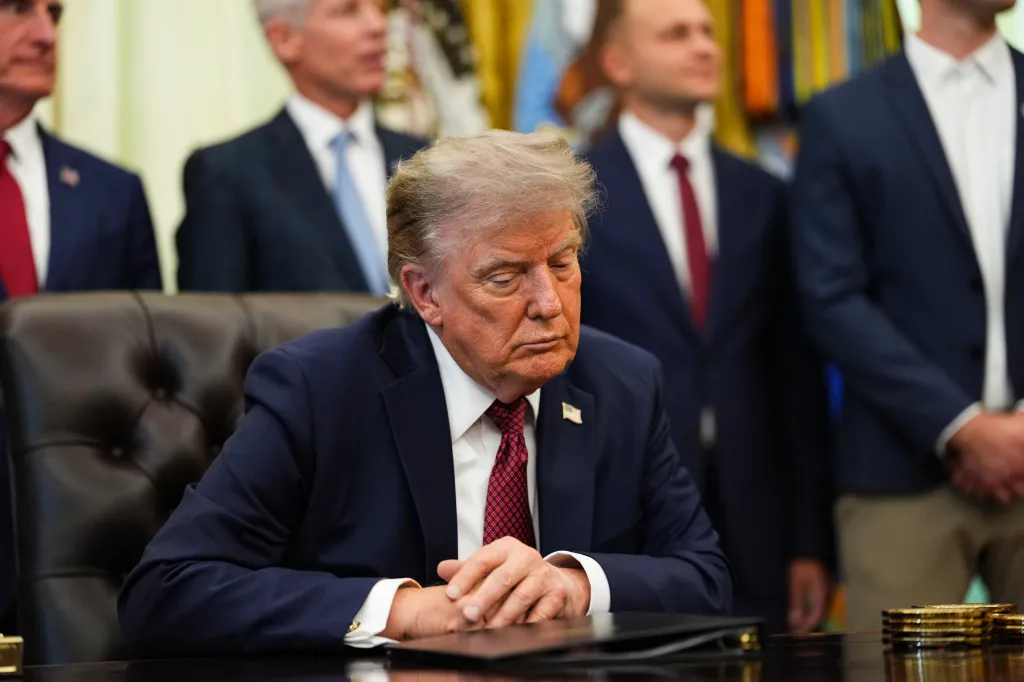
President Donald Trump has largely exhausted his available policy levers as the Iran conflict enters a second phase and oil prices once again hover near the $100-per-barrel mark—a level widely regarded as a psychological threshold that rattles energy markets.
Global emergency reserves of oil and refined fuel have been substantially depleted, and with fighting now spreading to the Red Sea—Saudi Arabia's alternative export route for crude—energy and geopolitical analysts say the United States is increasingly boxed into a choice between military escalation or capitulation. The Strait of Hormuz, at the mouth of the Persian Gulf, normally carries roughly a fifth of the world's daily oil consumption, making it one of the most consequential chokepoints in global energy commerce. Escalation could mean deploying ground troops, while capitulation would effectively hand control of the strait to Iran, allowing Tehran to impose de-facto tolls, thinly disguised as "service" or "administrative" fees in an effort to skirt international maritime law.
The central question, according to Dan Pickering, founder of consulting and research firm Pickering Energy Partners, is whether Trump will ultimately opt for what has been dubbed the "TACO" route—short for "Trump Always Chickens Out"—a term coined last year after Trump repeatedly retreated from elevated tariff threats and other aggressive postures. Market participants broadly believe something will have to give before the November midterm elections.
"You either 'TACO' or you turn up the heat—and things get worse before they get better," Pickering told Fortune. "If you think that the midterms are the pressure point, doing something that influences price and sentiment in the short run just looks challenging."
The interim peace deal collapsed and military hostilities intensified earlier this month, sending oil prices surging back above $100 per barrel before dipping below that level again on Friday. The spike came after Yemen's Houthi forces opened fire on two Saudi Arabian oil tankers in the Bab el-Mandeb strait, a narrow chokepoint at the mouth of the Red Sea through which millions of barrels of crude and refined products pass each day en route to the Suez Canal and European markets.
Virtually all short-term relief tools have already been deployed. The U.S. and other nations have drawn down most of their emergency petroleum reserves. A federal gas tax holiday remains improbable given a fractured Congress. American oil producers and refiners are already operating near record output levels. The administration has already waived the Jones Act—the 1920 maritime statute requiring goods shipped between U.S. ports to travel on American-built, American-flagged vessels—to permit additional ships to transport fuel from the Gulf Coast to the fuel-starved West and East coasts. Meanwhile, China, the world's largest crude oil importer, has sharply curtailed its purchases, a factor that has helped prevent prices from spiraling toward all-time highs.
"Most of these things have already been put in place in round one," Pickering said. "There's not a lot of other demand levers that you can pull."
Should both the Bab el-Mandeb and the Strait of Hormuz be effectively shut down, Pickering warned, oil prices could easily rebound in August toward the late-April peak of $124 per barrel. The average U.S. price for a gallon of regular unleaded gasoline has already climbed back above $4.10 and continues to rise.
"If we wind up with a de-facto closure of the strait and this Houthi threat shuts down the Red Sea, then I think it gets bad pretty fast during August," Pickering said. "We don't have multiple months because we're already starting from a tougher spot. It's going to be on us pretty quickly."
The $100 oil signal itself compounds the pressure, Pickering noted, even though the physical difference between $99 and $100 per barrel is negligible. "Triple-digit [oil] is bringing people out of the woodworks. It makes people pay attention. There's this psychological barrier of triple-digit oil prices that signals more significant problems than a $93 oil price."
Iran's Calculus
Iran now perceives itself as operating from a position of strength and leverage. Despite suffering significant losses to both its leadership and its economy, Tehran has demonstrated a willingness to dismantle the interim peace agreement and prolong the conflict. Analysts say Iran is seeking full control of the Strait of Hormuz and appears unwilling to compromise.
"It's unlikely Iran is going to open the strait—at least for now, under current conditions—unless the U.S. agrees to let [Iran] control it and toll it," Andy Laperriere, head of U.S. policy at Piper Sandler, wrote in a note. "[Iran] probably figures the deal it will get tomorrow is better than the deal it can get today, so it keeps playing with Trump."
Laperriere's assessment is blunt: Trump has no genuine middle-ground option. "There is no 'diplomacy' option available to Trump. He can either fight—with likely unsatisfactory results—or surrender control of the Strait of Hormuz to Iran," the note stated. "For now, he chooses to fight."
Dwindling Strategic Reserves
The constraints are visible in publicly available data, most notably the U.S. Strategic Petroleum Reserve (SPR). Established by Congress in 1975 after the 1973–74 Arab oil embargo exposed the country's vulnerability to supply shocks, the SPR peaked at over 726 million barrels during the final week of 2009. As of last week, it has fallen nearly 60% to 311 million barrels—the lowest level since early 1983, when the reserve was still being filled for the first time. As recently as late March, the SPR stood at 415 million barrels, meaning more than 100 million barrels were drawn down in a span of just four months.
Trump has authorized withdrawals of up to 172 million barrels, which would bring the SPR to just below the widely accepted minimum operational threshold of roughly 250 million barrels. Beneath that level, pumping oil from the depleted underground salt caverns in Texas and Louisiana that comprise the reserve becomes technically difficult.
The U.S. Department of Energy recently argued that "cavern mechanics" could theoretically allow the SPR to be drawn down to as few as 70 million barrels. Even if that figure is technically accurate, extracting oil at levels well below 250 million barrels would become far more challenging, rendering any technical minimum largely moot. Oil markets, moreover, have no appetite for testing such low numbers.
"We're no longer talking about hundreds of millions of barrels; we're talking about tens of millions of barrels," Pickering said. "Additional SPR releases beyond what's authorized would seem like you're getting close to scraping [storage] bottoms. That's not just in the U.S., but other places as well."
The path forward, Pickering suggested, is straightforward in principle but elusive in practice: "Your answer is to get a deal with the Iranians, and they don't seem to want to make a deal."

