Brent Crude Reaches Five-Month High as Houthi Claims and Gulf Ship Attacks Raise Supply Risks
Key Takeaways
- •Brent crude futures gained about 1.1% on Tuesday to trade between $110.80 and $111.05 per barrel, their strongest level since May, while WTI climbed to around $104.80, its highest since September.
- •Yemen's Iran-aligned Houthis claimed attacks on an Aramco site in Yanbu, the Shaybah oilfield, and airports in Riyadh and Abha, but Saudi authorities did not confirm and the claims went unverified.
- •Ship-tracking firm Kpler reported at least 18 vessels attacked in the Gulf over a two-week span, helping maintain a risk premium in oil prices.
- •Iran's Revolutionary Guard said an oil tanker hit a naval mine and caught fire in the Strait of Hormuz, where crude flows had recovered to roughly 80% of pre-war levels before the latest attacks raised new concerns.
- •A Houthi strike on a training camp in Yemen's Shabwa province on Monday killed 58 people and wounded more than 200, amid an offensive by Yemen's internationally recognized government forces to retake Houthi-held territory.
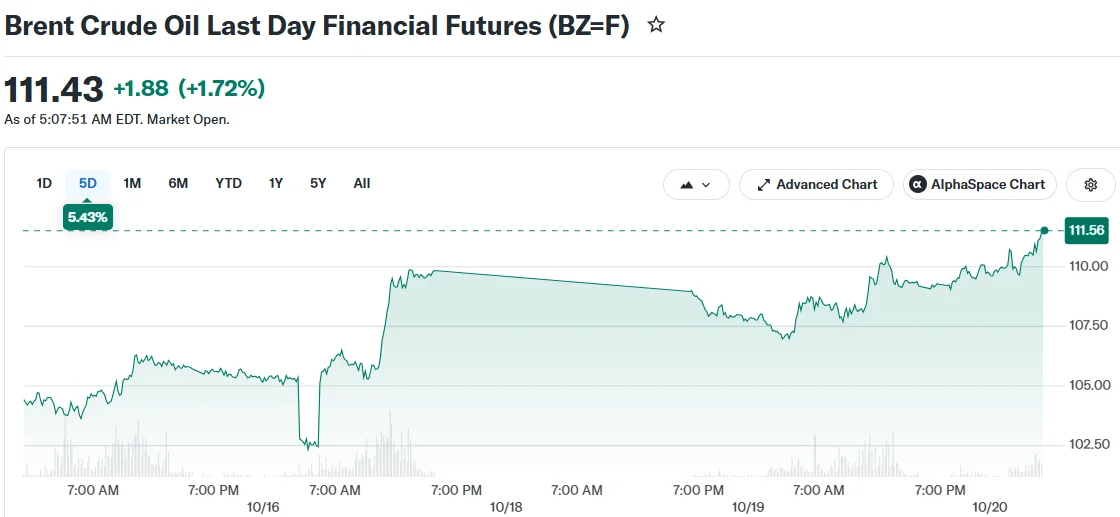
Oil prices rose on Tuesday as traders assessed reported attacks on ships in the Gulf and claims by Yemen’s Iran-aligned Houthis that they had targeted Saudi energy, airport and military sites.
Brent crude futures climbed to $111.05 a barrel, the highest level since May. By 0810 GMT, Brent was trading at $110.80, up $1.25, or 1.1%. Real-time data later put the price at around $111.46 on Tuesday morning.
US West Texas Intermediate crude rose as high as $104.94 a barrel, its highest level since September. It was quoted at $104.80, up $1.14, or 1.1%.
Houthi Claims of Attacks on Saudi Sites
The Houthis said on Monday that they had launched several attacks against Saudi energy, airport and military targets. The group identified an Aramco site in Yanbu and the Shaybah oilfield among the targets. It also claimed strikes on King Khalid International Airport in Riyadh and Abha airport.
Saudi Arabia is one of the world’s largest crude producers and exporters, which is why reported threats to its energy infrastructure draw immediate attention from oil markets. Saudi authorities did not immediately confirm the claims, and Reuters said it could not independently verify the Houthi statements.
Saudi Arabia’s main airport will curtail air travel until further notice after continued attacks from Houthi rebels prompted the government to extend restrictions, effectively cutting off Riyadh’s main entry point for airlines. — Bloomberg (@business) October 19, 2026
Saudi Arabia is aligned with Yemen’s internationally recognized government forces. Those forces began an offensive earlier this month to retake territory controlled by the Houthis. On Monday, a Houthi attack on a training camp in Shabwa province killed 58 people and injured more than 200.
The renewed attacks heightened concerns about regional stability and helped keep oil prices above $100 a barrel. Saudi Aramco shares were down about 1% on Tuesday.
Shipping Risks Around the Strait of Hormuz
Ship-tracking company Kpler said at least 18 vessels were reportedly attacked in the Gulf over a two-week period, maintaining a risk premium in oil prices.
Iran’s Islamic Revolutionary Guard Corps claimed that an oil tanker struck a naval mine and caught fire in the Strait of Hormuz, the principal maritime outlet for crude exported from Gulf producers. The claim could not be independently verified. The National reported that the vessel was allegedly using an unauthorised route, while it remained unclear whether the incident was connected to a U.S.-backed shipping corridor along Oman’s coast.
Brent prices dipped on Monday following reports that the United States and Iran might have reached a breakthrough in mediated talks. Deutsche Bank analysts said the decline was short-lived after Iran’s First Vice President said the country had “no choice but to exercise sovereignty” over the strait.
The Strait of Hormuz has been largely shut since a joint US-Israeli assault on Iran began in late February. Shipping data showed signs of recovery last month, and US Energy Secretary Chris Wright said Gulf crude flows had returned to about 80% of pre-war levels. Shipments of refined products remained constrained.
ANZ analysts warned that the recovery was under threat, saying preliminary data pointed to another slowdown because of attacks on ships in the Gulf. ING analysts said the oil-price risk premium would likely fade slowly if flows continued without interruption, but said there were no signs of that yet. Whether Gulf flows can continue without disruption has therefore become a central marker for traders weighing the durability of the risk premium.
In the United States, analysts expected crude stockpiles and product inventories to have declined last week, according to a preliminary Reuters poll, with official weekly inventory data set to show whether those estimates hold.
Source: CoinCentral

