Oil Prices Fall as Trump Waives New Russia Sanctions; Middle East Supply Risks Persist
Key Takeaways
- •December Brent crude futures fell 1.8% to $107.86 a barrel and December WTI futures dropped 1.7% to $97.37 on Monday, following a near-5% rise over the previous week.
- •President Trump signed an executive order on Friday waiving new sanctions and tariffs under a law targeting Russia, including proposed tariffs on countries importing Russian oil, days before the measures were to take effect.
- •Ukrainian drones struck an oil terminal in St. Petersburg on Sunday, while an attack on a tugboat near the UAE and two tanker attacks off Saudi Arabia heightened concerns about shipping safety in Gulf waters.
- •Iranian Foreign Minister Abbas Araqchi said Iran's offer to reopen the Strait of Hormuz within seven days still stands, with the strait's closure currently blocking roughly 20% of the world's oil supplies.
- •Morgan Stanley raised its fourth-quarter Dated Brent forecast to $105 a barrel, estimating that supplies from Gulf producers and Russia remain 5.5 million barrels a day below year-earlier levels.
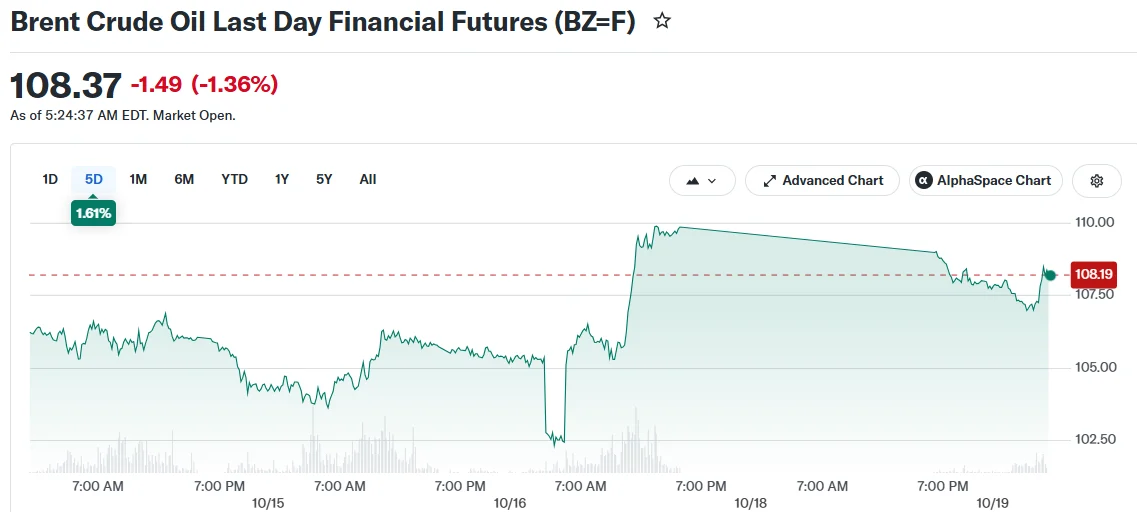
Oil prices fell on Monday as traders weighed a U.S. decision to waive a new round of sanctions and tariffs on Russia against a series of supply risks still hanging over the Middle East. The retreat came after prices climbed nearly 5% over the previous week.
December Brent crude futures dropped 1.8% to $107.86 a barrel, while December West Texas Intermediate futures fell 1.7% to $97.37 a barrel. Brent serves as the international benchmark for crude oil, while WTI tracks U.S. prices.
Trump Waives New Russia Sanctions
President Donald Trump signed an executive order on Friday that waived sanctions and tariffs under a new law targeting Russia. The order was issued just days before the measures were set to take effect. It also waived proposed tariffs on countries that continue to import Russian oil, removing the threat of those added costs for buyers of Russian crude.
Separately, The Hormuz Letter posted on X on October 17:
BREAKING: Trump administration proposes allowing Russia to sell large amounts of natural gas to Europe, offering Putin billions in revenue, with envoys Jared Kushner and Steve Witkoff arguing Ukraine should now consider restarting all pipelines that used to carry it, per the NYT.…
— The Hormuz Letter (@HormuzLetter) October 17, 2026
The waiver does not affect sanctions imposed earlier. Trump said the decision was in the national interest of the United States. In a social media post, the president said he is working on a Russia-Ukraine peace deal and that he did not want to push Russia away from the bargaining table.
Friday's order came roughly a week after Trump signed a diesel import deal with Russia. The waiver drew criticism from some European officials as well as U.S. lawmakers from both parties.
Analysts at ANZ Research suggested Monday's decline could reflect a technical correction following Friday's gains. They added that further drops could be limited by geopolitical tensions and the risk of additional supply disruptions.
Supply Risks Persist in Russia and the Middle East
Concerns over Russian supply continued after Ukrainian drones struck an oil terminal in St. Petersburg on Sunday, The Wall Street Journal reported. Ukraine has signaled it will keep attacking Russian infrastructure.
The Wall Street Journal also reported that Iran has been supplying Yemen's Houthi militia with intelligence and targeting assistance for attacks on Saudi Arabia. The Houthis control Yemen's coastline along the Bab al-Mandeb Strait, a key route for Saudi oil exports.
Risks to shipping continued as well. U.K. Maritime Trade Operations reported an attack on a tugboat near the United Arab Emirates on Sunday, and two tankers were attacked off the coast of Saudi Arabia on Friday. The incidents added to persistent concerns about the safety of vessels operating in Gulf waters.
Morgan Stanley estimates supplies from Gulf producers and Russia remain 5.5 million barrels a day below year-earlier levels, even as Middle East exports recover. The bank cited record tanker freight costs and low inventories, and raised its fourth-quarter Dated Brent forecast to $105 a barrel.
China, the world's largest crude importer, offered limited support to prices. Its economy grew slightly more than expected in the third quarter, and refinery output rose for a third consecutive month in September.
Iranian Foreign Minister Abbas Araqchi said Sunday that Iran's offer to reopen the Strait of Hormuz within seven days still stands, criticizing the United States for not accepting the proposal. The strait serves as the primary shipping route for crude from Gulf producers, and its closure has blocked roughly 20% of the world's oil supplies.
Analysts at ING said a lasting recovery in shipments through Hormuz would require greater confidence in regional stability, and that a U.S.-Iran agreement would be needed to reduce the geopolitical risk premium.
Persian Gulf flows improved in the second week of October but remain fragile, according to recent shipping data.
Monday's session captured the competing forces currently shaping the oil market: Washington's move to ease pressure on Moscow, continued attacks on energy and shipping infrastructure, and the unresolved status of the Strait of Hormuz, which Iran has offered to reopen within seven days. Key signposts ahead include the U.S. response to Iran's reopening offer, the pace of Ukrainian strikes on Russian energy infrastructure, and updates on Persian Gulf shipping flows.
Source: CoinCentral

