Standard Chartered Says Oil Markets Must Now Price in Two Middle East Chokepoints
Key Takeaways
- •Brent and WTI gave back earlier gains on Friday, falling to $96.36 and $88.86 per barrel respectively.
- •Pakistan is reported to be trying to revive U.S.-Iran nuclear negotiations, and China is supporting the effort.
- •The Houthis imposed a maritime blockade on Saudi-linked shipping and later attacked two Saudi oil tankers, damaging both and causing fires.
- •Saudi Arabia had already shifted most of its crude exports through the East-West pipeline to Yanbu because of disruptions in the Strait of Hormuz.
- •Standard Chartered said a prolonged Bab el-Mandeb disruption would likely hit European refiners hardest by delaying diesel and jet fuel shipments.
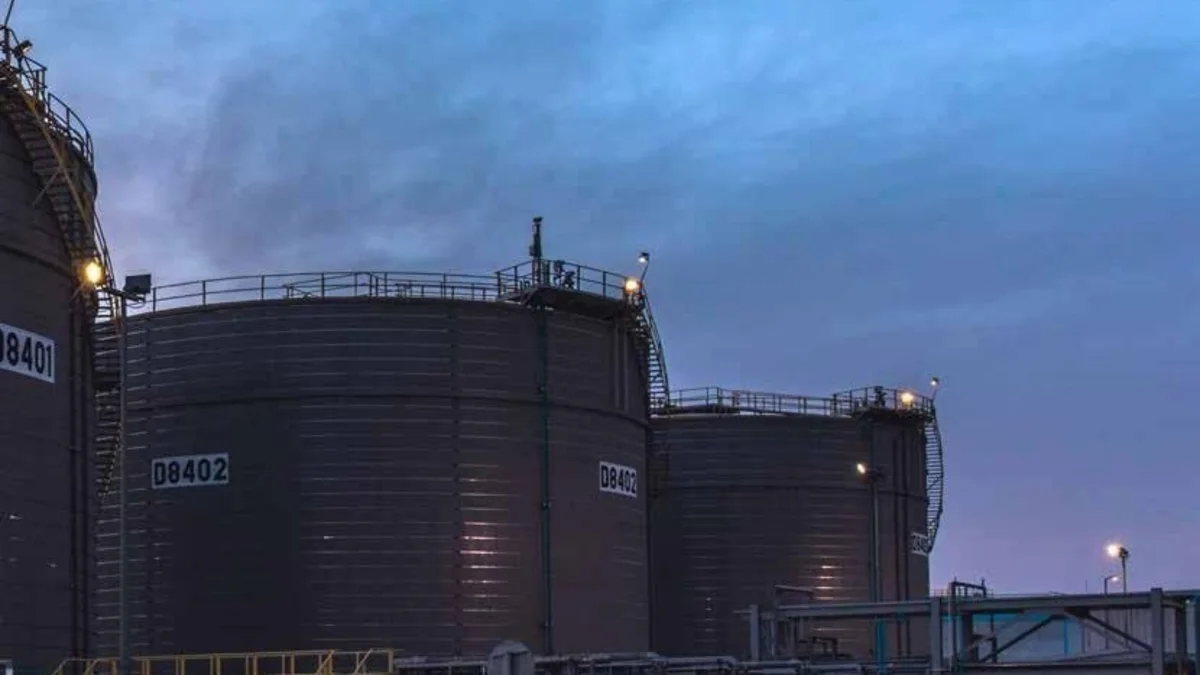
Oil prices gave up earlier gains on Friday after reports that Pakistan is trying to broker a return to U.S.-Iran nuclear negotiations. China is strongly backing the effort as the conflict and the closure of the Strait of Hormuz continue to threaten its energy security and weigh on its economy.
Brent crude for September delivery fell 4.4% to trade at $96.36 per barrel at 1.35 pm ET, while WTI crude for September delivery was down 3.6% to change hands at $88.86/bbl.
Standard Chartered said the latest pullback may prove temporary, arguing that Middle East oil market risk has expanded from one strategic chokepoint to two. The bank’s warning comes at a time when the market is already sensitive to shipping disruptions, since even short-lived threats to key routes can affect tanker insurance, freight costs and delivery schedules.
On Monday, Yemen's Houthi militant group imposed a targeted maritime blockade against Saudi Arabia, threatening to enforce it by blocking Saudi-linked vessels from transiting the vital Bab el-Mandeb Strait. The group said the blockade was a direct retaliation for a decade-long Saudi containment of Yemen, as well as a recent Saudi-backed airstrike targeting Sanaa International Airport.
The threat immediately rattled oil markets, prompting multiple Saudi-linked very large crude carriers (VLCCs) to abandon planned transits through the Bab el-Mandeb Strait and instead reroute around Africa's Cape of Good Hope, adding up to two weeks to each voyage. Two days later, the Houthis followed through. The group launched ballistic missiles and drones at two Saudi oil tankers on Thursday, damaging both vessels and igniting fires onboard. Brent crude surged nearly $20 per barrel, briefly climbing above $100.
The attacks came after Saudi Arabia had already shifted roughly 70% to 75% of its crude exports through the East-West pipeline to the Red Sea port of Yanbu as continued closures and disruptions limited shipments through the Strait of Hormuz.
Standard Chartered estimated that loadings at Yanbu had climbed to about 4.5 million barrels per day as Riyadh redirected exports away from the Arabian Gulf. Combined with southbound crude flows from the Suez Canal, roughly 7 million barrels per day were transiting the Bab el-Mandeb Strait before the Houthi attacks, making the waterway one of the world's most important oil chokepoints.
Standard Chartered noted that the Red Sea, Suez Canal and SUMED pipeline form the shortest export corridor between Asia and Europe. However, fully laden very large crude carriers cannot transit the Suez Canal because of draft restrictions, forcing cargoes to be transferred to smaller Suezmax tankers or moved across Egypt through the SUMED pipeline before being reloaded in the Mediterranean.
Disruptions along this corridor ripple through the tanker market. War-risk insurance premiums rise, freight rates increase, tanker availability tightens and cargo deliveries are delayed. If the security situation deteriorates further, Saudi Arabia could again be forced to reduce crude production because alternative export routes would not be able to absorb the lost capacity.
European refiners are likely to be the most affected if the Bab el-Mandeb Strait is compromised, according to Standard Chartered.
European diesel markets are already dealing with supply disruptions caused by Ukraine's sustained attacks on Russian refineries and tanker infrastructure. Additional disruption at Bab el-Mandeb would tighten an already constrained middle distillate market by delaying shipments of diesel and jet fuel into Europe.
Diversion around southern Africa would extend voyages by 10 to 15 days, depending on origin and destination, lengthening inventory replacement cycles. That could force refiners to source incremental Atlantic Basin barrels from West Africa, the U.S. or Brazil, reshuffling global trade flows and potentially widening regional dislocations in oil prices.
Standard Chartered added that clean product tankers, specialized ships that carry refined petroleum products, would likely be the hardest hit because of their heavy reliance on Suez transit compared with VLCC crude tankers. The bank noted that the large VLCC fleet serving long-haul Asia-bound trade generally travels around the Cape of Good Hope even in normal market conditions.
By Alex Kimani for Oilprice.com

