Oil Prices Fall as U.S. Prepares New Sanctions Against Iran
Key Takeaways
- •Brent crude dropped about 1.4% to $93.09 a barrel and West Texas Intermediate fell 1.6% to $85.65 on Monday, paring gains of more than 5% posted over the previous two weeks.
- •Iran permitted a limited number of Iraqi tankers to pass through the Strait of Hormuz at Baghdad's request, easing immediate supply concerns even though the number of vessels and oil volumes were unconfirmed.
- •Treasury Secretary Scott Bessent signaled an "economic D-Day" against Iran in a Financial Times opinion piece, and President Trump announced what he called the most crushing economic operation ever taken against a country, warning of consequences for any nation doing business with Tehran.
- •Iranian National Security Council Secretary Mohsen Rezaee warned that not a single drop of oil would be exported through the Strait of Hormuz or anywhere in the Persian Gulf if the economic war continues.
- •Oil has rallied more than 50% in 2026 amid the six-month U.S.-Iran conflict, while China's Sinopec reported first-half gasoline consumption down nearly 8% and diesel use down 12% as high prices and rising electric vehicle adoption weigh on demand.
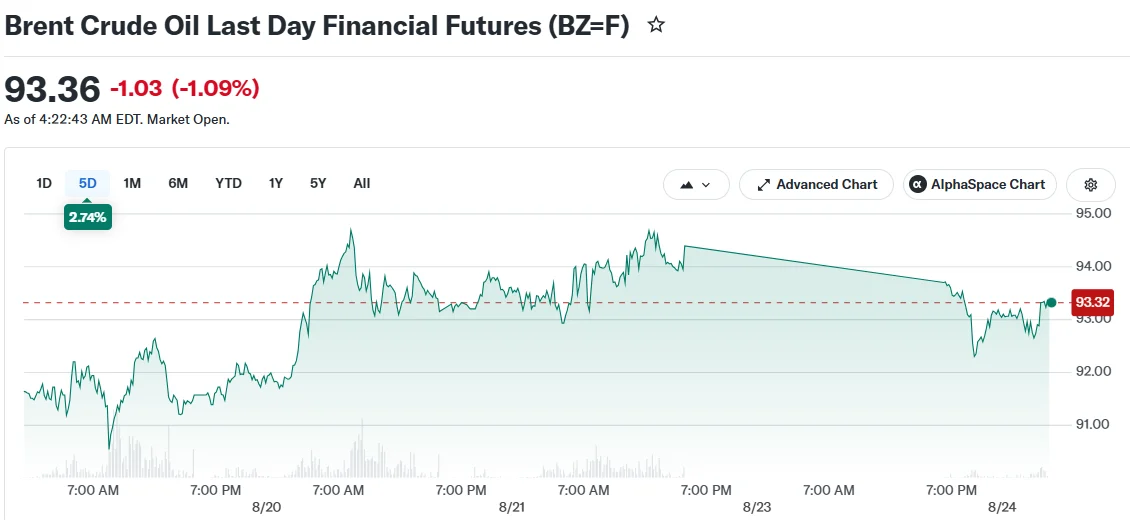
Oil prices pulled back on Monday as markets weighed mixed signals from the Strait of Hormuz and prepared for a new round of U.S. sanctions against Iran.
Brent crude fell about 1.4% to $93.09 a barrel, while West Texas Intermediate declined 1.6% to $85.65. Both benchmarks had risen more than 5% over the previous two weeks.
The decline followed Iranian media reports that Tehran allowed some Iraqi oil tankers to transit Hormuz after requests from Baghdad. That move eased some immediate supply concerns in the market. The exact number of vessels and the volume of oil involved were not confirmed, but even the limited reopening was enough to push prices lower in early trading.
Hormuz is the narrow waterway between Iran and Oman that connects Persian Gulf producers to world markets, and it is the most heavily used oil shipping chokepoint on the planet. There is no sea route around it for Gulf oil exports, which is why even small changes in tanker traffic carry outsized weight for global supply.
Bessent's "Economic D-Day" Warning
Treasury Secretary Scott Bessent said an "economic D-Day" was coming for Iran in an opinion piece published in the Financial Times. He is scheduled to hold a press conference at 2:00 PM ET Monday to announce details.
BREAKING: President Trump announces "the most crushing economic operation ever taken against a country" on Iran. Trump says any country that does business with Iran will face "tremendous economic consequences." This is "Economic D-Day" President Trump says. pic.twitter.com/sp8PWZBnwO — The Kobeissi Letter (@KobeissiLetter) August 19, 2026
Bessent wrote that Iran's "enablers" who buy and transport its oil "would do well to consider the consequences." The wording suggested the pressure is also aimed at countries such as China, the largest buyer of Iranian crude. Oil sales are a mainstay of Iranian government revenue, which is why the country's crude exports have long been the focus of Western economic pressure.
Chris Weston, head of research at Pepperstone Group, said the op-ed delivered a tough message. He added that any plan to disrupt Iranian crude imports carries "execution and reaction risk."
Iran responded quickly. Mohsen Rezaee, Secretary of Iran's National Security Council, warned that not a single drop of oil would be exported through Hormuz or anywhere in the Persian Gulf if the economic war continues.
Iranian officials also warned neighboring Gulf countries against cooperating with the United States.
Supply Disruptions Spread Beyond Hormuz
The conflict has extended beyond Hormuz. Saudi Arabia has been rerouting oil shipments from the Red Sea to a longer northern route after Iran-backed Houthi militants targeted shipping through the Bab el-Mandeb chokepoint. The strait links the Red Sea to the Gulf of Aden and, like Hormuz, ranks among the world's most important oil transit chokepoints; avoiding it forces tankers onto longer, costlier voyages.
Oil has rallied more than 50% so far in 2026. The U.S.-Iran war, now in its sixth month, has tightened global supplies of crude and refined products. Crude at these levels feeds through to the fuel and freight bills paid by consumers and businesses around the world.
Before the conflict, Hormuz accounted for around 20% of the world's oil supply. Traffic through the waterway remains far below pre-war levels.
China's top refiner Sinopec reported that gasoline consumption fell nearly 8% and diesel use declined 12% in the first half of 2026. The company said high prices and increasing use of electric vehicles weighed on demand. China is the world's largest crude importer, which makes Sinopec's readings a broad gauge of how high prices are affecting global fuel demand.
Russia also rejected a truce offer from Ukraine over Black Sea agricultural shipping, saying it wanted guarantees against strikes on its energy infrastructure before any agreement.
The oil market remains on edge ahead of Bessent's full sanctions announcement later Monday. Traders will be watching how far the new measures reach — which oil buyers, shipowners, and ports they cover — along with tanker traffic through Hormuz and whether Iran acts on its threat to shut off Persian Gulf exports.

