Beyond Hormuz: The World's Other Oil Chokepoints Are All Under Strain
Key Takeaways
- •Saudi Arabia rerouted crude to the Red Sea after Hormuz effectively closed, increasing volumes through Yanbu and the Bab el-Mandeb to record levels before Houthi blockade threats reduced traffic.
- •The Bosphorus remains legally open under the Montreux Convention, but Russian Black Sea oil flows have been hit by drone strikes, terminal outages, and slower transit permits in Turkey.
- •The Panama Canal is being constrained by low water in Gatun Lake, forcing repeated draft cuts even as transit volumes and revenue remain elevated.
- •Denmark cannot block passage through its straits under the 1857 Copenhagen Convention, so it is using inspections and sulfur checks to monitor sanctioned and shadow-fleet tankers.
- •The Strait of Malacca remains the world’s largest oil chokepoint by volume, and most of the crude moving through it originates in the Gulf after passing through Hormuz.
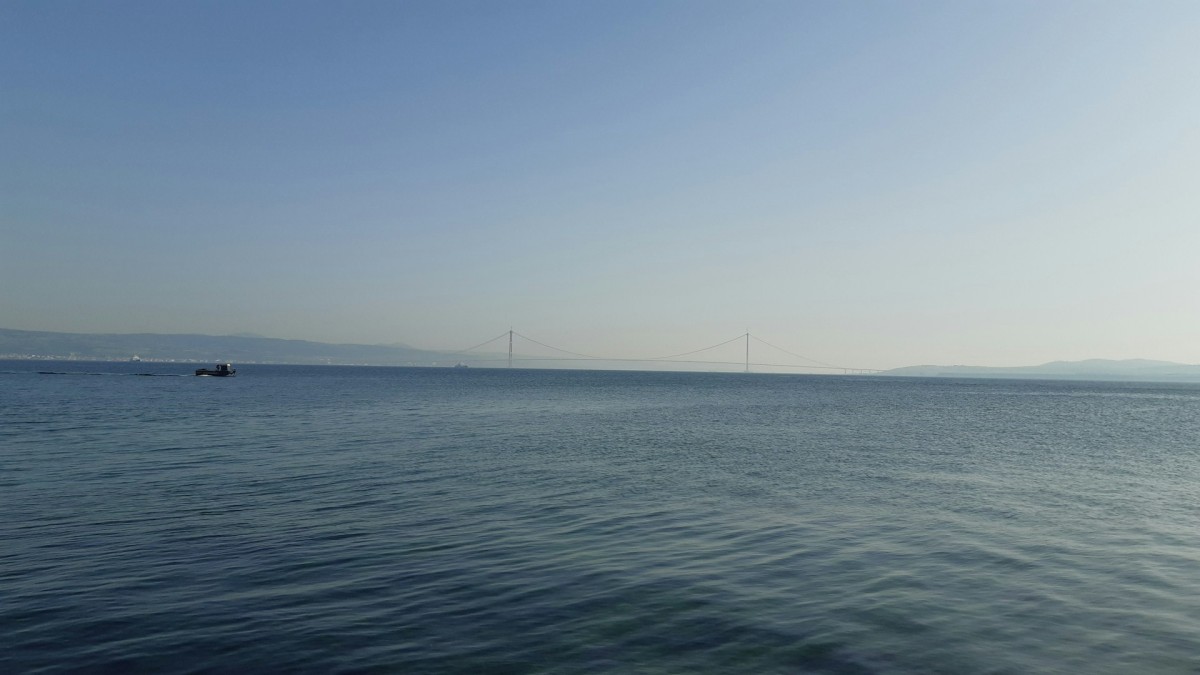
For six months, the conversation about oil logistics has centered on a single strait. The Strait of Hormuz has been effectively closed since late February, when the war between Iran, the United States and Israel began, and the U.S. Energy Information Administration (EIA) estimates that only 4.9 million barrels per day of crude and liquids passed through in the second quarter, compared with 21.6 million in the final quarter of 2025. Iranian Parliament Speaker Mohammad Baqer Qalibaf said in June that management of the strait “will never return to the way it was before the war” — about as clear a signal as Tehran has given on any subject lately.
The roughly 16.7 million barrels per day that no longer transit Hormuz have not vanished from the map; they have been rerouted, and rerouting oil means pushing it through other narrow waterways that were already busy. Brent traded around $91.62 on Wednesday and WTI at $85.56, and a significant share of those prices reflects the cost of the detour. The more useful question at this point is therefore not what is happening at Hormuz, but what is happening everywhere else. Five other chokepoints matter, and each is currently reacting in its own way. They appear below in rough order of how much disruption they are already causing, beginning with the one that already is.
The Houthis followed Saudi Arabia to the Red Sea
When Hormuz shut, Riyadh did the obvious thing and swung its export machine 800 miles west. Crude that used to load in the Gulf began moving instead through the East-West pipeline to Yanbu on the Red Sea coast. The shift worked on a massive scale: Yanbu was loading around 240,000 barrels per day a year ago; by June it was handling 3.5 million.
All of those barrels must exit through the Bab el-Mandeb, the 18-mile gap between Yemen and Djibouti at the bottom of the Red Sea, and the volumes show it. The strait carried 4.2 million bpd through the first half of 2025 and 8.1 million in the second quarter of this year — essentially doubling overnight.
Then, on July 20, the Houthis declared a maritime blockade of Saudi Arabia. The group does not hold the Yemeni coastline at the strait itself, but it controls ground roughly 100 kilometers away, which has proven sufficient. The Houthis have since claimed strikes on Saudi tankers and on Aramco facilities at Jizan and Yanbu. Traffic responded predictably: traceable transits fell to 200 in the week of Aug. 3, the lowest weekly count in a year, and a growing share of the vessels still moving have switched off their transponders and gone dark.
Two China-crewed tankers loaded Saudi crude at Yanbu last month and cleared the strait untouched. Windward’s read on the pattern: “Enforcement is calibrated to crew and ownership, not cargo.” The blockade is not primarily about the oil — it is about whose ship it is sitting on.
Going around means the Cape of Good Hope, which adds about 3,500 nautical miles and 10 to 14 days. Reuters costed one Saudi cargo sent the long way at roughly $1.6 million in extra fuel plus another $1 million in canal fees. Riyadh can also push barrels north through Suez and the SUMED pipeline, but as the EIA puts it, those routes “take longer, are more expensive, and are more limited in capacity.”
The Bosphorus is wide open — and it doesn’t matter
Here is a chokepoint that is not blocked, not threatened, and failing anyway. The Turkish Straits — the Bosphorus and the Dardanelles together — moved 4.1 million barrels per day last quarter, up from 3.7 million in the first half of 2025.
More than 40,000 ships passed through the Bosphorus last year, threading a channel that narrows to 750 meters with a city of 16 million people on both banks. Turkey could not close it to merchant traffic even if it wanted to. The 1936 Montreux Convention guarantees free passage in peacetime, and Ankara’s authority extends only to warships and safety rules. It has leaned hard on the latter, banning single-hull tankers since 2008 and keeping anything over 200 meters out at night, but the passage stays open.
The problem is what sits at the other end of it. Ukrainian drones have been working over Novorossiysk for months. The Sheskharis terminal there, which had been moving about 650,000 barrels per day — roughly a fifth of Russia’s seaborne crude — has sat idle since July 21. The Caspian Pipeline Consortium terminal next door handles more than 80 percent of Kazakhstan’s exports and close to 2 percent of world supply, and it has taken enough hits that Kazakhstan has started cutting production. The Greek-managed tanker Skiros was struck on Aug. 16 after loading there. In early August, Turkey quietly began slowing transit permits for Novorossiysk-bound ships — entirely Montreux-compliant and unmistakably a message.
For Caspian crude there is a genuine bypass in the Baku-Tbilisi-Ceyhan pipeline, which skips the Black Sea altogether. For anything loading at a Russian Black Sea port there is nothing: no alternative route, no workaround, no long way around. That is what makes a chokepoint a chokepoint, and it is why Turkey has spent a decade talking about Canal Istanbul, a $25 billion parallel waterway that would sit outside Montreux and hand Ankara an actual dial to turn. It still is not built.
Panama’s problem is rain
Every other entry on this list is a story about people. Panama’s is about weather — which at least makes it the only one that can be forecast. The canal is a freshwater system perched 85 feet above sea level, and every ship that transits drains tens of millions of gallons of Gatun Lake out to sea. When it rains, that is fine. When it does not, the authority starts telling ships to ride higher in the water, and a ship riding higher is a ship leaving cargo on the dock.
It has not been raining. Gatun Lake sat just above 84 feet in early August, down close to a foot from July, with the canal projecting around 83 feet by September. Maximum draft has been cut five times since the summer started: 49.5 feet on July 3, then 49 on July 24, 48.5 on Aug. 15, 48 on Aug. 26, and 47.5 from Sept. 3. NOAA puts the odds of this El Niño reaching very strong status by late 2026 at 81 percent.
Volumes are actually up — 3.2 million bpd last quarter against 2.3 million in the first half of 2025 — though the cargo mix matters. Panama is a products and LPG route rather than a crude route, carrying mostly U.S. Gulf barrels to Asia and the Pacific coast of South America. Around 5 percent of world maritime commerce moves through, and fiscal 2025 was a strong year at 13,404 transits and $5.7 billion in revenue.
The figure that matters most, however, is not the draft but daily transit slots, still holding at 36. Draft restrictions cost money; slot cuts cost schedules, and schedules are what send ships to Suez or around the Horn instead. During the 2023–24 drought the canal went to 24 slots and then 18, drafts fell to 44 feet, Gatun bottomed at 79.6 feet, and carriers left. Panama knows how that goes, which is why it is building the Rio Indio reservoir — a $1.6 billion project that will not hold a drop of water before 2031 and therefore does nothing for this El Niño.
The workarounds are not much better. Suez has its own problems right now, Cape Horn adds something like 8,000 nautical miles, and the U.S. rail land bridge is a fine answer for containers and no answer at all for a products tanker.
Denmark’s hands were tied in 1857
Roughly 60 percent of Russia’s seaborne crude leaves through three narrow channels between the Baltic and the North Sea. The Great Belt is the deep one that big tankers use, with the Øresund and the Little Belt taking the rest — and all three belong to a NATO member with strong reasons to want a say over what passes through. The Copenhagen Convention, signed in 1857 back when Denmark was still charging tolls, guarantees free passage and bars Copenhagen from levying fees. Of the five chokepoints here, the one administered by an EU and NATO government is the one whose owner has the least legal room to act.
The Danish Maritime Authority counted 292 voyages by EU-sanctioned tankers through its waters in 2025. Around 175 shadow-fleet tankers come through every month, averaging 17 years old, routinely sailing with transponders off and carrying insurance that would not cover a fraction of a real spill. Copenhagen’s answer has been environmental and port-state inspections at the Skagen anchorage and sulfur sniffers bolted to the Great Belt bridge. Environment Minister Magnus Heunicke’s line is that these ships “pose a particular risk to our marine environment.”
Volumes have barely moved — 4.7 million bpd last quarter against 4.9 million in the first half of 2025 — and there is no alternative worth discussing. The Kiel Canal takes small vessels. The Druzhba pipeline is mostly shut to the EU. Oil loaded at Primorsk or Ust-Luga goes through Danish waters or it does not go. That is why the real risk here is not a closure but a wreck. A serious spill in a shallow, enclosed sea like the Baltic runs into the tens of billions of euros, with cleanup measured in decades — and December 2024 already showed what that looks like, when two shadow-fleet tankers broke apart in a Black Sea storm and produced the worst spill that region has seen this century.
The quiet one is the big one
The largest oil chokepoint on the planet is not Hormuz and never was. It is the Strait of Malacca, which pinches down to 1.7 miles at the Phillips Channel near Singapore and carried 23.2 million barrels per day through the first half of 2025. Roughly 94,000 vessels transited in 2024, hauling about a quarter of everything traded on earth. Last quarter it carried 16.6 million.
That drop is the cleanest illustration anywhere of what closing Hormuz actually did, because most of the crude crossing Malacca started life in the Gulf and had already been through Hormuz once. Shut a strait in the Persian Gulf and you throttle another one 4,000 miles away without going anywhere near it.
Nobody administers Malacca. Indonesia, Malaysia and Singapore manage it between them; there is no canal authority and no toll. This spring, Indonesia’s finance minister floated the idea of introducing one, apparently taking his cue from Iran doing the same thing in Hormuz. Kuala Lumpur and Singapore shot it down, and Jakarta backed off within days.
The alternatives are the genuinely interesting part, because Indonesia owns those too. The Sunda Strait is the short way around, but it is also shallow, hazardous and sits directly under Krakatoa, which rules it out for a loaded VLCC. Lombok is deep enough for anything afloat and costs seven to eight days and roughly $472,000 per voyage, according to RSIS research. The country that controls a chunk of the main route also controls both bypasses — a position no other littoral state on this list enjoys.
Nothing is threatening Malacca right now. Piracy is up — 108 incidents across the Malacca and Singapore straits in 2025, a 74 percent jump and the worst figure in 19 years — but nearly all of it is opportunistic theft off slow-moving ships rather than anything strategic. The exposure that matters belongs to China, which brings around 80 percent of its imported oil through here and has been openly nervous about it since Beijing coined the phrase “Malacca dilemma” two decades ago. Some 16.6 million barrels per day represent an enormous amount of oil riding on nothing going wrong.
Suez, the Cape, and the one nobody wants to talk about
Suez moved 5.8 million bpd last quarter, and revenue reached $1.26 billion, up 13 percent — but functionally it is the northern half of the Bab el-Mandeb problem rather than a separate one. The Cape of Good Hope is not a chokepoint at all, which is precisely the point: 9.4 million bpd went around it last quarter, and nobody on earth is capable of closing it. It is the release valve, and the toll it charges is time. Then there is the Taiwan Strait, which carries no meaningful oil volume of its own but sits square on the route from Malacca up to Japan and South Korea — not a problem today, but the one that would make everything above look minor.
And none of this is theoretical anymore. Saudi Arabia rebuilt its entire export logistics around a pipeline to the Red Sea and got blockaded there within weeks. Kazakhstan is cutting production because of drone strikes on a terminal in Russia. Panama is rationing water. Denmark is measuring sulfur in ship exhaust from a bridge because a treaty from 1857 left it nothing else to work with. So the next time a finance minister floats a transit fee, a canal authority publishes a draft advisory, or somebody’s navy suddenly needs more patrol boats in a place nobody was talking about last week, this is usually the reason.
By Michael Kern for Oilprice.com
Source: OilPrice.com

