Americas FX wrap, Nov. 24: Chip stocks slide, Anthropic breaks IPO price, dollar lower as Trump tariffs return
Key Takeaways
- •Chip and AI infrastructure shares led Tuesday's decline, with Nvidia falling 5.86% to $155.38 after Monday's 31.48% surge, while Astera Labs, Credo, Micron and CoreWeave dropped between roughly 11% and 14%.
- •The Dow rose 0.86% and the Russell 2000 gained 0.57% while the Nasdaq Composite fell 1.48%, reflecting selling that was concentrated in AI-linked names rather than the broader market.
- •A report that the Trump administration is preparing fresh tariffs on China, the EU and 14 other economies put import costs and inflation back in focus, and European indexes closed lower with Italy's FTSE MIB down 1.84% and Germany's DAX down 1.26%.
- •U.S. November consumer confidence jumped to 103.3, well above the 92.5 expected, even as housing data stayed soft with flat FHFA house prices and builder sentiment sitting at its lowest since 2012.
- •WTI crude rebounded 2.35% to settle at $82.05 near its 100-hour moving average amid Iranian calls for tighter control of the Strait of Hormuz, while gold, silver and Bitcoin declined, with Bitcoin slipping below $60,000.
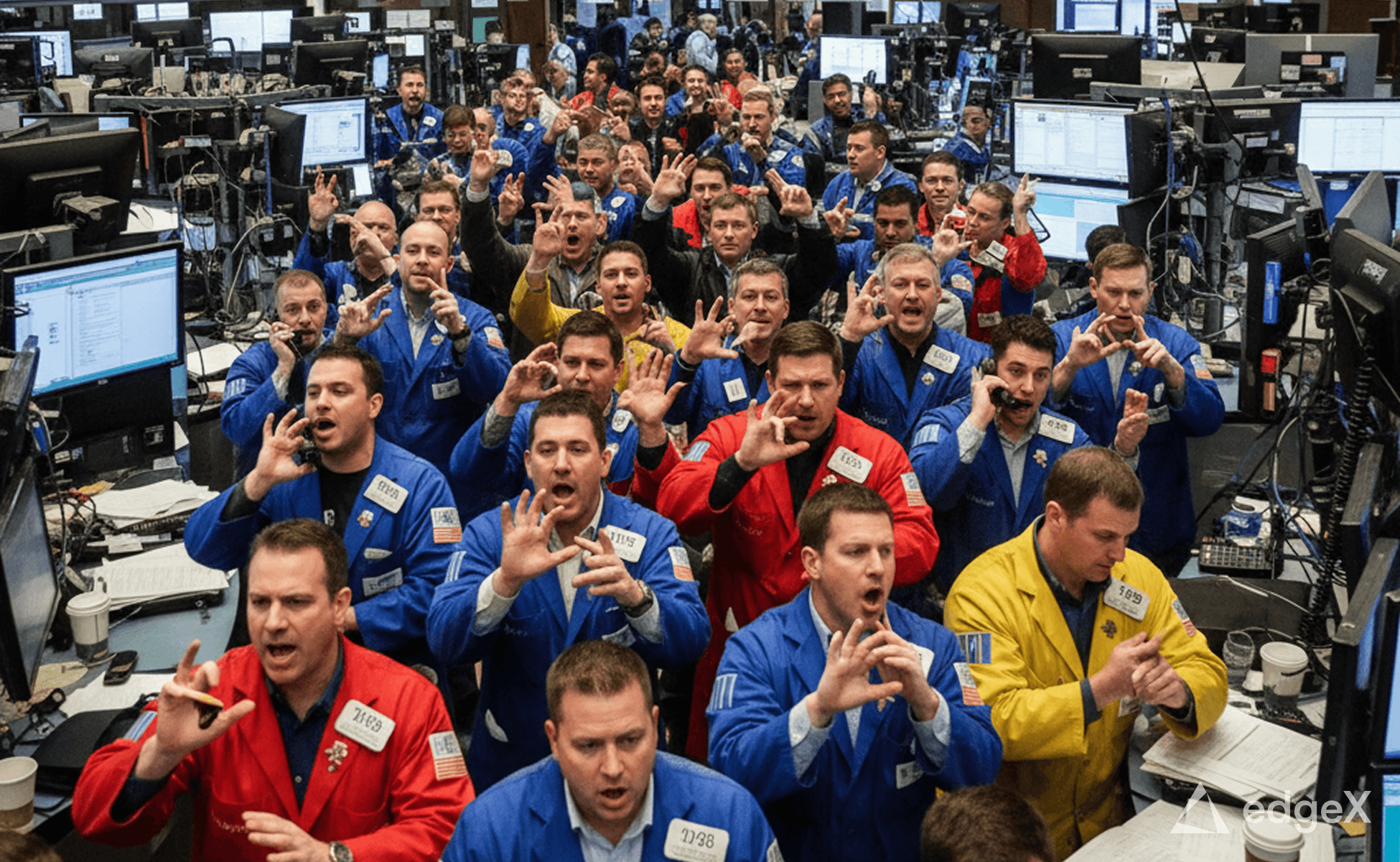
Monday's Nvidia-led rally lost momentum on Tuesday, Nov. 24, with chip and AI infrastructure shares taking the brunt of the selling. Anthropic finished below its $83 IPO price after briefly trading back above it, while the Dow and Russell 2000 held up as the Nasdaq slid. A report that the Trump administration is preparing fresh tariffs on China, the EU and 14 other economies put import costs and inflation back in focus, with markets falling as Trump pivoted from corporate meddling to fresh tariffs.
The tariff report drew pointed commentary from the InvestingLive newsroom: "Here we go again. I smell Steven Miller - new Chief of Staff - exerting his pressure on Trump."
Treasury yields edged higher, led by the 2-year, while the dollar fell against most of the majors. Oil rebounded as gold, silver and Bitcoin moved lower. U.S. futures had given back the Nvidia-led gains during the European session, with Nasdaq 100 futures falling 450 points.
Dollar falls against most majors
The U.S. dollar was weakest against the Swiss franc and strongest against the Japanese yen. Both the franc and the yen are traditionally treated as safe-haven currencies, so the split between the two pairs pointed to a mixed tone across risk assets rather than a uniform flight from the dollar. USDCHF fell 0.72% to 0.8354, while USDJPY rose 0.14% to 159.23. USDCAD fell 0.63% to 1.4268, with higher oil helping to support the loonie.
Bank of Canada Governor Tiff Macklem said the Bank may need to respond sooner or more forcefully to large or persistent supply shocks, and that the renewed policy framework keeps the 2% inflation target. Tariffs are typically treated by central banks as supply-side shocks, since they raise input costs without adding demand — the kind of shock Macklem flagged. On housing, he said: "The housing market is certainly soft, we don't see it leading the recovery."
Elsewhere among the majors, EURUSD rose 0.58% to 1.0964, GBPUSD gained 0.61% to 1.3110, AUDUSD rose 0.21% to 0.6640 and NZDUSD gained 0.61% to 0.5482.
Treasury yields edge higher, led by the 2-year
- 2-year yield: 4.687%, up 2.1 basis points
- 5-year yield: 4.731%, up 0.1 basis points
- 10-year yield: 4.924%, up 0.4 basis points
- 30-year yield: 5.309%, up 1.4 basis points
The 2-year is the maturity most sensitive to near-term Federal Reserve policy expectations, so front-end leadership typically signals shifting rate expectations rather than a change in long-run growth views. The 2s10s curve flattened modestly, and firmer confidence alongside higher oil was consistent with the front end leading the move. The U.S. Treasury sold $70 billion of 5-year notes at a high yield of 4.719%, stopping with a small tail and a 2.37x bid-to-cover ratio. The bid-to-cover ratio measures total demand against the amount offered, while a tail — an award yield above the pre-auction level — signals demand that came in softer than traders anticipated. Direct bidders took 36.7%, helping offset softer indirect demand.
U.S. stocks: Dow gains as the Nasdaq slides
Near-closing levels:
- Dow Industrial Average: 50,026.99, up 427.04 points (+0.86%)
- S&P 500: 7,201.69, down 35.48 points (-0.49%)
- Nasdaq Composite: 23,733.54, down 356.02 points (-1.48%)
- Russell 2000: 2,684.94, up 15.29 points (+0.57%)
- Nasdaq 100: 26,214.17, down 531.93 points (-1.99%)
The Dow's 30 components are far less concentrated in chip and AI names than the Nasdaq's, which helps account for the split result on a day when the selling clustered in AI-linked shares.
Chip and AI shares take the biggest hit
Nvidia fell 5.86% to $155.38 after surging 31.48% on Monday following Jensen Huang's return as CEO. Nvidia's stock is the most widely watched barometer of the AI trade, and its swings tend to set the tone for the names clustered around it. The selling was heavier across parts of the AI trade: Astera Labs, which makes connectivity chips for AI infrastructure, fell 13.88%; Credo, a supplier of high-speed networking gear, lost 13.07%; Micron, the memory maker, fell 10.97%; and AI cloud provider CoreWeave dropped 11.85%. Apple gained 1.43% and Microsoft added 0.74%. The S&P 500's 0.49% decline masked how hard chip and AI infrastructure names were hit.
Anthropic finished at $81.91, down 6.54%, after trading as low as $75.61 and as high as $83.49. That makes the $83 IPO price the first barometer for the next session: buyers got above it briefly on Tuesday, then gave it back.
Europe closes lower; Italy leads the declines
- Germany's DAX: 25,017.82, -1.26%
- France's CAC 40: 8,040.50, -0.05%
- UK's FTSE 100: 10,467.08, -0.13%
- Spain's IBEX 35: 19,015.81, -0.86%
- Italy's FTSE MIB: 48,121.18, -1.84%
European equities fell as Trump turned back to tariffs. Germany's export-heavy economy is among the most sensitive to transatlantic trade policy, and the DAX's 1.26% drop was the second-steepest of the major benchmarks, behind only Italy's.
Consumer confidence rebounds; housing remains under pressure
U.S. November consumer confidence jumped to 103.3, above the 92.5 expected and up from a revised 91.9, with both current conditions and expectations improving. Consumer confidence is tracked closely because household spending accounts for roughly two-thirds of U.S. economic output. The Richmond Fed composite index rose to +3 from -2 last month as new orders rebounded; regional Fed surveys are often read as early clues ahead of the national reports. Firms reported faster input-cost growth, while selling-price growth held steady.
Housing data stayed soft. September FHFA house prices were flat month over month versus +0.2% expected, and the Case-Shiller 20-city house price index rose 2.6% year over year versus +2.7% expected.
National Bank of Canada economist Jocelyn Paquet highlighted the squeeze on builders: high mortgage rates are holding back demand, residential construction input prices are up nearly 60% since the pandemic began, and builder sentiment sits at its lowest since 2012. According to InvestingLive's housing analysis, the AI investment boom has helped mask how much higher rates are weighing on housing.
Oil rebounds; the 100-hour moving average is still in play
WTI crude oil settled at $82.05, up $1.88, or 2.35%, before easing to $81.40, up 1.53%, in a later snapshot. The settlement landed two cents above the falling 100-hour moving average at $82.03; the subsequent pullback put WTI back below it, leaving $82.03 as the barometer for whether buyers can build on the rebound.
Supply risks stayed in focus after Iranian state media reported that the army commander called for tighter control of the Strait of Hormuz until Tehran's conditions are met. The strait is one of the world's busiest transit routes for oil shipments, which is why commentary about control of the waterway is tracked closely by crude traders.
Gold stalls; silver takes the bigger hit
Spot gold fell 2.30% to $3,551.02, while silver slid 5.59% to $40.729. Gold got little help from the softer dollar as Treasury yields edged higher; because gold pays no interest, rising yields tend to weigh on it and cap the usual benefit of a weaker dollar. Silver and copper both fell more than 4%, consistent with broader selling across metals. The 100-hour moving average once again acted as resistance for gold and remains the first hurdle for buyers after another rejection.
Bitcoin slips below $60,000
Bitcoin was down 2.57% at $59,638 late in the session, trading with the Nasdaq and other risk-sensitive assets as the bounce that followed Monday's Nvidia news faded.
What to watch next
The first question is whether buyers return to the chip stocks and whether Anthropic can get back above $83 and stay there. Traders will also watch $82.03 in WTI alongside the pending tariff details. A move back above $60,000 in Bitcoin would be another sign that buyers are returning to risk-sensitive assets.

