Nickel Ore Trade Surges as Safety Concerns Intensify
Key Takeaways
- •Global seaborne nickel ore volumes rose more than 22% year on year to 26.1 million tonnes in the second quarter, according to Signal Ocean data.
- •China imported close to 20 million tonnes of nickel ore in the first half of 2026, leaving it on course for record annual imports.
- •The Philippines remains the main supplier, while Indonesia has become a major importer after years of export restrictions and domestic smelter expansion.
- •Indonesia has set a 2026 nickel ore production target of about 260 million tonnes, down from 320 million tonnes last year, to manage smelter feedstock and avoid oversupply.
- •Safety concerns remain high because nickel ore can liquefy at sea, and the January capsizing of the Devon Bay killed two seafarers with four others reported missing.
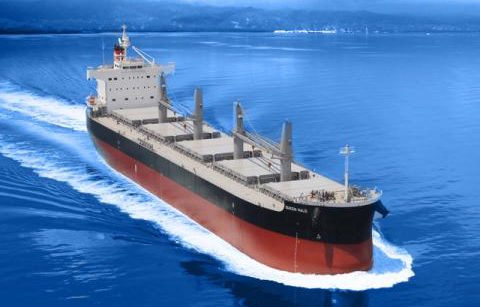
The seaborne nickel ore trade is expanding rapidly, generating additional employment for supramax and ultramax bulkers while renewing scrutiny of one of shipping’s most dangerous cargoes.
Global seaborne nickel ore volumes climbed by more than 22% year on year to 26.1 million tonnes in the second quarter, according to Signal Ocean data.
Broker Braemar said nickel ore spent most of the 2020s as a relatively steady, short-haul Pacific trade, with shipments typically peaking in the second and third quarters and supporting demand for supramaxes and ultramaxes. That pattern is now changing as greater Philippine export availability, rising Chinese import demand and the emergence of Indonesia as a major buyer combine to lift cargo volumes.
Nickel ore is primarily processed into nickel products used across industry. Its largest end use is stainless steel, where nickel improves strength, durability, heat resistance and protection against corrosion. Lower-grade laterite ore is commonly converted into nickel pig iron or ferronickel for steelmaking. Higher-grade material can be refined into nickel sulphate for lithium-ion battery cathodes used in electric vehicles and energy storage systems. Nickel is also essential in superalloys for aircraft engines and gas turbines, as well as in plating, industrial catalysts, electronics and specialist engineering components. Demand is therefore closely linked to construction, manufacturing, transport and the energy transition.
China imported close to 20 million tonnes of nickel ore in the first half of 2026, Braemar data shows, an increase of around 5 million tonnes compared with the same period last year and putting the country on course for record annual imports.
The Philippines remains the dominant supplier. Its miners are benefiting from seasonal improvements in operating conditions as well as rising requirements from processing plants in China and Indonesia.
Indonesia’s transformation is particularly striking. The country imported close to 16 million tonnes of nickel ore last year, having previously been the world’s leading exporter. Indonesian exports peaked at around 65 million tonnes in 2013 as companies built inventories ahead of a raw ore export ban introduced in January 2014.
Further restrictions imposed in 2020 were designed to force investment in domestic processing and reduce the export of unprocessed material. The resulting expansion of Indonesia’s smelting industry is now generating a growing requirement for imported ore.
The country’s Energy and Mineral Resources Ministry has set a nickel ore production target of around 260 million tonnes for 2026, down from 320 million tonnes last year, as Jakarta seeks to ensure sufficient feedstock for domestic smelters while preventing oversupply and downward pressure on global nickel prices.
Officials have indicated that mining quotas could be reviewed to address shortages at individual smelters, although any increase is expected to be limited.
Indonesian mining companies have warned that tighter quotas will encourage further imports from the Philippines, potentially adding another layer of demand for Pacific minor bulk shipping.
A separate vulnerability comes from sulphur supplies. Indonesia sources around 75% of the sulphur required to produce sulphuric acid for its nickel-leaching operations from the Middle East, according to Braemar. Disruption to those flows could affect smelter utilisation and, in turn, the country’s requirement for imported ore.
The rapid growth in nickel ore movements is nevertheless accompanied by a familiar and potentially deadly shipping risk. For owners, charterers and crews, the trade’s expansion means more cargoes to move, but also more attention on how those cargoes are tested, certified and stowed before a vessel sails.
Nickel ore from the Philippines and other tropical exporters typically undergoes little processing before shipment and contains a high proportion of fine clay and soil particles. These retain moisture and can lose strength under the repeated motion of a ship, causing the cargo to behave like a liquid or shift suddenly. Crucially, ore that appears comparatively dry during loading can still become unstable at sea.
Nickel ore is classified as a Group A cargo under the International Maritime Solid Bulk Cargoes Code. Shippers must provide certificates stating both the cargo’s moisture content and its transportable moisture limit, with the moisture level required to remain below that limit when loaded.
The International Group of P&I Clubs and INTERCARGO issued a fresh warning last month following a significant increase in nickel ore shipments from the Philippines and Solomon Islands.
Industry bodies continue to report inconsistent sampling, inadequate protection of stockpiles from rainfall, questionable laboratory procedures and restrictions preventing owner-appointed surveyors from gaining full access to cargoes.
The latest circular noted that some declared moisture contents differed from independently tested results by between six and 10 percentage points, with occasional discrepancies even larger.
The dangers were underlined in January when the 56,095 dwt Devon Bay capsized while carrying around 55,000 tonnes of nickel ore from the Philippines to China. Two seafarers died and four were reported missing.
Initial crew accounts suggested that liquefaction may have caused the cargo to shift rapidly to port, although the investigation has yet to reach a final conclusion.
Cargo liquefaction accounted for 55 of the 89 deaths recorded in Intercargo’s study of bulk carrier losses between 2015 and 2024, making it the largest single cause of fatalities despite accounting for fewer ship losses than grounding.

