Natural Gas Futures Edge Higher as September Reloads With More Heat
Key Takeaways
- •Weather forecasts indicate September could rank among the hottest months on record, supporting elevated cooling demand for natural gas.
- •LNG feedgas demand has recovered to above 19 Bcf/d, adding bullish pressure against near-record U.S. production.
- •NGI's model projects a 31 Bcf storage build for the upcoming report, continuing a trend of leaner-than-seasonal injections.
- •Shrinking storage surpluses are leaving inventories more sensitive to extended heat or an early cold snap heading into the heating season.
- •The October contract's transition to prompt month has amplified recent price swings as market focus shifts from cooling to heating demand.
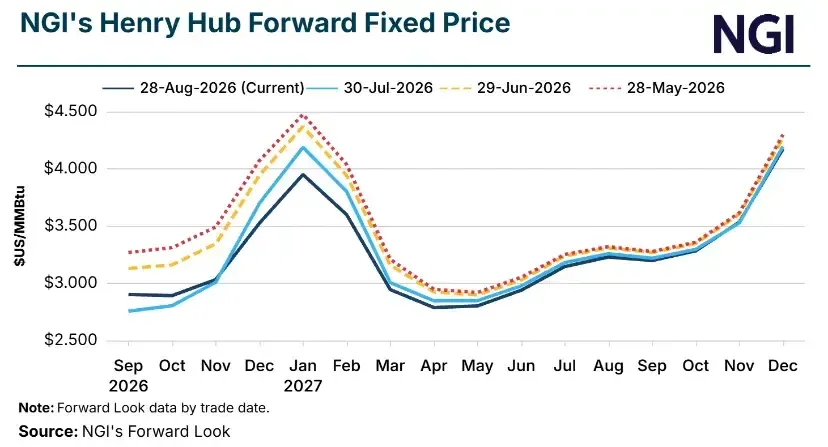
Natural gas futures moved higher on Monday as the market headed into September, with weather forecasts pointing to a month that could rank among the hottest on record.
Bullish demand factors are stacking up against a supply backdrop that remains formidable. LNG feedgas demand has recovered to above 19 Bcf/d, and storage surpluses have continued to shrink, while U.S. natural gas production is running near record highs. The tug-of-war between record-adjacent supply and weather-driven demand has kept futures range-bound in recent sessions, with rallies repeatedly stalling near $3.
At a Glance:
- September tracks among the hottest on record
- LNG feedgas rebounds above 19 Bcf/d
- NGI models a 31 Bcf storage build
Background: The Storage Picture
The latest government inventory data has continued to show leaner-than-seasonal injections, and NGI's model for the upcoming storage report points to a build of 31 Bcf. Sustained heat through the tail end of summer has kept cooling demand elevated, chewing into a storage surplus that had weighed on prices earlier in the year. The pace of that erosion matters heading into the heating season: surpluses that once insulated the market from price spikes have been narrowing week by week, leaving inventories more sensitive to any extended heat or early cold snap. Traders are also watching the transition to the October contract as the prompt month, a roll that has amplified price swings in recent sessions as the market shifts focus from late-summer cooling demand to winter heating demand.
Related Market Developments
The futures move came amid a busy stretch for natural gas markets, including rising competition for U.S. LNG cargoes from European and Asian buyers:
-
Europe's Fight for LNG Puts TTF Back on the Upswing — European natural gas prices spiked Monday as competition with Asia for LNG cargoes intensified amid renewed clashes between the United States and Iran. (NGI)
-
Weekly Natural Gas Spot Prices Advance as Southwest Heat, Supply Disruptions Fuel Competition — The physical natural gas market advanced in the final full week of August, bolstered by scorching heat across the southern reaches of the country and supply interruptions that temporarily stalled flows to the Southwest and Southern California. (NGI)
-
Heat, LNG Counter Supply as Natural Gas Futures Launch Trading Week — Natural gas futures hovered on both sides of even early Monday as market participants contrasted elevated cooling demand and solid LNG volumes against healthy levels of supply. (NGI)
-
Arizona Natural Gas Cash Plunges $4 as West Cools, Heat Shifts East — Physical natural gas prices fell at most hubs Friday for delivery through Monday as cooler weather unwound the Desert Southwest's late-week price spike, while the eastward-shifting heat dome lifted Louisiana and Southeast hubs. (NGI)
-
Natural Gas Futures Ease as October Takes Prompt Baton — Natural gas futures pulled back Friday as cooler early-September weather trends undercut demand expectations and Thursday's rally stalled short of $3, outweighing persistent late-summer heat and the leanest storage builds of the summer. (NGI)
-
Is the Cheap Natural Gas Advantage for Ammonia Producers Shrinking? — Regional natural gas basis advantages for U.S. ammonia producers are tightening heading into the fall, compressing production margins in key markets. (NGI)
Reported by Chris Newman for Natural Gas Intelligence (naturalgasintel.com).
