Regional Natural Gas Basis Advantages for US Ammonia Producers Tighten Heading Into Fall
Key Takeaways
- •Natural gas accounts for 70–80% of ammonia's cash production cost, making regional hub pricing as important as the Henry Hub benchmark.
- •Panhandle Eastern's discount to Henry Hub narrowed by 35 cents from June to August, more than Gulf Coast or Midwest compression.
- •Key regional hubs directly feed major ammonia plants, including OCI in Beaumont, Koch and Coffeyville facilities in Kansas, and CF Industries in Iowa.
- •Plains producers have given back roughly 43% of their summer basis advantage, squeezing margins across ammonia, methanol, and hydrogen production.
- •The basis compression lands ahead of the fall application season, one of two major annual nitrogen fertilizer demand windows in North America.
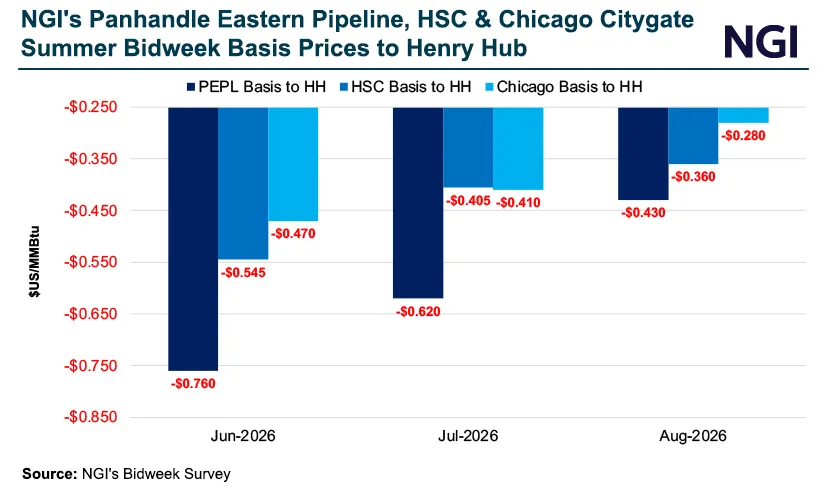
Regional natural gas basis advantages for US ammonia producers are tightening heading into the fall, squeezing production margins in key markets. Natural gas typically accounts for 70–80% of ammonia's cash production cost, which makes regional sourcing just as important as the national Henry Hub benchmark. That feedstock intensity is also the foundation of the US nitrogen industry's competitive position: domestic producers have long benefited from natural gas costs well below those paid by producers in Europe and parts of Asia, which rely more heavily on imported liquefied natural gas and higher-priced regional benchmarks.
Data from NGI's Bidweek Survey and Entropic Analytics, powered by NGI, show that specific regional price hubs map directly to confirmed plant locations. These include Houston Ship Channel, which feeds OCI Global's ammonia plant in Beaumont, TX; Panhandle Eastern, which serves Koch Fertilizer and Coffeyville Resources Nitrogen Fertilizers facilities in Kansas; and Chicago Citygate, which supplies CF Industries Holdings in Iowa.
The Midcontinent region maintained the largest and most consistent discount to Henry Hub during the core summer months. Panhandle Eastern's bidweek basis ran wider than Gulf Coast or Midwest metrics, but its discount to Henry Hub narrowed by 35 cents from June to August. Located within or adjacent to the winter wheat belt, Koch's Enid and Dodge City facilities and the Coffeyville facilities provide the most geographically relevant ammonia supply for fall pre-plant nitrogen application. The timing matters: fall is one of two major seasonal demand windows for nitrogen fertilizer in North America, alongside spring planting, so feedstock cost shifts landing ahead of the fall application season feed directly into the economics of supplying that demand.
Gulf Coast basis at Houston Ship Channel, meanwhile, ran a tighter discount to Henry Hub, shrinking by 22 cents from June to August. Chicago Citygate tracked similarly over the same three months, consistently holding a smaller cost advantage than the Plains region throughout the summer. This pricing divergence underscores the distinct regional market dynamics that shape localized production costs.
Notably, every basis across the three regions narrowed from June into August. Plains basis compressed by roughly 33 cents, while both Gulf Coast and Midwest basis shrank by close to 19 cents. In other words, the natural gas cost advantage the domestic ammonia industry has enjoyed relative to the national Henry Hub benchmark has been eroding ahead of the fall application season.
As a result, margin cushions are being squeezed for multiple natural gas feedstock industries across these regions, including methanol, hydrogen and ammonia production. Plains producers have already given back close to half — around 43% — of their summer basis advantage. If the trend reaches Henry Hub parity during the fall, unhedged operators could face much tighter production economics. Watchpoints ahead include the monthly Bidweek Survey prints for whether the compression continues, the approach of winter heating demand — historically the period when regional basis relationships shift as consumption patterns change — and any changes in producer hedging disclosures as companies report quarterly results.
