NASA Blocks Development of Largest U.S. Tungsten Discovery in Nevada
Key Takeaways
- •3 Proton Lithium discovered a tungsten deposit in Nevada estimated at 1.78 million tons, which would be five times larger than the next-largest U.S. tungsten deposit.
- •NASA has successfully blocked drilling in the satellite tracking zone, arguing that mining activity would disrupt its space-to-Earth signal monitoring operations.
- •Tungsten prices have surged approximately 600% since last year due to China's export restrictions and heightened military demand from ongoing armed conflicts.
- •The United States has allocated approximately $46 billion over the past five years to build a critical mineral supply chain less dependent on China, which controls 80% of the global tungsten market.
- •The Nevada tungsten deposit has not yet been demonstrated to be commercially viable, and its strategic significance depends on confirming that viability.
The competition for critical metals and minerals has intensified since President Trump took office, placing the United States in direct contention with several of its international allies. While the federal government commits billions of dollars to establishing a foothold in critical minerals and challenging China's market dominance, domestic obstacles have also emerged.
The Financial Times reported earlier this week that a company had discovered what is believed to be the largest tungsten deposit in the United States. Tungsten is classified as a critical metal with applications spanning electronics, defense, and aviation—sectors central to the U.S. economy. Its extreme density and heat resistance make it essential for armor-piercing munitions and high-temperature components in missiles and aircraft engines. However, NASA is opposing any further development of the site.
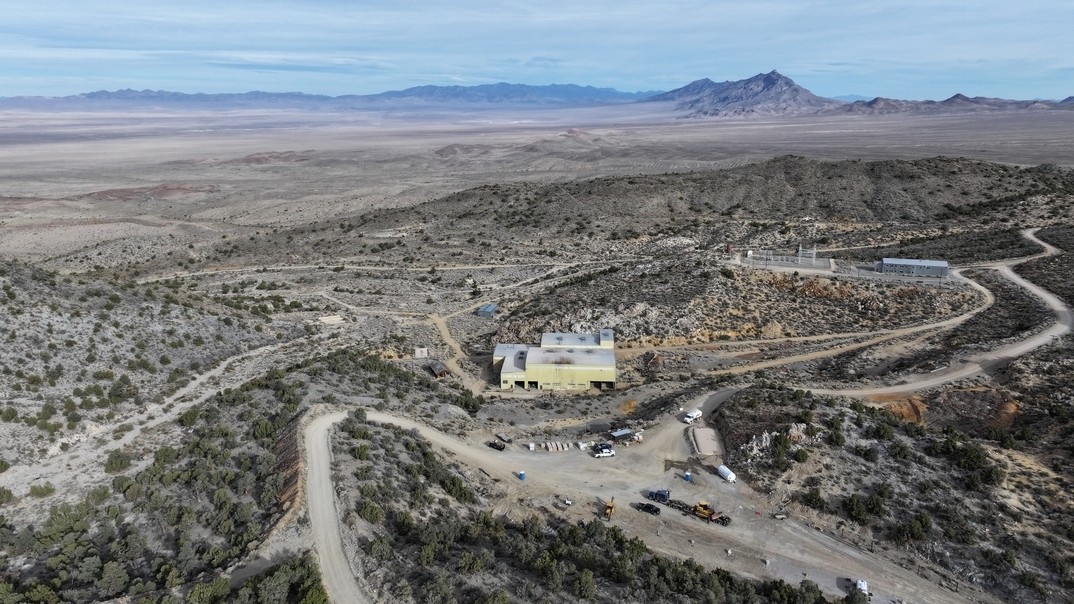
3 Proton Lithium (3PL), the company behind the discovery, conducted its drilling operations in a remote area of the Great Basin Desert in Nevada. NASA states that a significant portion of the surrounding area is used to track satellite signals transmitted from space to Earth, and the agency maintains that any mining activity in the vicinity would interfere with those operations. NASA has already succeeded in blocking drilling within the zone where satellite tracking takes place. The standoff illustrates a recurring challenge for U.S. mineral development: promising deposits frequently collide with overlapping federal land-use restrictions, and the United States maintains one of the longest mine permitting timelines among developed nations.
"This is a metal the United States stopped mining a decade ago and now imports, while China controls and manipulates the global market," Kevin Moore, Chief Executive Officer of 3 Proton Lithium, told the Financial Times. Moore emphasized that the Nevada discovery extends beyond resource extraction. "It is a national security story," he said.
President Trump has made expanding domestic critical mineral production a national security priority, reflecting the extensive use of these elements across the electronics and defense industries. However, establishing a reliable local supply has proven challenging despite several promising discoveries. The Nevada tungsten deposit has not yet been demonstrated to be commercially viable.
Current resource estimates place the deposit at 1.78 million tons, which would make it five times larger than the next-largest tungsten deposit in the United States, according to the Financial Times. In financial terms, 3PL values the discovery at approximately $152 billion, driven by surging tungsten prices amid a severe global shortage of the metal.
The tungsten price rally underscores the national security dimensions of critical mineral supply chains. The increase was triggered by export restrictions announced by China earlier this year, compounded by heightened demand for military applications amid two ongoing armed conflicts. Beijing's tungsten curbs follow a pattern of export controls it has placed on other strategic minerals, including gallium, germanium, and rare earth elements, signaling a broader strategy of leveraging its processing dominance across multiple critical materials. Pentagon Scraps $300 Million Lithium Tender for Defense Stockpile
Over roughly the past five years, the United States has pursued critical minerals worldwide, offering premium prices to secure materials needed for military applications and frequently outbidding European Union allies, as the Wall Street Journal reported last month. During that period, Washington has allocated approximately $46 billion toward building a critical mineral supply chain less dependent on China.
"The U.S. can be a partner in developing alternative sources, but it can also be a competitor," the Secretary-General of the Aerospace, Security and Defense Industries Association of Europe told the Wall Street Journal.
Building an independent supply chain will require time, as it did for China, and domestic supply and processing capabilities will be critical—just as they are for China today. These factors heighten the strategic significance of the Nevada tungsten discovery, provided its commercial viability can be confirmed.
China currently controls 80% of the global tungsten market, the Financial Times notes. Following surging demand tied to ongoing conflicts and China's export curbs—which extend beyond tungsten alone—the metal's price has climbed approximately 600% since last year. While transforming a discovery into an operational mine is a lengthy process, long-term planning remains essential when national security is at stake—and long-term critical mineral supply security starts at home.
By Irina Slav for Oilprice.com

