Minsheng Financial Leasing Expands Shell-Backed MR Tanker Programme at GSI to 11 Newbuilds
Key Takeaways
- •Minsheng Financial Leasing increased its Shell-backed tanker programme at GSI from six to eleven vessels by adding five newbuilding contracts.
- •The 49,900 dwt chemical and product carriers will be built using GSI's 16th-generation MR tanker design with an optimized hull and propulsion system to reduce fuel consumption and emissions.
- •All eleven vessels will be owned and financed by Minsheng while being chartered long-term to Shell Tankers, allowing Shell to access capacity without adding the ships to its balance sheet.
- •Industry estimates value the five additional vessels at approximately $228 to $230 million, based on a per-vessel price range of $45.5 million to $46 million.
- •Minsheng and Shell are also jointly developing four 175,000 cubic-metre LNG carrier newbuilds at Jiangnan Shipyard, scheduled for delivery in 2028 and 2029.
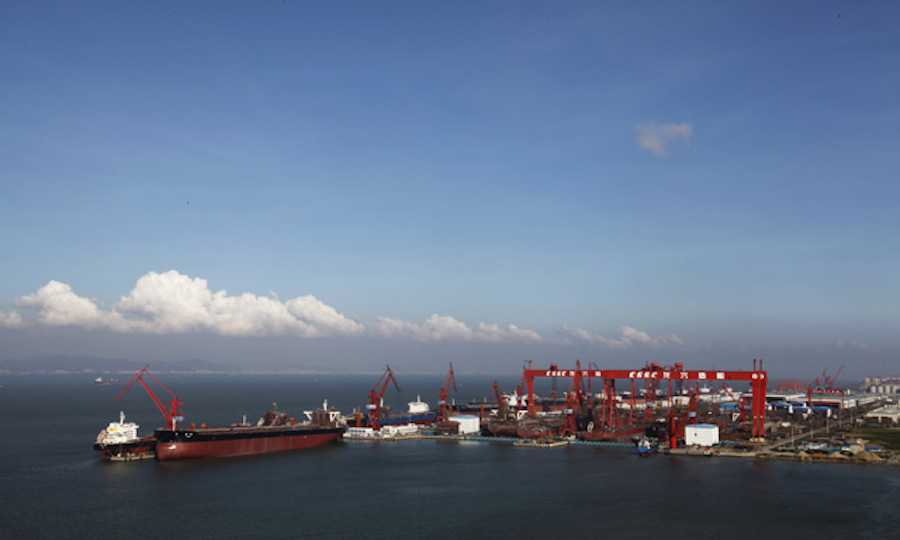
Minsheng Financial Leasing has expanded its Shell-backed tanker programme at Guangzhou Shipyard International (GSI) to a total of 11 vessels, adding five newbuildings as construction officially begins on the original six-ship series.
The latest contracts were signed by Minsheng, GSI, and China Shipbuilding Trading, and coincided with the CSSC-controlled yard's steel-cutting kickoff on the first vessel in the initial batch. GSI is a subsidiary of China State Shipbuilding Corporation (CSSC), the largest shipbuilding conglomerate in China and a central player in the country's dominance of global shipbuilding orders, which account for the largest share of newbuilding contracts worldwide.
The 49,900 deadweight-ton (dwt) chemical and product carriers will be constructed based on GSI's 16th-generation Medium Range (MR) tanker design, which incorporates an optimised hull form and propulsion package designed to reduce both fuel consumption and emissions. MR tankers are among the most actively traded vessel classes in global shipping, transporting refined petroleum products and chemicals on regional and medium-haul routes. The focus on fuel efficiency aligns with tightening international regulatory pressure, including the International Maritime Organization's greenhouse gas reduction strategy targeting net-zero emissions from international shipping by or around 2050.
Under arrangements already agreed between the two parties, all 11 vessels will be chartered to Shell Tankers. Minsheng, as the Chinese financial lessor, will own and finance the ships, providing Shell with long-term operational control of the capacity without the vessels appearing directly on the energy major's balance sheet. The structure reflects a broader pattern among oil majors and trading houses, which have increasingly used sale-and-leaseback and long-term charter arrangements with financial lessors to renew ageing fleets while preserving capital for their core energy transition investments.
No contract value or delivery schedule has been formally disclosed. However, Chinese shipbuilding sources previously linked Shell with MR slots at GSI for delivery between 2029 and 2030, with estimated prices ranging from $45.5 million to $46 million per vessel. On that basis, the five additional vessels would represent an estimated value of approximately $228 million to $230 million.
The order contributes to a sustained wave of MR tanker contracting at GSI. Earlier this year, Central Group, led by Evangelos Pistiolis, booked 10 product tankers at the yard in a deal approaching $500 million. Pleiades Shipping and Nanjing Tanker have also placed additional orders at GSI during 2026.
Separately, Minsheng and Shell are already collaborating on four 175,000 cubic-metre LNG carrier newbuilds at Jiangnan Shipyard, another CSSC-affiliated facility. Those vessels are scheduled for delivery in 2028 and 2029, with Shell Singapore taking the ships on long-term charter, Shandong Marine Energy handling commercial management, and Shell International Shipping overseeing technical operations.
Source: Splash247

