Mexico's Natural Gas Demand Is Critical to Permian Oil Production, Esentia CEO Says
Key Takeaways
- •Texas-to-Mexico natural gas exports have reached 2 Bcf/d, while Mexico imports roughly 75% of its natural gas needs.
- •Esentia Energy Systems CEO Daniel Bustos said Mexican demand provides a crucial outlet for Permian associated gas, which rises with oil-focused drilling whether or not local demand can absorb it.
- •New midstream pipeline capacity is narrowing the Waha hub's price discount relative to Henry Hub and Agua Dulce by moving more gas toward Gulf Coast and export markets.
- •Bustos said the narrowing Waha spread does not diminish the hub's importance to the Mexico market, where West Texas supply remains the foundation of cross-border flows.
- •Bustos dismissed fears of trade disruptions, but how quickly the remaining Waha discount closes remains an open question.
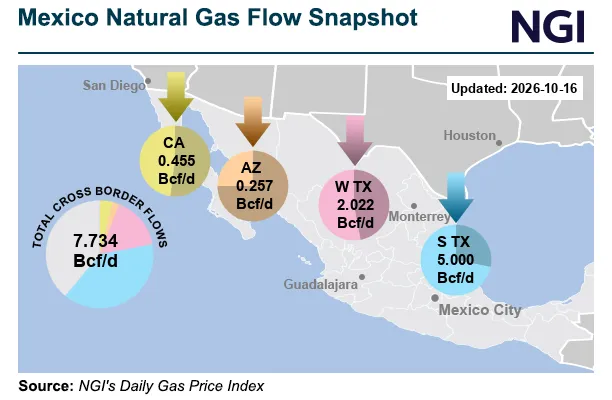
Mexico's natural gas demand is propping up oil and gas producers in Texas, according to Daniel Bustos, chief executive officer of Esentia Energy Systems.
Two figures underscore the depth of the cross-border relationship. Exports of natural gas from Texas to Mexico have reached 2 Bcf/d (billion cubic feet per day), and Mexico imports roughly 75% of its natural gas needs, according to Natural Gas Intelligence (NGI). With such a large share of its supply coming from abroad, Mexico's power generators and industrial users are closely tied to pipeline flows from the United States — a dependence that cuts both ways, giving Permian producers a reliable customer base for gas they might otherwise struggle to place.
For Permian Basin producers, Mexican demand provides a crucial outlet for associated gas — the natural gas extracted alongside crude oil in the basin, the largest oil-producing region in the United States. Because the Permian, which stretches across West Texas and into southeastern New Mexico, is drilled primarily for oil, gas output rises with drilling activity whether or not local demand can absorb it, making export routes to the south an important pressure valve.
Bustos also dismissed fears of trade disruptions.
In related reporting, NGI noted that new midstream capacity is narrowing the price discount at Waha, the benchmark hub for Permian natural gas, relative to hubs such as Henry Hub in Louisiana and Agua Dulce in South Texas. The Waha hub sits deep in the heart of Permian production, far from major demand centers, which has historically left it prone to trading below other hubs when takeaway pipelines fill up; Henry Hub, by contrast, serves as the reference point for United States natural gas futures. Additional pipeline capacity relieves that bottleneck by moving more gas out of the basin toward Gulf Coast and export markets. According to Bustos, however, the narrowing spread does not diminish Waha's importance to the Mexico market, where West Texas supply remains the foundation of cross-border flows. How quickly the remaining discount closes remains one of the open questions in the cross-border market.
The article was written by Christopher Lenton, NGI's Managing Editor for Mexico, who has covered Latin American energy markets since 2009.
Original report (published October 19, 2026): Mexico Natural Gas Demand Critical to Permian Oil Production, Esentia CEO Says — Natural Gas Intelligence

