LNG Canada Feedgas Demand Falls to Six-Month Low as July Repairs Curb Exports
Key Takeaways
- •LNG Canada's Kitimat terminal drew its lowest monthly feedgas since January, with July exports falling to 10 cargoes.
- •Scheduled July maintenance, including a flare tip replacement, reduced processing throughput at the terminal.
- •Feedgas deliveries were additionally constrained by limits on the Coastal GasLink pipeline supplying the Kitimat plant.
- •LNG Canada is Canada's first large-scale LNG export facility, with a 14 million tonne per year first-phase capacity led by Shell.
- •Lower terminal offtake leaves more gas for domestic and export markets, partially offsetting tightening from T-South pipeline constraints that have lifted Sumas prices.
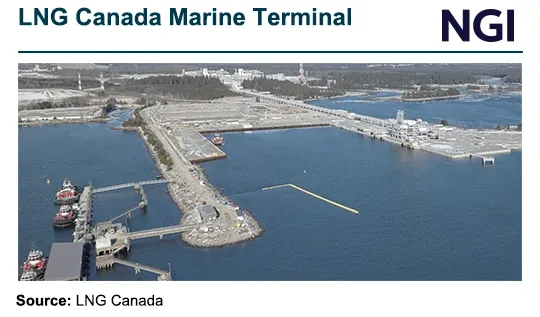
LNG Canada's Kitimat export terminal drew less feedgas in July than in any month since January, with export volumes declining over the same period as crews worked through mechanical repairs, according to regulatory filings and data from Kpler.
The pullback in feedgas demand coincided with scheduled maintenance activity at the facility. During the July repairs, crews replaced a flare tip at the terminal, work that contributed to the reduction in throughput during the month. Flare tip replacements are routine safety and equipment-integrity work at LNG facilities, though they typically require reduced or halted processing while the work is underway.
July exports from the facility fell to 10 cargoes, down from higher levels earlier in the year, the data showed.
Feedgas deliveries to the Kitimat terminal were also constrained by limitations on the British Columbia pipeline system that supplies the plant, with pipeline limits pinned at Station 2. Coastal GasLink, the pipeline feeding the terminal, delivers gas from the Montney and other Western Canadian production areas to Kitimat, so constraints anywhere along that supply path can limit how much gas the plant can process even when liquefaction units are available.
LNG Canada, located in Kitimat, British Columbia, is Canada's first large-scale LNG export facility. The Shell-led project's first phase has a capacity of 14 million tonnes per year and shipped its inaugural cargo in mid-2025, opening a new outlet for Western Canadian natural gas production to overseas markets. The terminal is a key part of Canada's effort to diversify gas exports beyond the North American market, where producers have historically depended heavily on pipeline sales to the United States.
The monthly decline in feedgas demand marks the weakest level for the terminal since January, when the facility was still ramping up operations. New LNG facilities commonly experience throughput variability during their first year as operators commission equipment and work through early maintenance issues.
The reduction in LNG Canada offtake comes as Western Canadian gas markets continue to grapple with pipeline capacity constraints. Sustained limitations on Westcoast Energy's T-South system have tightened flows of western Canadian gas into the Pacific Northwest, lifting regional prices at the Sumas hub in recent weeks. Lower LNG Canada offtake adds another variable for regional gas balances: when the terminal draws less feedgas, more gas remains available for domestic and export pipeline markets, which can offset some of the tightening pressure from the T-South constraints. How quickly feedgas demand recovers in the coming months will depend on the pace of remaining commissioning and maintenance work and on pipeline system limits.
Source: Natural Gas Intelligence
