Korean Firms Hold Off Converting Dollars Into Won as Local Currency Hits 23-Month High
Key Takeaways
- •Dollar deposits at KB Kookmin, Shinhan, Hana, Woori and NH NongHyup hit a record $76.98 billion, rising more than $6.9 billion in August alone.
- •Corporate dollar deposits reached a record $63.3 billion as exporters delayed repatriating earnings and importers staged dollar purchases for future payments.
- •The won closed at 1,345 per dollar in Friday's night market, its strongest level since early October 2024.
- •KB Kookmin economist Moon Jeong-hee expects the exchange rate to settle in a range of 1,300 to 1,350 won per dollar as dollar supply outstrips demand.
- •Analysts said Samsung and SK hynix's combined 800 trillion won investment plan should support the won through 2027, but U.S. inflation, rate hikes, or higher Treasury yields could pressure it lower.
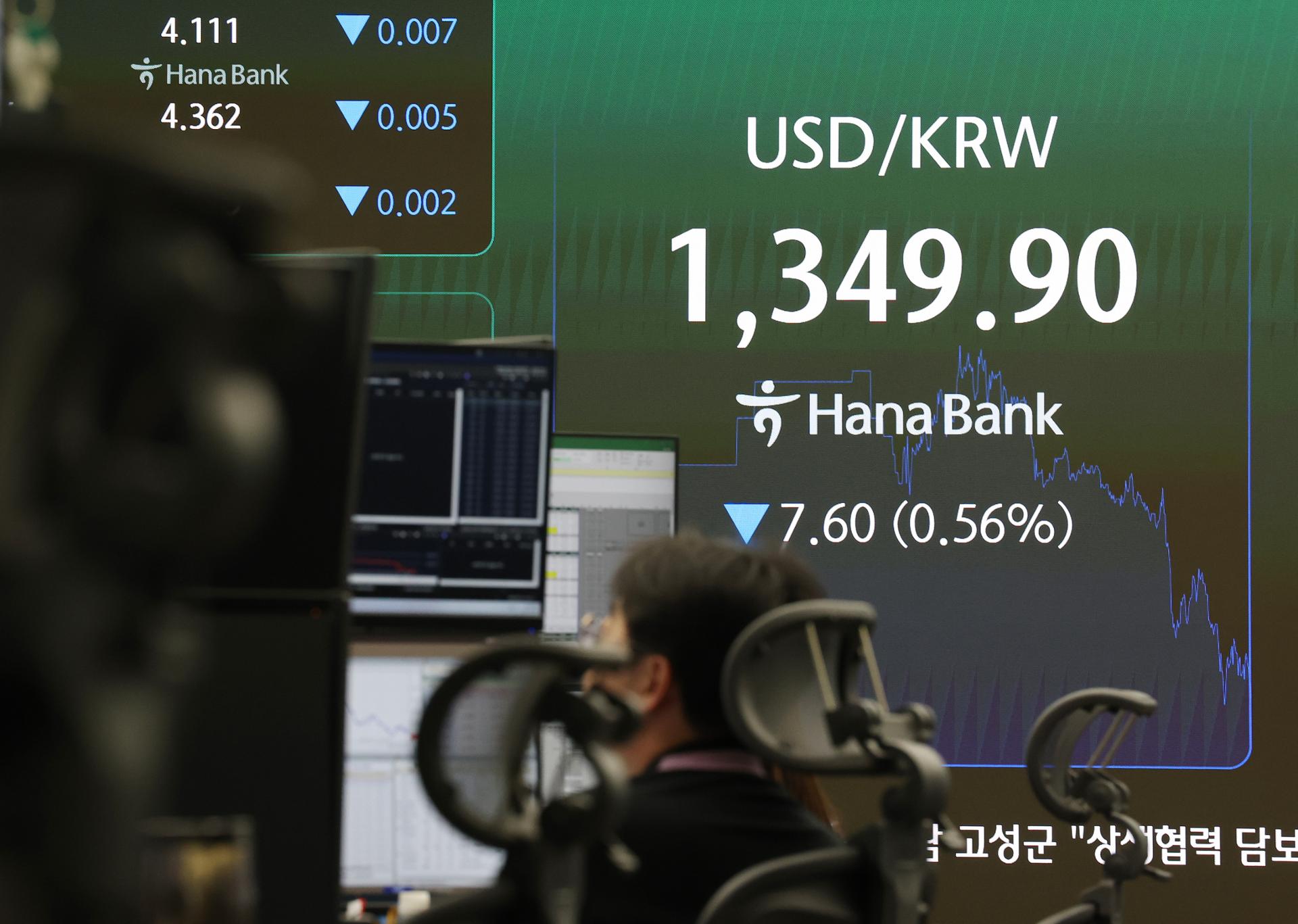
Dollar deposits at Korea's five largest banks climbed to a record high as companies accumulated the U.S. currency, with the won trading at its strongest level in 23 months, data showed Sunday.
Dollar deposits at KB Kookmin, Shinhan, Hana, Woori and NH NongHyup reached a record $76.98 billion as of Thursday, the highest level since comparable data collection began in May 2021. The total rose by more than $6.9 billion in August and increased by a further $600 million in the first three days of September.
Corporate deposits accounted for most of the increase. Companies held a record $63.3 billion in dollar deposits as of Thursday, as exporters delayed converting dollar revenue into won while the exchange rate remained low, and importers bought the U.S. currency in stages ahead of future payments. The behavior reflects the mechanics of Korea's export-driven economy: many large exporters, including chipmakers, shipbuilders and automakers, invoice overseas sales in dollars, so the pace at which they repatriate earnings directly affects both the exchange rate and domestic money supply.
Dollar deposits held by individuals also rose to $13.68 billion, the highest since February 2022. Individuals converted $389 million worth of won into dollars in August, the largest monthly amount since January, while conversions from dollars into won were only about a third as large.
The won, which had remained above 1,500 per dollar in July amid a weak yen and capital outflows into overseas assets, has strengthened sharply in recent weeks as exporters converted foreign currency earnings following strong overseas sales. Dollar inflows related to SK hynix's American depositary receipts also supported the currency.
The average weekly closing won-dollar exchange rate fell from the high 1,400s in the third week of July to the high 1,300s by the third week of August and the mid-1,300s in the first week of September. The Korean currency closed at 1,345 won per dollar in the night market Friday, its strongest level since early October 2024.
Despite the increase in dollar demand, analysts see room for further gains in the won.
"With dollar supply still outstripping demand, the exchange rate is expected to settle into a lower trading range of 1,300 to 1,350 won per dollar," said Moon Jeong-hee, an economist at KB Kookmin Bank.
Ashok Bhundia, deputy chief economist at the Institute of International Finance, said further won appreciation is likely following plans by Samsung Electronics and SK hynix to expand semiconductor fabrication capacity. The two companies announced a combined investment of 800 trillion won in Korea's southwestern region. Semiconductors are Korea's largest single export category, and Samsung and SK hynix together dominate the global memory chip market, which makes their capital spending and repatriation decisions a significant factor in won demand.
"These projects are expected to lead both companies to repatriate and convert a larger share of their growing export earnings into won to finance domestic capital expenditure, providing a meaningful source of support for the currency through the remainder of 2026 and into 2027," Bhundia said.
Still, analysts cautioned that a rise in U.S. inflation that increases the likelihood of further interest rate hikes, or higher U.S. Treasury yields, could put downward pressure on the won. The won-dollar rate has historically been sensitive to U.S. rate policy and to the yen's trajectory, given the competition between Korean and Japanese exporters in key markets.
Source: The Korea Times
