Japan moves to revive LNG carrier construction
Key Takeaways
- •Japan's transport ministry gathered shipyards including Imabari Shipbuilding, Kawasaki Heavy Industries and Namura Shipbuilding, industry associations and LNG buyer JERA to plan restarting domestic LNG carrier construction.
- •Japan has not delivered a domestically built LNG carrier since 2019, having lost its once-dominant position to South Korea and increasingly China.
- •The government has set a target of building three to five LNG carriers per year from 2035 to rebuild the domestic industrial base.
- •A government roadmap published this summer acknowledges Japan lacks recent experience with membrane-type containment systems and necessary production infrastructure, and yards may cooperate using South Korean technology and components.
- •Cargo interests and domestic shipowners indicated they would consider or prioritize Japanese-built ships if internationally competitive, with around 200 LNG carriers controlled by Japanese companies at the end of last year.
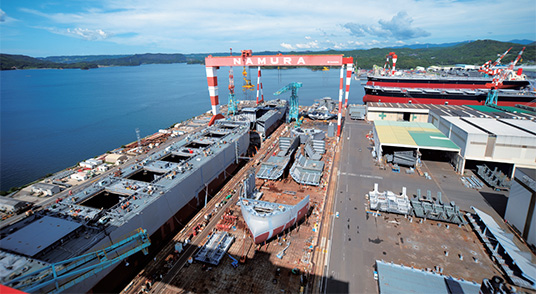
Japan has brought shipyards, owners and the country’s largest LNG buyer together to work out how to restart domestic construction of LNG carriers, seven years after the country delivered its last home-built vessel in the sector.
The Ministry of Land, Infrastructure, Transport and Tourism convened the industry on Friday to begin putting numbers around proposed order volumes, construction schedules, yard investment and costs.
Participants included Imabari Shipbuilding, Kawasaki Heavy Industries and Namura Shipbuilding, along with the Shipbuilders’ Association of Japan, the Japanese Shipowners’ Association and LNG giant JERA.
Officials from the transport ministry, the Ministry of Economy, Trade and Industry, and the Agency for Natural Resources and Energy also attended.
Tokyo has already set a target of establishing capacity to build three to five LNG carriers a year from 2035, a sign that the effort is not just about restarting one-off production but about rebuilding a domestic industrial base.
Japan was once a dominant LNG shipbuilding nation, but it has not delivered an LNG carrier domestically since 2019 as South Korea, and increasingly China, took control of the sector.
Restarting production will not be straightforward.
A government roadmap published this summer acknowledges that Japan lacks recent experience building the membrane-type containment systems now dominant in the LNG carrier market, as well as some of the necessary production infrastructure. That makes the current discussion as much about capability recovery as about future orders.
The three yards have been discussing cooperation to rebuild that capability, potentially drawing on technology and components from South Korea.
Friday’s meeting also brought the demand side firmly into the process. Cargo interests said they would consider planned ordering provided Japanese-built ships were internationally competitive, while domestic owners signaled they could prioritize competitive home-built tonnage.
Japan had around 200 LNG carriers controlled by domestic shipping companies and energy groups at the end of last year, underscoring that any revival would serve an established home market even as the country looks to regain ground in a segment it once led.
The government will now work with industry on expected vessel numbers, construction timing, investment requirements and the support needed to make Japanese LNG carrier construction commercially viable again.

