Iraq–Turkey Pipeline Reopens Under One-Year Deal as Baghdad Seeks Export Alternatives
Key Takeaways
- •Iraq and Turkey signed a one-year interim deal on August 1 to resume oil flows through the Iraq-Turkey Pipeline corridor, targeting 750,000 bpd compared to the current 170,000–200,000 bpd level.
- •The blockade of the Strait of Hormuz had forced Iraq to shut down production wells as domestic storage tanks reached maximum capacity, creating risk of permanent reservoir damage.
- •Iraqi crude shipped through the Turkey route is being directed to European and American buyers, with Kirkuk blend serving as an effective substitute for sanctioned Russian and Black Sea crude.
- •Turkey's state oil company TPAO acquired a 15% interest in BP's Kirkuk holding, gaining exposure to over three billion barrels of oil equivalent across multiple fields in Federal Iraq.
- •The agreement's long-term viability remains uncertain due to Turkey's outstanding $1.5 billion ICC arbitration penalty, ongoing disputes over Kurdistan's independent oil sales, and Ankara's demands for additional energy-sector investments.
With over 90% of Iraq's annual budget reliant on oil exports and historically around 95% of that crude shipped through the Strait of Hormuz, securing an alternative export route while the Strait remains effectively blockaded has become an existential priority for Baghdad. Beyond the billions in lost immediate oil revenues for OPEC's second-largest producer, the blockade caused Iraq's domestic storage tanks to fill rapidly to maximum capacity, forcing the shutdown of several production wells. The longer such shutdowns persisted, the greater the risk of permanent damage to Iraq's oil production capacity through loss of reservoir pressure, water infiltration, and corrosion, among other factors.
Although historically about 80% of Iraq's oil exports have gone to key Asian buyers—especially China—the most viable alternative export route was through northern Iraq into Turkey. The obstacle was that the key agreement governing Baghdad's movement of oil through two pipelines into Turkey expired on 27 July.
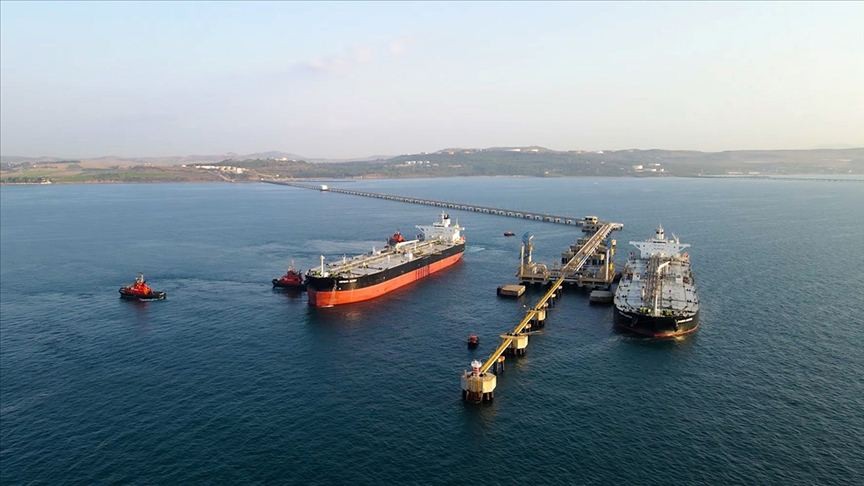
On 1 August, Baghdad and Ankara officially signed a one-year interim deal allowing Iraq to move its oil through the Iraq-Turkey Pipeline (ITP) corridor, which comprises two separate pipelines but is treated as a single, unified mechanism under the original 1973 Crude Oil Pipeline Agreement. The agreement was signed in Ankara between Turkish state energy firm Boru Hatları ile Petrol Taşıma Anonim Şirketi (BOTAS) and Iraqi state oil entities—the State Organization for Marketing of Oil (SOMO) and the North Oil Company (NOC). It sets a transit target of 750,000 barrels per day (bpd) of Iraqi crude, substantially above the current 170,000–200,000 bpd level, though still only half of the corridor's 1.5 million bpd total capacity.
Following the signing, tanker operations resumed swiftly. According to industry data, the tanker Valpiave loaded over 600,000 barrels of crude at Ceyhan on 3 August. The focus of these shipments is not Asia but European and American buyers, who can access the oil without it transiting a single maritime chokepoint. Demand for Iraqi crude through this route remains extremely strong in Western markets, partly to replace Black Sea and Russian crude barrels—Iraq's Kirkuk blend is a medium sour oil that serves as an effective substitute—and partly due to the broader shortage of alternative supplies caused by the effective blockade of the Strait of Hormuz.
However, while this new one-year deal may have addressed Iraq's most pressing problem for now, there is little reason for optimism that it will endure. From March 2023 to September 2025—a span of two and a half years—oil flows from Iraq to Turkey were halted following an International Chamber of Commerce (ICC) arbitration ruling that Turkey must pay Baghdad US$1.5 billion in damages for breaching the 1973 Crude Oil Pipeline Agreement. The breach centered on Ankara permitting the Erbil-based, semi-autonomous Kurdistan Region of Iraq (KRI) to circumvent the Baghdad-based Federal Government of Iraq (FGI) and export oil independently. In retaliation for the ICC ruling, Turkey halted the flow of Iraqi oil through the northern pipeline route, which at the time regularly exported approximately 450,000 bpd of crude from the Kirkuk region to Ceyhan.
The standoff between Baghdad and Ankara over independent oil sales from Iraq's Kurdistan Region underscores another deep fault line running through the new one-year agreement and all related accords since 2014. The prohibition on the Kurdistan Region selling oil independently from Baghdad was a core condition of the 2014 agreement between Baghdad and Erbil: the Kurdistan Region would channel crude produced in its territory—roughly 550,000 bpd at the time—to the federal authorities via SOMO. In return, it would receive a fixed share of the national budget, then approximately 17% each month.
Baghdad's fundamental unwillingness to permit the Kurdistan Region to sell oil independently stemmed from fears that any large, unmonitored revenue stream could serve as a financial base for an eventual Kurdish breakaway—a concern that proved well founded. On 23 April 2013, Kurdistan's regional government passed a bill allowing it to independently export crude oil from its own fields and those of Kirkuk if Baghdad failed to pay its share of oil revenues and exploration costs. A corollary bill to create an oil exploration and production company separate from the Federal Government in Baghdad, along with a sovereign wealth fund to absorb all energy revenue, was approved simultaneously by the KRG's cabinet under then-Prime Minister Nechirvan Barzani.
At that point, the KRI was producing around 350,000 bpd out of a total 3.3 million bpd across Iraq, with plans to increase output to 1 million bpd by the end of 2015. The KRG intended the 2013 legislation to give Kurdistan complete financial independence from the rest of Iraq as a precursor to full political independence. The next planned phase after securing independent oil sales was a referendum on independence. The Federal Government correctly perceived this as an existential threat, particularly given the U.S.'s prior promises to the Kurds regarding the defeat of Islamic State. Although over 90% of the KRI's population voted in favor of independence in a 2017 referendum, the move failed to garner meaningful U.S. support and instead triggered a major clampdown from Baghdad and neighboring countries with sizable Kurdish populations, including Iran and Turkey.
All of these fissures continue to shape relations between the Federal Government of Iraq and the Kurdistan Region of Iraq, as well as between Baghdad and Turkey. A further complicating factor is the vital geopolitical strategic importance that northern and southern Iraq hold for the West on one side and China and Russia on the other. According to a high-ranking Kremlin official who spoke exclusively to OilPrice.com, Russia and China took the view that "by keeping the West out of energy deals in Iraq, the end of Western hegemony in the Middle East will become the decisive chapter in the West's final demise." Baghdad's position on any KRI independence was made unequivocally clear when then-Prime Minister Mohammed Al-Sudani stated that a new unified Oil Law—administered by the FGI out of Baghdad—would govern all oil and gas production and investments in both Iraq and the Kurdistan Region and would constitute "a strong factor for Iraq's unity."
On the other side, the U.S. and its allies continued to advance their own agenda in the KRI, viewing it as a base from which to expand their footprint in southern Iraq at the expense of Beijing and Moscow. The U.S. and Israel also had a strategic interest in using the Kurdistan Region as a base for ongoing monitoring operations against Iran.
There is little doubt that the U.S. and the European Union (E.U.) of 27 member states played key roles in facilitating the latest one-year deal between Iraq and Turkey. "The 750,000 barrels per day flow requirement for Iraq is not as high as had been expected from Turkey, although it's interesting to see that TPAO [Türkiye Petrolleri Anonim Ortaklığı] has been able to acquire a 15% interest in BP's Kirkuk holding, despite the long-running hostility between the Turks and the Kurds," a senior source in the E.U.'s energy security complex exclusively told OilPrice.com. "That [holding] will give it [TPAO] exposure to a partnership that covers over three billion barrels of oil equivalent from the Baba and Avanah domes of the Kirkuk oil field, as well as the Bai Hassan, Jambur and Khabbaz fields in Federal Iraq—a nice deal for the Turks," the source added.
Further benefits for Turkey may be forthcoming, according to a senior energy source who works closely with Iraq's Oil Ministry. "It's asked for other multi-layered joint ventures across the energy sector—with the emphasis on Iraqi investment—in oil, gas, petrochemicals, and electricity, and has demanded that an arrangement is made that offsets the entire US$1.5 billion that it was fined by the arbitration court and technically still owes Baghdad," the source said. "And if Turkey doesn't get what it wants, then it could well fail to extend the deal or even break the one-year term," the source concluded.
By Simon Watkins for OilPrice.com
Source: OilPrice.com

