Iraq-Syria Pipeline to Bypass Hormuz Could Be Revived Within 3 Years
Key Takeaways
- •Syria’s state-owned oil chief said renovating the Iraq-Syria pipeline could take between 30 months and three years.
- •The route would run from Iraq’s Kirkuk fields through Haditha to Syria’s Mediterranean port of Baniyas.
- •Iraq and Syria have started negotiations to finalize a contract and are discussing potential investors.
- •The project is expected to include two pipelines with combined capacity of 1.5 million to 2 million barrels per day.
- •The United States has said it supports efforts to rebuild the pipeline and reduce future disruption risks in the Strait of Hormuz.
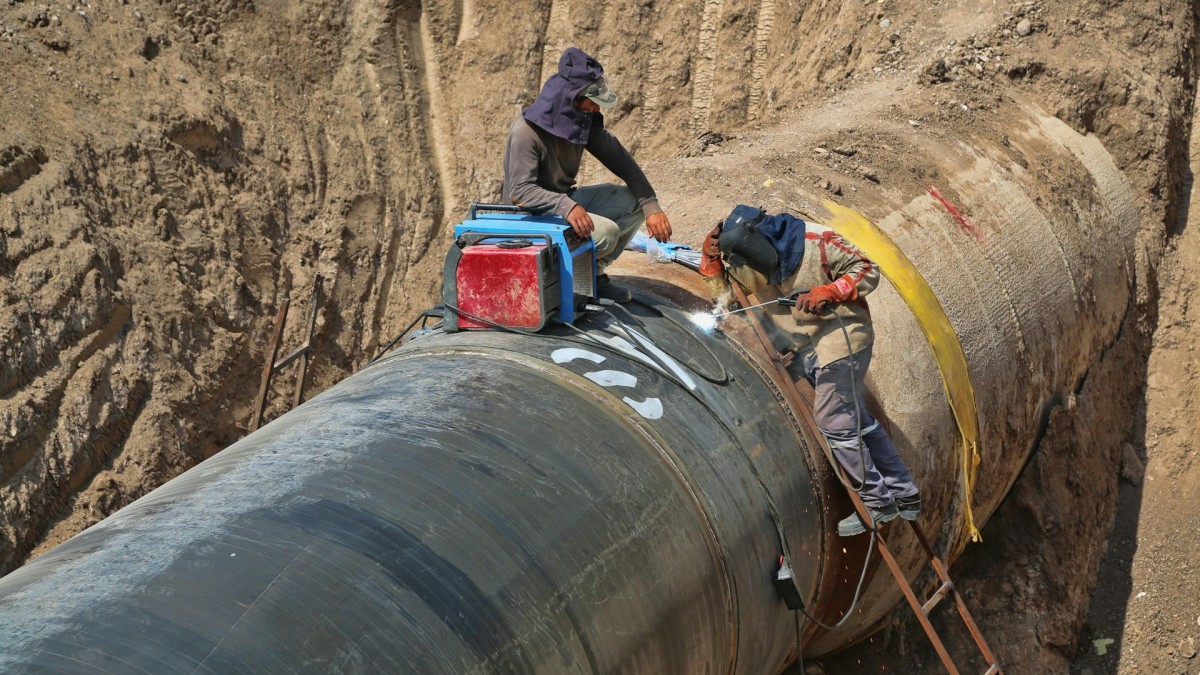
An old oil pipeline connecting Iraq and Syria that would bypass the Strait of Hormuz could be back in operation within three years, according to a senior Syrian official.
The latest crisis involving Hormuz has accelerated plans by Iraq and Syria to rebuild a damaged pipeline that would transport crude from Iraq’s Kirkuk fields to Syria’s Mediterranean coast. Youssef Qablawi, chief executive of the state-owned Syrian Petroleum Company, said renovation of the pipeline from Haditha in Iraq to the Syrian port of Baniyas would take “three years at most.”
Syria and Iraq have already begun negotiations to finalize a contract and are also discussing potential companies that could invest in the project, Qablawi told reporters, according to Iraqi outlet The New Region.
“Engineering studies and the purchase of materials will then begin, followed by construction. Implementation will take between 30 months and three years at most, after which the pipeline will be ready,” Qablawi said.
According to the executive, the project is expected to include two pipelines with combined capacity of between 1.5 million barrels per day (bpd) and 2 million bpd.
Last month, the United States voiced support for the plan. A U.S. State Department official told Reuters that Washington backs Iraqi and Syrian efforts to rebuild the Kirkuk-Baniyas oil pipeline and reduce Iran’s ability to disrupt traffic through Hormuz in the future.
Reports have also indicated that U.S. companies are expected to take part in the reconstruction of the route.
For Iraq, the project highlights a longstanding need for export routes that do not rely on the Strait of Hormuz, through which a large share of regional crude flows. Any closure there has exposed a major Iraqi vulnerability, forced OPEC’s second-largest producer to reduce upstream production, and cost Baghdad billions of U.S. dollars in lost revenue. For Syria, reviving the route would also tie into broader efforts to restore energy infrastructure after years of war, while the Mediterranean outlet at Baniyas would give the line a direct link to international shipping lanes.
The pipeline would be important for several reasons: it would give Iraq an export route that does not depend on Hormuz, support Syria’s post-war economy, and reduce Iranian leverage over the strait.
By Tsvetana Paraskova for Oilprice.com

