Can Iraq Really Overtake Saudi Arabia as the Middle East’s Top Oil Producer?
Key Takeaways
- •Iraq's new Prime Minister Ali al-Zaidi announced a target of raising oil production to 8-10 million barrels per day within six years, up from 4.14 million bpd before the February Strait of Hormuz blockade.
- •Iraq holds 145 billion barrels of proved crude oil reserves, nearly 18% of the Middle East total and around 9% of the world's, with the IEA estimating about 246 billion barrels of ultimately recoverable resources including Kurdistan.
- •TotalEnergies' US$27 billion mega-project, ratified in 2023, includes boosting the Ratawi field toward a 210,000 bpd target and the Common Seawater Supply Project to maintain pressure at Iraq's largest fields.
- •Peak plateau targets in Technical Service Contracts for Iraq's super-giant fields alone indicate about 11.5 million bpd of potential production, excluding 115 other oil fields and northern fields run by the Kurdistan regional government.
- •Key risks to the target include completing the CSSP on schedule, sustaining returning Western firms' commitments through political cycles, and reconciling the goal with Iraq's OPEC-plus quota arrangements.
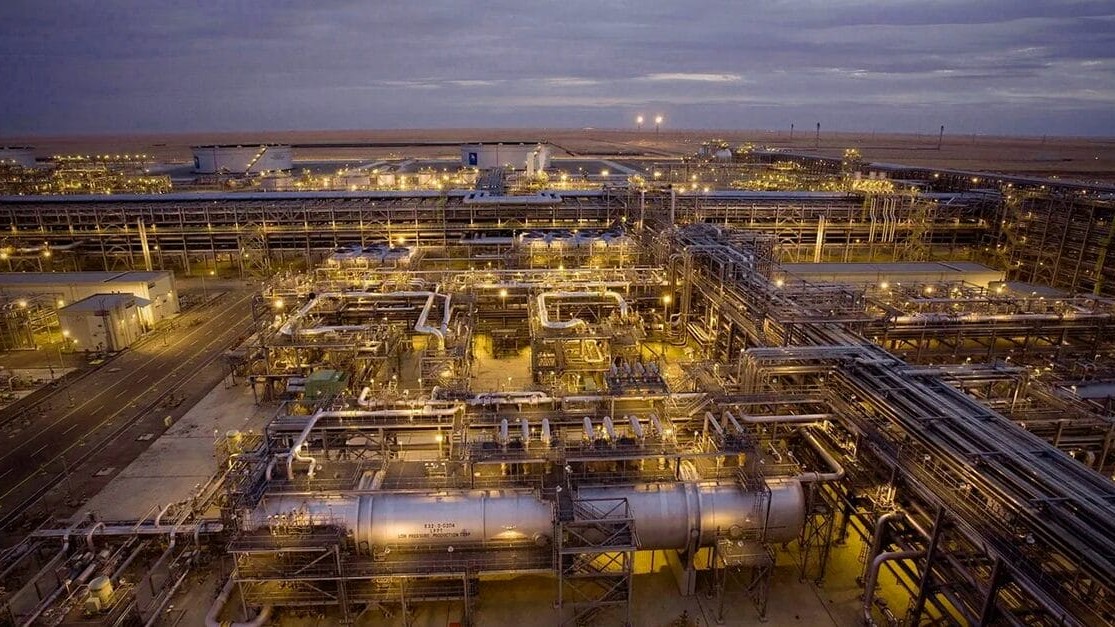
The global power of most Middle Eastern countries remains tied to their oil and gas output, so it is hardly surprising that governments try to maximize production, inflate it, or forecast that it will rise at some point in the future. Iraq has historically fallen into the last of those categories, repeatedly promising major increases in oil output that never materialized. Saudi Arabia, the Middle East’s top oil producer, has tended toward the first, citing oil production “capacity” of 11 million, 12 million, or 13 million barrels per day (bpd) at different times. Both countries are members of OPEC, where Iraq ranks as the group’s second-largest producer, and oil proceeds account for the overwhelming majority of Iraq’s government revenues and export earnings — which is why production levels carry such weight for Baghdad’s finances and geopolitical standing.
The facts for Iraq are that its crude oil production averaged 2.38 million bpd from 1973 until 2026. Before the blockade of the world’s major oil transit route began in February, Iraq was producing 4.14 million bpd. For Saudi Arabia, the U.S. Energy Information Administration (EIA) says the Kingdom has never produced anywhere near its claimed capacity for any sustained period that would justify that description. Its crude oil production averaged 8.29 million bpd from 1973 until 2026. Before the Strait of Hormuz blockade, it was producing 10.1 million bpd.
That said, the recent announcement by Iraq’s new Prime Minister Ali al-Zaidi that the country plans to raise oil production to between 8 million and 10 million barrels per day within six years may finally prove correct for three key reasons. It could even allow Iraq to surpass Saudi Arabia as the region’s top oil producer.
Related: Oil Prices Climb After U.S. Strikes Three Iranian Tankers and Iran Vows Revenge
First, Iraq has always had sufficient oil reserves to reach that level, if managed properly. According to EIA figures, Iraq holds a conservatively estimated 145 billion barrels of proved crude oil reserves, nearly 18% of the Middle East total and around 9% of the world’s. Unofficially, as analyzed in depth in my latest book on the global oil markets, around the same time the official reserves figures were produced, Iraq’s Oil Ministry said the country’s undiscovered resources were about 215 billion barrels. That estimate was in line with a detailed 1997 study by oil and gas firm Petrolog, although it did not include parts of northern Iraq in the semi-autonomous Kurdistan region.
As the International Energy Agency (IEA) has highlighted, most of these oil sites were drilled before the 1970s, when technical limits and low oil prices created a narrower definition of a commercially successful well than would be the case later. Overall, the IEA said ultimately recoverable resources across all of Iraq, including Kurdistan, totaled about 246 billion barrels of crude and natural gas liquids.
All of these figures fit within the assumptions of the government-sponsored Integrated National Energy Strategy (INES), launched in 2013, which set out three forward production scenarios for Iraq. The best-case INES scenario called for crude oil production capacity to rise to 13 million bpd by 2017, remain around that level until 2023, and then gradually decline to about 10 million bpd for a long-term period afterward. The mid-range scenario projected Iraq would reach 9 million bpd by 2020, while the worst-case scenario put production at 6 million bpd by 2020. Against that backdrop, the current target of 8 million to 10 million bpd appears to be a reasonable-case scenario — a reminder that Iraq’s production history is littered with ambitious targets that were missed largely because of political instability, underinvestment and infrastructure gaps rather than geology.
Second, in the later part of former Iraqi Prime Minister Mohammed Shia al-Sudani’s time in office, and continuing under Ali al-Zaidi, Baghdad has drifted back toward accommodating U.S. demands to reduce the widespread corrupt practices that drove Western firms out of the country in recent years. Transparency International (TI), in its Corruption Perceptions Index, had long described Iraq as being “among the worst countries on corruption and governance indicators, with corruption risks exacerbated by lack of experience in the public administration, weak capacity to absorb the influx of aid money, sectarian issues and lack of political will for anti-corruption efforts.”
TI added: “Massive embezzlement, procurement scams, money laundering, oil smuggling and widespread bureaucratic bribery that have led the country to the bottom of international corruption rankings, fuelled political violence and hampered effective state-building and service delivery.” It concluded: “Political interference in anti-corruption bodies and politicisation of corruption issues, weak civil society, insecurity, lack of resources and incomplete legal provisions severely limit the government’s capacity to efficiently curb soaring corruption.”
The departure of Western firms that had the right mix of experienced personnel, advanced technology and modern equipment to drill wells efficiently and build the infrastructure needed for major output growth was disastrous for Iraq. However, as corruption has broadly declined in the West’s dealings with Iraq, and as Washington has imposed new sanctions on Baghdad for aiding Iran over the years, several of those key firms have returned.
Third — and most important from the perspective of both oil and gas field development and key infrastructure construction — is French supermajor TotalEnergies’ US$27-billion, four-pronged mega-project, which was finally ratified in 2023. One part of the project will sharply increase the amount of gas captured during oil drilling, known as associated gas. That will reduce the amount of oil Iraq must burn for domestic power generation, freeing up more crude for export, while some of the proceeds can be reinvested in field development.
Another part will raise production from the Ratawi oil field from roughly 60,000 bpd to 120,000 bpd in the initial phase, with a final development target of 210,000 bpd. That is also expected to show Iraq how a much higher recovery rate can be achieved across its other fields. The final key element is the stabilization and then boosting of pressure at Iraq’s largest oil fields through the treatment and redirection of seawater to those sites via the Common Seawater Supply Project (CSSP), as detailed in my latest book.
Given these factors, the odds of Iraq reaching its latest 8 million to 10 million bpd production target appear to have risen significantly. A back-of-the-envelope calculation based only on the super-giant fields and their original individual peak plateau targets in their Technical Service Contracts indicates about 11.5 million bpd of oil production. That total includes Rumaila at 2.1 million bpd, West Qurna 2 at 1.8 million bpd, West Qurna 1 at 1.6 million bpd, Majnoon at 1.8 million bpd, Zubair at 1.2 million bpd, Kirkuk (Federal Domes) at 1 million bpd, and Halfaya, East Baghdad, Garraf and Badra combined at 2 million bpd.
Those peak plateau targets assumed a functioning CSSP, adequate sustained investment and the most technologically advanced oil firms leading the projects. Importantly, the 11.5 million bpd figure does not include any of Iraq’s other 115 oil fields, nor does it include fields in the north of the country administered by the semi-autonomous regional government. What to watch next, then, is whether the CSSP is actually completed on schedule, whether the returning Western firms sustain their commitments through Iraq’s political cycles, and whether Baghdad can hold to its OPEC-plus quota arrangements while chasing a target that would more than double its current output.
By Simon Watkins for Oilprice.com
More Top Reads From Oilprice.com
BLM Moves to Fast-Track Oil Permits in Alaska Petroleum Reserve
