Iran Warns Tanker Attacks Could Extend Beyond Strait of Hormuz Over U.S. Sanctions
Key Takeaways
- •Iran said countries backing U.S. sanctions could be treated as enemies and face retaliation.
- •The warning included the possibility of targeting tankers beyond the Strait of Hormuz.
- •Reported traffic through the strait has fallen to about 5% of pre-war levels, with only 2-3 large crude carriers passing each day.
- •The Strait of Hormuz remains a critical route for global oil and liquefied natural gas shipments.
- •The United States is preparing additional sanctions against Iran, increasing economic pressure on Tehran.
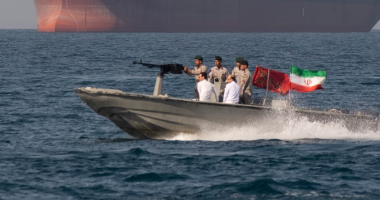
Iran has warned that potential attacks on oil tankers could extend beyond the Strait of Hormuz if countries in the Middle East support U.S. sanctions against Tehran, according to information highlighted by @coinbureau in a recent post on X.
The warning comes as tensions surrounding the strategically important waterway remain high and shipping activity continues to face significant disruption. The Strait of Hormuz is a critical route for global energy supplies, connecting the Persian Gulf with the Gulf of Oman and the wider international maritime network. The channel is roughly 21 miles wide at its narrowest point, with shipping lanes only about two miles wide in each direction, and U.S. Energy Information Administration estimates have put the share of globally traded oil moving through it at around one-fifth, alongside a substantial portion of the world's liquefied natural gas shipments. According to the information cited in the post, Iran now regards countries that support U.S. sanctions as enemies, raising concerns about the potential consequences for regional shipping and energy markets.
Iran Broadens Warning to Countries Backing U.S. Sanctions
The warning represents a wider extension of Iran's position toward countries that cooperate with U.S. economic measures. The X post said Tehran could target tankers beyond the Strait of Hormuz if Middle Eastern countries back Washington's sanctions, and it cited hokanews as reporting that Iran considers any country supporting the sanctions an "enemy."
The remarks come as the United States prepares additional economic pressure against Iran. Iran has repeatedly criticized U.S. sanctions and has rejected efforts to use economic restrictions to force changes in its policies. The latest warning places neighboring countries and their shipping activities under additional scrutiny as governments in the region assess how to respond to the continuing confrontation between Washington and Tehran.
Strait of Hormuz Traffic Falls Sharply
The Strait of Hormuz has experienced a major reduction in maritime traffic during the conflict. According to the figures cited in the X post, traffic through the waterway has fallen to roughly 5% of pre-war levels. Only 2-3 large crude carriers are reportedly transiting the strait each day, compared with 8 before the war.
The decline is significant because the waterway is one of the most important maritime passages for the global energy industry. Large volumes of crude oil and other energy products traditionally move through the strait from major producer markets in the Persian Gulf, and reduced tanker traffic can therefore affect the movement of energy supplies between producers and international markets. Bypass options are limited: Saudi Arabia's East-West pipeline and the UAE's link to the port of Fujairah provide some alternative capacity, but most Gulf crude exports still depend on tanker transit through the strait — one reason Asia's largest crude importers, including China, India, Japan and South Korea, monitor conditions there closely.
The figures, attributed to Kpler in the original post, describe a sharp contraction in crude tanker activity. However, more recent reporting has indicated that traffic through the waterway has fluctuated as shipping arrangements and security conditions have changed.
Shipping Risks Increase Across the Region
The threat of attacks beyond the Strait of Hormuz could broaden the geographic scope of the risks facing commercial shipping. Iran has previously threatened or taken action against vessels attempting to navigate the waterway without coordination with Tehran. In July, Iran's Revolutionary Guard said it had stopped oil tankers attempting to pass through the strait, while U.S. officials and Iranian forces continued to exchange accusations over attacks on commercial shipping. The region has seen comparable episodes before: during the 1980s Iran–Iraq war, attacks on merchant shipping in the Gulf — the so-called "Tanker War" — damaged hundreds of vessels and drew international naval escorts, and in 2019 a series of attacks on tankers near the Gulf of Oman led to heightened security measures and sharply higher war-risk insurance costs for operators in the region.
Iranian officials have also warned neighboring countries against supporting U.S. economic measures. On Aug. 23, Iran's Supreme National Security Council secretary Mohsen Rezaei said countries participating in U.S. economic restrictions would be regarded as enemies and warned of retaliation.
The warnings come as Washington prepares new sanctions against Tehran. U.S. Treasury Secretary Scott Bessent has said the administration intends to impose what it describes as the "toughest sanctions in history," increasing economic pressure on Iran.
Strait of Hormuz Remains Critical to Global Energy Trade
The developments surrounding the waterway remain closely watched because of its importance to international energy markets. Any sustained disruption to tanker movements could complicate crude oil exports from the Persian Gulf and increase uncertainty for shipping companies, energy producers and major importers. Standard indicators for tracking the situation include tanker transit counts from tracking firms such as Kpler, shipping advisories issued by the UK Maritime Trade Operations centre, and sanctions announcements from the U.S. Treasury.
For countries in the region, the situation also presents a difficult balance between maintaining commercial relationships with Iran and managing pressure from the United States. Iran's latest warning adds another layer of uncertainty to an already disrupted shipping environment. With sanctions pressure increasing and maritime traffic remaining below normal levels, the Strait of Hormuz continues to be a central point of tension in the wider Middle East conflict.

