Iran Reroutes Crude Exports Through Jask Terminal as Hormuz Disruptions Persist
Key Takeaways
- •Iran has shifted crude oil exports to its Jask terminal in the Gulf of Oman to bypass the Strait of Hormuz amid US port blockades and threats to its primary Kharg Island loading hub.
- •Satellite imagery confirmed at least six tanker dockings at Jask between March and July, with the first observed crude export loading from the terminal dating back to September 2024.
- •The Jask terminal features an initial single point mooring with a loading capacity of one million barrels per day and is supplied by a 1,000-kilometer pipeline connecting from the Goureh terminal.
- •Iran's crude exports averaged 687,500 barrels per day in July, with all volumes sourced from Iranian anchorages or unidentified locations and tankers frequently disabling transponders to evade detection.
- •Iran implemented an emergency plan in June to boost oil flows to Jask in response to the conflict, providing an alternative export pathway to Kharg Island, which handles the majority of Iranian crude shipments.
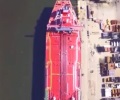
Iran is increasingly relying on its only crude loading terminal outside the Persian Gulf to sustain seaborne oil exports, as a US blockade of its ports and threats to its primary oil hub at Kharg Island compel Tehran to seek alternative export routes, according to satellite imagery analysis. The development marks one of the most tangible adaptations of Iran's export infrastructure to sustained American sanctions pressure since Washington moved to drive Iranian barrels to zero under its maximum-pressure campaign.
The shift to loading crude at Iran's Jask terminal, located in the Gulf of Oman, underscores Tehran's efforts to bypass the Strait of Hormuz — a critical choke point through which approximately one-fifth of the world's seaborne crude transits. The move comes as Iranian oil exports grow progressively more dependent on obscured trade flows to remain viable, mirroring tactics employed by other sanctioned producers such as Venezuela and Russia.
Satellite imagery from the EU's Sentinel-2 satellite shows tankers docked at Jask's offshore single point mooring (SPM) buoy at least six times between March and July. The documented sightings include at least two loadings each in June and July, one in May, and one in March. The first observed crude export loading from Jask dates back to September 2024. However, very few tankers called at the terminal in the intervening period, with none detected in January or February of this year.
The Jask terminal became operational in 2021 and is supplied by a 1,000-kilometer pipeline connecting the Goureh terminal in Bushehr province to storage facilities at Jask in Hormuzgan province. The facility's initial SPM has a loading capacity of 1 million barrels per day — well above Iran's total reported July export rate — and Iran has announced plans to expand the terminal with two additional SPMs.
Iran's crude exports averaged 687,500 b/d in July, all sourced from Iranian anchorages or other unidentified locations, according to S&P Global Commodities at Sea. The data illustrates how Iranian barrels increasingly depend on obscured trade flows, with tankers frequently disabling their location transponders to evade detection.
"Basically, the Jask oil terminal was created to bring Iran an outlet outside the Strait of Hormuz, and now they are using it," said Iman Nasseri, senior vice president for the Middle East and Asia at energy consultancy FGE NexantECA. "They loaded a couple of cargoes a couple of years ago, and then they started using it again, especially this year, post-war."
Rising Vessel Traffic
Satellite imagery also revealed a sharp increase in vessel traffic in the Gulf of Oman, with numerous tankers moored near or transiting past the Jask terminal. The Sentinel-2 satellite passes over the area every few days rather than providing continuous coverage, meaning some sightings may have involved the same vessel on different dates.
A sanctioned tanker arrived at Jask on August 2, marking the fourth vessel flagged as destined for the terminal since the United States and Israel entered into conflict with Iran in late February, according to CAS data.
The US-sanctioned Azhin was anchored off Jask on August 5, following the arrival of the Iran-flagged tanker Dore in March and Iran's Vernon tanker in May. The sanctioned Stark I arrived unladen at Jask on August 2 for possible loading, CAS data showed.
US Marines conducted a verification boarding aboard the M/T Wen Yao — now operating as Azhin — in the Gulf of Oman on July 16, according to US Central Command. CAS data indicated the vessel was destined for Jask. The incident reflects the Biden-era and subsequent administration's continued reliance on naval interdictions and Treasury sanctions designations to enforce oil export restrictions.
"The ship was allowed to proceed with its journey after US forces completed the boarding days later," US Central Command spokesperson Captain Timothy Hawkins told Platts, part of S&P Global Energy.
Export Volumes and Iranian Response
Crude exports from the Jask terminal in March were estimated at 64,600 b/d — the first volumes recorded at the site, according to CAS. Shipments continued each month through July, with additional loadings scheduled for August, according to Kpler shipping data.
Iranian media have also acknowledged the increased activity at Jask. Iran implemented an emergency plan to boost oil flows from Goureh on the Persian Gulf to Jask in response to the war, the official news agency IRNA reported on June 20, citing Nasrollah Zarei, managing director of Petroleum Engineering and Development Co. The plan was also designed to provide an alternative to Kharg Island, through which Iran typically exports the majority of its crude.
On May 19, Fars news agency reported that Iran had loaded oil from Jask on May 18, without elaborating on the shipment's broader significance.
Iran's oil ministry and the National Iranian Oil Co. declined to comment on the matter when contacted by Platts on July 28.
Source: Platts via S&P Global

