Iran's Oil Blockade Leverage Weakens as U.S. Keeps Gulf Crude Flowing
Key Takeaways
- •About 5 million barrels per day of crude, nearly all non-Iranian, moved through the Strait of Hormuz in the latest 28-day period, with an additional 2.5 million barrels per day passing through Gulf of Oman ports including Fujairah.
- •Global crude prices have remained below $100 a barrel, partly because China drew on domestic reserves and cut imports.
- •Iran's economy is under heavy strain, with a falling rial, rising inflation, gasoline shortages, and a 25-35% decline in trade according to President Masoud Pezeshkian.
- •Other Gulf economies, notably Qatar which depends almost entirely on Hormuz for LNG exports, remain exposed to shipping disruptions.
- •Iran must soon decide between returning to negotiations or escalating militarily, with the November U.S. midterm elections reducing its incentive to lower energy prices.
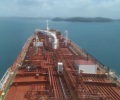
Iran's attempt to pressure global oil markets by restricting traffic through the Strait of Hormuz is losing some of its impact as the United States helps Gulf producers keep crude moving, the Wall Street Journal reported, with Tehran facing mounting economic strain six months into the conflict.
A U.S. naval blockade has prevented Iran from shipping oil from the Persian Gulf since July. Washington has, meanwhile, helped Gulf Arab states move significant volumes through Hormuz despite Iranian missile and drone attacks.
About 5 million barrels a day of crude — almost none of it Iranian — passed through the strait on average during the latest 28-day period, according to TankerTrackers.com. Another 2.5 million barrels a day moved through Gulf of Oman ports, including Fujairah in the United Arab Emirates, which sits outside the strait and is connected to Gulf oilfields by the UAE's East-West pipeline — infrastructure built precisely to bypass Hormuz and now central to keeping regional exports flowing.
Those volumes represent more than 40% of the region's prewar oil flows. Global crude prices have remained below $100 a barrel, partly aided by China drawing on domestic reserves and reducing imports — a significant buffer, since China has been a major buyer of Iranian crude in recent years.
As a result, Tehran's ability to use Hormuz — normally a transit route for roughly one-fifth of global crude supplies and a chokepoint that has long factored into oil-market risk premiums — to trigger the worldwide economic shock it anticipated has been weakened. Washington's blockade has likewise fallen short of forcing Iran to reopen the waterway or of changing the government's broader behavior.
Economic pressure inside Iran, however, is mounting. The rial is falling, inflation is rising, and gasoline shortages have become commonplace — a notable strain in a country where fuel is heavily subsidized. President Masoud Pezeshkian has said the country's trade has declined between 25% and 35%.
Other Gulf economies are also suffering, as liquefied natural gas, fertilizer and other commodity shipments remain constrained, particularly in countries without alternative sea outlets. Qatar, the world's largest LNG exporter before the conflict, has relied almost entirely on Hormuz for its seaborne gas sales, making it especially exposed to prolonged disruption.
Iran has continued attacking tankers and U.S. military facilities but has avoided larger strikes against Saudi Arabia and the UAE. The United States has, in turn, refrained from attacking major Iranian cities or the country's current leadership.
Tehran now faces a difficult choice as its earlier estimate that it could withstand about five months of severe economic pressure approaches its limit: return to negotiations, or escalate militarily to increase pressure on Washington.
The November U.S. midterm elections could complicate that calculation. Iranian leaders may see little incentive to ease restrictions and lower energy prices before voters head to the polls, leaving oil markets exposed to renewed escalation around Hormuz — a dynamic policymakers and shippers will be watching as the pressure on both sides builds.
Source: Investing.com via Hellenic Shipping News
