Iran Blacklists 45 Tankers as Strait of Hormuz Standoff Escalates
Key Takeaways
- •Iran’s new Persian Gulf Strait Authority said 45 vessels violated its Hormuz transit rules and warned of punishment including fines, detention and cargo seizure.
- •The blacklist includes ships associated with Saudi Arabia’s Bahri and ADNOC Logistics & Services, including its Navig8 Tankers subsidiary.
- •Iran said it may broaden enforcement to ships that conduct ship-to-ship transfers with any of the listed tankers.
- •Only four commodity vessels crossed the strait on Sunday, down from 13 on Saturday, and UK Maritime Trade Operations said traffic remains about 90% below pre-war levels.
- •The warning comes as Treasury Secretary Scott Bessent prepares to announce new U.S. economic measures against Tehran later on Monday.
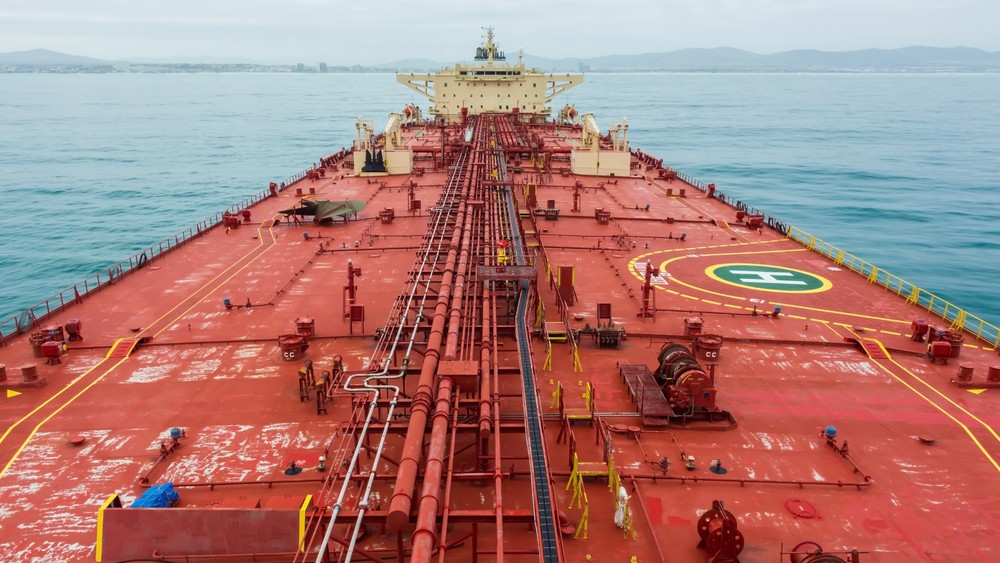
Iran has blacklisted 45 oil, LNG, LPG and product tankers operating through the Strait of Hormuz, warning of fines, detention and cargo confiscation as Tehran pushes back against Washington’s looming “economic D-Day.”
The blacklist includes vessels owned by shipping companies tied to two of the Gulf’s biggest oil producers — Saudi Arabia’s Bahri, one of the world’s largest owners of very large crude carriers, and ADNOC Logistics & Services, along with its Navig8 Tankers subsidiary — according to Reuters.
Iran’s newly created Persian Gulf Strait Authority said the 45 vessels had violated its rules governing passage through Hormuz. Tehran has previously demanded that ships obtain Iranian clearance before transiting the strait and has sought payments for security and other services. Iran’s Revolutionary Guards have seized or harassed commercial vessels in the Gulf during previous standoffs with the West, including tankers linked to sanctions disputes.
Iran is now threatening to extend the blacklist beyond the named vessels, including by targeting ships conducting ship-to-ship transfers with any of the 45 sanctioned tankers.
Traffic through the waterway has slowed sharply. Just four commodity vessels crossed the strait on Sunday, down from 13 on Saturday, according to Kpler data reported by Reuters. UK Maritime Trade Operations estimates that AIS-detected traffic remains roughly 90% below pre-war levels.
Before the Iran war, roughly 20% of global oil and LNG supply moved through Hormuz, the world’s most important oil transit chokepoint, where the inbound and outbound shipping lanes are only two miles wide each at the strait’s narrowest point. Energy Secretary Chris Wright said Friday that the seven-day average of oil leaving the strait had climbed above 8 million barrels per day. Only Saudi Arabia and the UAE operate pipelines that can bypass the strait, and their combined spare bypass capacity of roughly 3.5 million barrels per day, by U.S. Energy Information Administration estimates, covers less than half of current outflows.
Iran’s move follows its threat on Sunday to prevent any oil from leaving the Persian Gulf if Washington proceeds with a new economic offensive against Tehran. Treasury Secretary Scott Bessent is due to unveil the new measures later on Monday.
Washington’s threatened “economic D-Day” may also have fewer Iranian barrels left to target. Bloomberg reported Monday that Iranian crude shipments to Asia have already all but dried up, even before the new U.S. measures are announced. Bessent has yet to say where the next round of economic pressure will fall.
By Charles Kennedy for Oilprice.com

