India's Crude Oil Output Declines for Third Consecutive Year as Government Pushes Offshore Exploration
Key Takeaways
- •India's crude oil output fell 3% in FY 2025/26, marking the third straight annual decline driven by the natural depletion of mature fields.
- •The federal government launched an $8.8 billion National Offshore Exploration Scheme to develop deepwater basins, committing to cover up to 50% of exploratory drilling costs through FY 2030–31.
- •India relies on imports for as much as 90% of its crude oil needs and is the world's third-largest crude importer.
- •ONGC limited its annual production decline to roughly 2% by applying Enhanced Oil Recovery and Improved Oil Recovery techniques at its ageing fields.
- •Any supply impact from the offshore exploration program is not expected until later in the decade, as deepwater discoveries require several years of appraisal and development before production begins.
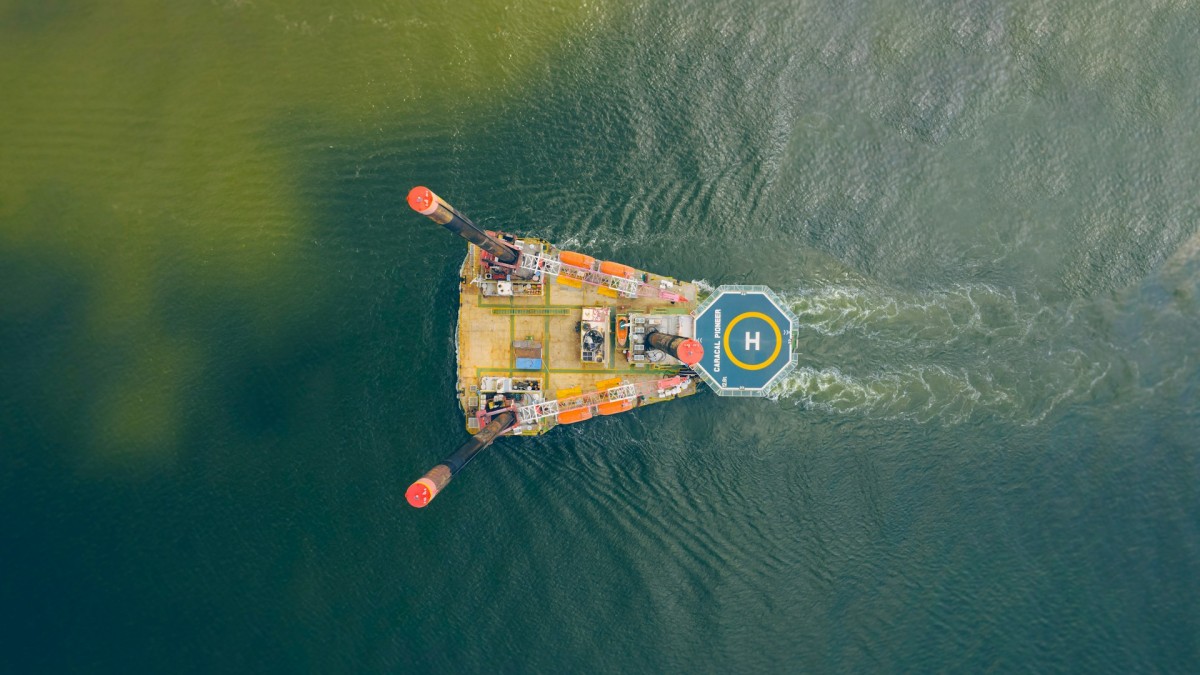
India's crude oil production has fallen for the third straight financial year, even as the federal government ramps up an ambitious push to expand offshore oil and gas exploration.
Crude output declined by 3% in the 2025/2026 fiscal year, which ended March 31, 2026, Oil and Natural Gas Minister Hardeep Singh Puri told Parliament. The government attributed the downward trend to the natural depletion of mature fields. The continued slide underscores a structural challenge: India's producing onshore and shallow-water fields, many developed decades ago, are past their peak output, and incremental recovery techniques can only partially offset geological decline.
"The domestic oil production over the last three years has shown a slight decline, primarily owing to natural decline in mature and ageing oil and gas fields," the government said in its statement.
State-owned Oil and Natural Gas Corporation (ONGC), India's largest exploration company, managed to limit its annual production decline to approximately 2% through the application of Enhanced Oil Recovery (EOR) and Improved Oil Recovery (IOR) techniques.
India currently relies on imports for as much as 90% of its crude oil needs, sourcing cargoes from the Middle East, Russia, and the United States among others. To address this heavy import dependence and bolster domestic output, the federal government recently launched the National Offshore Exploration Scheme, backed by $8.8 billion in government support through FY 2030–31. The initiative represents India's most ambitious offshore exploration effort to date.
Under the program, the government will cover up to 50% of the cost of drilling deepwater exploration wells. According to the government, this financial support is designed to reduce exploration risk, stimulate investment, and accelerate the development of India's offshore hydrocarbon potential.
India's most promising untapped hydrocarbon resources are located in deepwater and ultra-deepwater basins, including the Krishna-Godavari, Cauvery, Mahanadi, and Andaman regions. Exploration in these frontier areas demands advanced technology and substantial capital, with a single deepwater exploratory well costing an estimated $125–150 million. Even successful discoveries in deepwater basins typically require several years of appraisal and development before meaningful production begins, meaning any supply impact from the new program would materialize later in the decade.
"Recognising the high-risk, high-cost nature of such exploration, the Government is adopting a risk-sharing approach to encourage sustained investment, accelerate exploration, and unlock India's offshore hydrocarbon resources," the federal government stated.
In a parallel effort to strengthen energy security, India also plans to construct new strategic storage facilities. The country currently maintains strategic petroleum reserves at three sites — Visakhapatnam, Mangaluru, and Padur — with combined capacity for roughly 5.3 million tonnes of crude. As the world's third-largest crude oil importer, India is seeking to enhance its resilience against potential supply disruptions.
Source: OilPrice.com

