Guyana's Oil Boom Positions Nation as Key Energy Security Pillar for the Americas
Key Takeaways
- •Guyana produced 888,000 barrels of crude oil per day at the end of May 2026, making it South America's third-largest oil producer behind Brazil and Venezuela.
- •ExxonMobil's $12.7 billion Uaru project is expected to commence operations in 2026, adding 250,000 barrels per day and pushing total output beyond one million barrels daily.
- •By 2030, Guyana is projected to pump up to 1.9 million barrels of crude oil and condensate per day across eight offshore ExxonMobil developments in the Stabroek Block.
- •The United States imported an average of 261,000 barrels per day from Guyana in April 2026, representing a 51% increase from two years earlier and nearly seven times the volume imported in April 2022.
- •Guyana's oil exports are insulated from Middle East shipping disruptions because the country does not depend on the Strait of Hormuz or the Red Sea to reach key markets in the Americas and Europe.
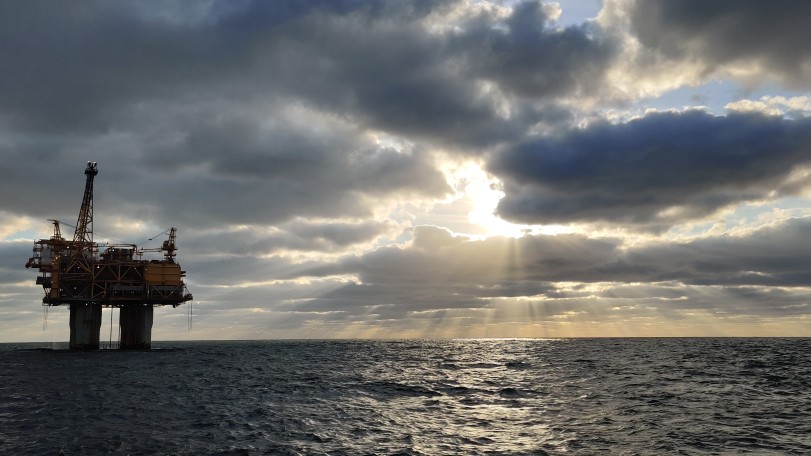
Guyana, a small South American nation of roughly one million people, has rapidly transformed into a major oil exporter. The former British colony went from its first hydrocarbon discovery to first oil in just four years and now ranks as the continent's third-largest oil producer, pumping nearly one million barrels per day. This swift expansion of Guyana's offshore oil industry comes at a critical juncture for global energy security, as escalating Middle East tensions continue to disrupt supplies worldwide.
According to official government data, Guyana lifted 888,000 barrels of crude oil per day at the end of May 2026, a 4% decline from the 924,000 barrels being extracted at the start of the month. Four floating production, storage, and offloading (FPSO) vessels are currently operating in offshore Guyana, with a fifth—the Errea Wittu—expected to commence operations during 2026 when ExxonMobil's Uaru project comes online. The $12.7 billion Uaru development will add 250,000 barrels per day to Guyana's output upon reaching capacity, pushing total production beyond one million barrels daily.
That milestone would allow Guyana to surpass Venezuela as South America's second-largest oil producer, trailing only Brazil. While Caracas has expanded its own production since January 2026, growth remains constrained by the need to rebuild Venezuela's heavily corroded petroleum infrastructure—a effort expected to require tens of billions of dollars and at least a decade. Separately, Washington's decision to intervene in Venezuela at the start of 2026 eliminated what had been the most serious threat to Guyana's petroleum boom: President Nicolas Maduro's longstanding vow to annex the mineral-rich Essequibo region.
The Essequibo, a western territory roughly the size of the U.S. state of Georgia, comprises approximately two-thirds of Guyana's land area. The territorial dispute dates back to the nineteenth century when Guyana was still a British colony. By 2024, Caracas was repeatedly threatening to invade the territory. The disputed region's waters contain the Exxon-operated 6.6-million-acre Stabroek Block, which holds an estimated 11 billion barrels of oil and encompasses Guyana's only operational oilfields.
Beyond Uaru, Exxon is developing three additional projects within the Stabroek Block. The next slated for completion is the $12.5 billion Whiptail facility, Exxon's sixth project in Guyana. Whiptail is expected to come online in late 2027, utilizing the Jaguar FPSO to lift oil from 48 production and injection wells, with a capacity of 250,000 barrels per day. Following Whiptail is the $6.8 billion Hammerhead project, designed for 150,000 barrels per day from 18 production and injection wells. Hammerhead is scheduled to begin operations in 2029.
Exxon's eighth offshore project in Guyana is the Longtail development. A final investment decision (FID) for the $12.5 billion project is anticipated in late 2026 or early 2027. Longtail will have a nameplate capacity of 1.2 billion cubic feet of natural gas and 250,000 barrels of condensate per day, with operations expected to commence in 2030. The facility represents a strategic shift by Exxon to begin lifting natural gas from offshore Guyana—a move that aligns with growing demand across South America, where countries such as Colombia are facing natural gas shortages and being forced to increase imports.
These projects underscore how rapidly Guyana's oil production is set to expand. By 2030, the country is expected to be pumping up to 1.9 million barrels of crude oil and condensate per day, solidifying its position as South America's second-largest oil producer behind Brazil—unless Venezuela manages to substantially increase its petroleum output over the same period, which appears unlikely.
The surge in Guyanese hydrocarbon output will significantly bolster energy security across the Americas. Disruptions to shipping through the Strait of Hormuz pose considerable risks to regional nations such as Colombia and Peru, both of which are increasingly reliant on imported fuel and hydrocarbons. With Middle East tensions elevated and the Strait of Hormuz subject to periodic closure, countries in Asia and Europe are intensifying their demand for oil that does not transit the vital chokepoint. As a result, demand for Guyanese crude is climbing sharply—a trend mirrored in neighboring Brazil, where China now absorbs the majority of petroleum exports. For buyers in the Western Hemisphere, Guyana's growing export stream adds another non-OPEC supply source that can move directly across the Atlantic, reducing reliance on constrained shipping lanes.
The largest buyers of Guyana's crude oil are the United States, the Netherlands, Italy, and Panama. Shipments to the U.S. have risen steadily since 2020. According to data from the U.S. Energy Information Administration (EIA), the United States imported an average of 261,000 barrels per day from Guyana during April 2026. That figure represents a 51% increase compared to the same month two years earlier and is nearly seven times the 38,000 barrels per day imported from Guyana in April 2022. While this accounts for roughly one-thirtieth of the 7.9 million barrels per day the U.S. imported during that period, volumes from Guyana are expected to continue growing as production expands.
Guyana's oil boom, still in its early stages, is reshaping the global energy landscape. Together with Brazil and Argentina, the former British colony is spearheading a major wave of non-OPEC petroleum production growth. Unlike many OPEC producers, Guyana and other South American oil producers are not dependent on the Strait of Hormuz or the Red Sea to ship oil to key export markets. This geographic advantage insulates shipments from the wars, terrorism, and geopolitical incidents that frequently roil the Middle East. As the country's project slate expands toward 2030, the timing of each new offshore startup will remain important for tracking how quickly Guyana can translate its resource base into sustained export capacity.
By Matthew Smith for Oilprice.com

