Gold Steadies Ahead of Fed Chair Warsh's Jackson Hole Speech
Key Takeaways
- •Gold's upward momentum has weakened as investors lock in profits ahead of Federal Reserve Chair Kevin Warsh's speech at the Jackson Hole symposium.
- •Lower Treasury yields, helped by increased Treasury buybacks of longer-dated bonds and comments from Treasury Secretary Scott Bessent, combined with a softer US dollar, have supported bullion by reducing the opportunity cost of holding it.
- •The core PCE price index rose 3.3% year-on-year in July, remaining well above the Federal Reserve's 2% inflation target.
- •If Warsh does not oppose easing financial conditions, gold could retest resistance near USD 4,775 and then USD 4,890 per ounce, whereas a hawkish signal raising expectations of a September rate increase would likely pressure prices lower.
- •The current pullback, following two consecutive sessions of declines from levels near USD 4,700 per ounce, remains shallow, with no convincing technical signs that the broader uptrend has ended.
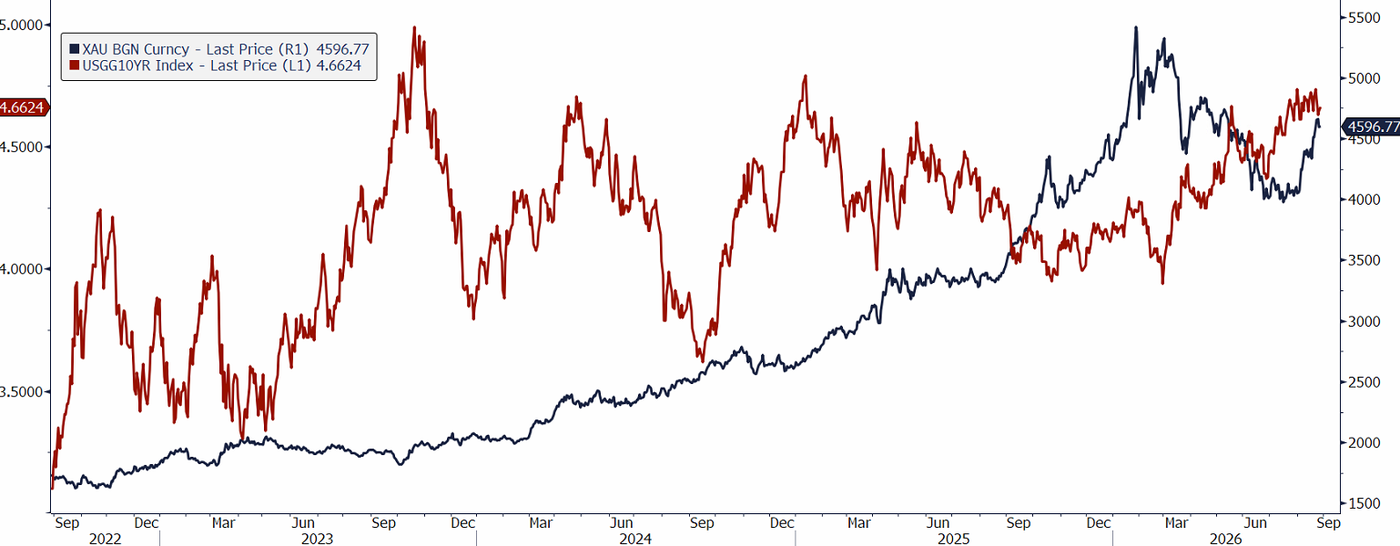
Gold's upward momentum has weakened as investors take profits ahead of a speech by Federal Reserve Chair Kevin Warsh at the Jackson Hole symposium, an event that could materially reshape expectations for US monetary policy. The annual gathering, hosted by the Federal Reserve Bank of Kansas City in Wyoming, brings together central bankers, officials and economists each August, and Fed chairs have in the past used the platform to signal meaningful shifts in the policy outlook — one reason markets tend to trade cautiously around the address. Lower Treasury yields and a softer US dollar have supported the metal by reducing the opportunity cost of holding a non-yielding asset, while the recent stabilisation in prices also reflects growing caution before the speech.
Easing financial conditions in focus
The key issue heading into the speech is the recent easing in US financial conditions. The Treasury's announcement that it will increase buybacks of longer-dated government bonds — operations in which the Treasury repurchases outstanding older securities from the market — together with verbal intervention from Treasury Secretary Scott Bessent, contributed to a decline in yields. Although the operations were officially presented as measures intended to improve market liquidity, investors also interpreted them as an attempt to contain the US government's borrowing costs.
Lower yields remain supportive for gold
Lower bond yields are generally positive for gold because the metal does not generate interest income. A decline in Treasury yields, particularly in real terms, reduces the opportunity cost of holding bullion. If this is accompanied by a weaker US dollar, gold also becomes more affordable for investors using other currencies. Gold is also widely held as a traditional store of value during periods of elevated inflation, a role that has underpinned its appeal while price growth remains well above the Fed's target.
The most important question is whether Warsh will push back against the recent easing in financial conditions. If the Fed Chair does not express concern about falling yields and effectively leaves the initiative with the Treasury, investors could scale back expectations of an imminent interest-rate increase. Such a scenario would support another leg higher in gold.
A hawkish message could trigger a correction
The alternative scenario would be a more hawkish speech. Warsh could argue that persistently easier financial conditions make it more difficult to bring inflation back towards the Fed's target. He may also signal that the central bank is prepared to react if lower yields, rising asset prices and easier access to financing generate renewed demand-side inflationary pressure.
Such remarks could be interpreted as a warning that the September Federal Reserve meeting may take a more hawkish turn. A rise in expectations of a rate increase would probably push Treasury yields higher and strengthen the dollar, putting downward pressure on gold.
The stakes are particularly high because US inflation remains persistent. The core PCE price index — the Fed's preferred gauge of inflation — rose by 3.3% year-on-year in July, remaining clearly above the Fed's 2% target. At the same time, the Treasury's efforts to lower long-term yields may partially offset the restrictive effects of monetary policy.
Technical analysis: the latest upswing remains intact
Gold broke above a descending trend line in July, providing an early signal that the previous corrective phase was losing momentum. Two strong bullish impulses followed in August, lifting the price towards USD 4,700 per ounce.
The market is now undergoing a technical correction after two consecutive sessions of declines. However, the pullback remains relatively shallow and there are still no convincing signs that the latest phase of the uptrend has ended.
The nearest resistance is located around USD 4,775 per ounce, corresponding to the highs recorded in May 2026. Above that level, the main target for buyers remains the April peak near USD 4,890. A decisive break above USD 4,890 would confirm the continuation of the broader uptrend and could open the way towards USD 5,400 per ounce. Such an extensive move would, however, probably require a pronounced depreciation of the US dollar.
Warsh's tone may determine the next move
In the short term, gold's direction will depend primarily on Warsh's assessment of the recent easing in financial conditions. A lack of opposition from the Fed Chair could allow the market to retest USD 4,775 and subsequently USD 4,890 per ounce. Conversely, a hawkish signal accompanied by a higher perceived probability of a September rate increase could encourage profit-taking and initiate a deeper correction.
Warsh's speech may therefore determine whether the current pullback remains a temporary pause within the uptrend or develops into a more substantial reversal.
Source: OANDA MarketPulse

