Gold Eyes $5,000 as UBS Backs Rally After Weak US Jobs Data Lifts Prices
Key Takeaways
- •Gold advanced 2.3% to $4,340.70 per ounce on Friday and posted a 7.2% weekly gain, while silver rose 3.1% to $63.33 with a 10% weekly surge.
- •The US economy lost 23,000 jobs in July compared to an expected gain of 85,000, causing the implied probability of a September Fed rate hike to fall from 57% to 42%.
- •UBS established a gold price target of $5,000 per ounce for the first half of 2027, anticipating that Fed rate cuts and declining real yields will strengthen investment demand.
- •The People's Bank of China purchased 20 tons of gold in July, marking its largest monthly acquisition since October 2023 and extending its buying streak to 21 consecutive months.
- •Gold prices are approximately flat year-to-date following a more than 65% increase in 2025, with market attention now shifting to the upcoming US CPI inflation report.
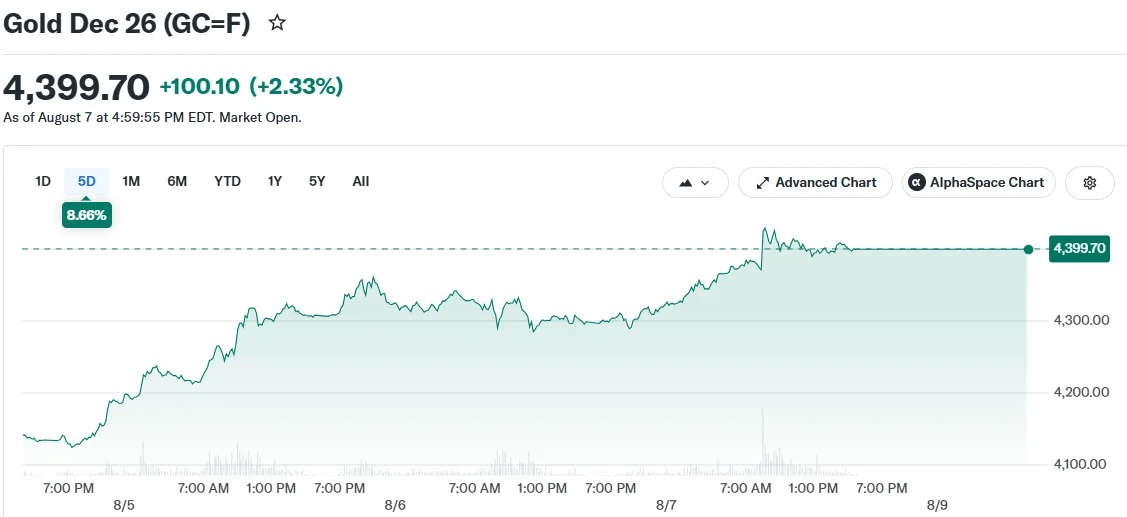
Gold prices surged on Friday after a weak US jobs report dampened expectations for a Federal Reserve rate hike, with UBS setting a long-term price target of $5,000 per ounce.
The precious metal climbed 2.3% to $4,340.70 per ounce, its highest settlement since June 17. For the week, gold gained 7.2%, marking its best weekly performance since the week ending January 23.
Silver also advanced, gaining 3.1% to $63.33 per ounce — its best settlement since June 22. Silver surged 10% for the week, its strongest showing since late February.
Weak Jobs Report Shifts Rate Expectations
The Bureau of Labor Statistics reported that the US economy lost 23,000 jobs in July, falling well short of the expected gain of 85,000 jobs.
The report also revised earlier months downward. June's job gains were cut to 20,000 from an initial estimate of 57,000, while May's figure dropped to 63,000 from 129,000.
Traders reacted quickly to the data. The probability of a September rate hike fell to 42% from 57% before the report, according to CME Group's FedWatch tool. The jobs data is among the most closely watched inputs for Fed policy decisions, as labor market weakness complicates the case for maintaining a restrictive rate stance.
UBS Sets $5,000 Price Target
UBS chief investment officer Ulrike Hoffmann-Burchardi said in a note that gold's rally has underlying support. Her team expects prices to reach $5,000 per ounce in the first half of 2027.
UBS said it expects inflation to gradually moderate, allowing the Fed to hold rates steady this year before cutting in 2027. Lower rate expectations would reduce real yields, weigh on the US dollar, and boost investment demand for gold. Gold traditionally moves inversely to real yields, as the metal offers no interest income and becomes more attractive when competing yield-bearing assets lose their edge.
The bank said price dips toward $4,000 per ounce could present opportunities to build long-term positions.
Near-term risks include rising oil prices or markets pricing in a more aggressive Fed rate path. Either scenario could make bonds more attractive and place downward pressure on gold prices.
Central Banks and Chinese Buyers Fuel Demand
Central bank buying has provided steady support for gold. The People's Bank of China has purchased gold for 21 consecutive months. In July, the PBOC bought 20 tons of gold, its largest monthly increase since October 2023, according to the World Gold Council. The PBOC's accumulation is part of a broader pattern of official-sector gold demand, as central banks across emerging markets have diversified reserves away from the dollar in recent years.
Chinese investors and exchange-traded fund inflows have also contributed to the recent price rise. The SPDR Gold Shares ETF and related gold funds saw continued inflows alongside the price move.
Market Outlook
Gold prices are roughly flat year to date, after jumping more than 65% in 2025.
Markets will now turn attention to next week's US CPI inflation report, a key barometer the Fed uses alongside employment data to assess whether price pressures remain on track. Oil prices are also being closely monitored, with no deal yet reached between the US and Iran following the conflict that began in late February.

