The Gold-Silver Ratio Remains a Relevant Indicator Today, Alongside Other Silver News
Key Takeaways
- •The study found the gold-silver ratio remains a useful technical indicator for forecasting the silver market's direction, with a long-run mean of roughly 60-1.
- •The gold-silver ratio currently stands at around 67-1, and the Silver Institute still expects it to revert to the mean of about 60 to 1.
- •Historically, the ratio hit 30-1 in 2011 after exceeding 80-1 during the Great Recession, and set a record of 123-1 in 2020 before falling back to around 60-1.
- •The report attributes the recent elevated ratio to official-sector gold demand driving gold prices higher.
- •The Silver Institute report also highlighted silver technology advances, including silver nanoparticles for safer ethylene separation, nanosilver sensors for bedside drug dosing, nanosilver fluoride for stain-free cavity prevention, and more durable silver-based wearable sensors.
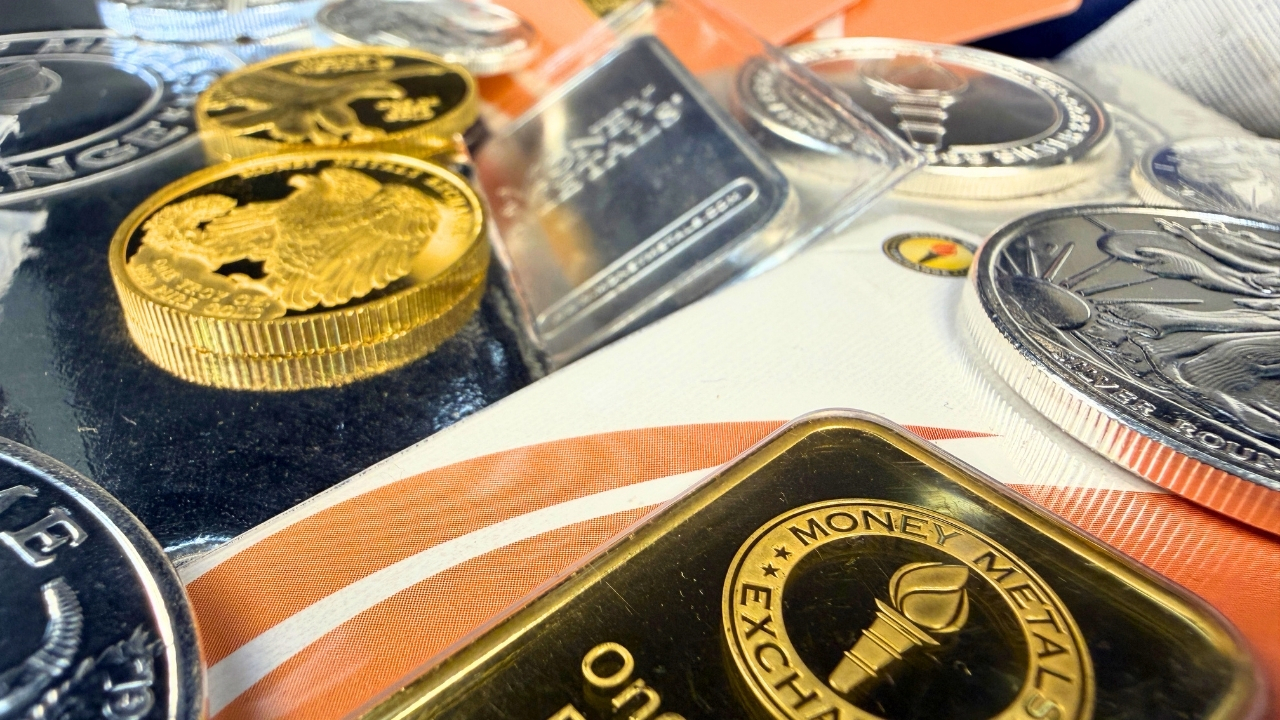
Although some analysts dismiss it as a relic of the past, a recent study found that the gold-silver ratio remains a relevant technical indicator and continues to be useful for forecasting the trajectory of the silver market.
The study appeared in the latest edition of the Silver Institute's Silver News report, which also covered recent advances in silver technology and developments in the silver market. The gold-silver ratio is one of the oldest analytical tools in precious metals, dating back centuries to when both metals circulated as money, and it remains one of the most widely watched yardsticks for comparing the relative value of the two metals.
What the Gold-Silver Ratio Shows
The gold-silver ratio measures how many ounces of silver it takes to buy one ounce of gold at the current spot prices of both metals — in effect, it expresses the price of gold in ounces of silver. Traders and analysts have long used it as a relative-value gauge: because gold is generally the steadier of the two metals, sharp moves in the ratio typically reflect volatility in silver, which tends to be amplified by its dual role as both a monetary metal and an industrial commodity.
According to the study, the ratio tends to revert to a mean of roughly 60-1. When it climbs well above its historical average, that signals silver is underpriced relative to gold, and there is a strong possibility that silver will go on a bull run to close the gap. Conversely, when the ratio drops significantly below 60-1, it tends to revert to the mean through either a silver selloff or a surge in the gold price.
The gold-silver ratio currently stands at around 67-1.
According to the Silver Institute: "The tendency for the gold-silver ratio cyclically to rise above and fall below its long-run equilibrium has not changed. Therefore, even if in future the outcomes will be skewed higher by the structural change supported by heavy official sector gold demand, dips well below equilibrium will also occur."
The data show that when the ratio rises roughly 20 percent above its mean, it eventually moves back — often overshooting the average very quickly in the process.
Historical Swings
The 2011 episode illustrates the pattern. The ratio fell to 30-1 that year after climbing above 80-1 during the money creation of the Great Recession that followed the 2008 financial crisis.
Then in 2020, as COVID hysteria gripped the world, the gold-silver ratio set a record of 123-1. It subsequently plunged to around 60-1 as central banks worldwide ramped up money creation to cope with government-mandated economic shutdowns.
According to the Silver Institute, the ratio of above-ground gold to silver bullion stocks moves in tandem with the ratio of gold-to-silver investment demand.
"The report noted that recently the higher gold price has been powered by official-sector net sales or purchases that have pushed the gold-silver ratio above the long-run 60-1 ratio. Nonetheless, the ratio is still expected to revert to the mean of about 60 to 1," the institute stated.
Silver Technology Advances
The Silver Institute's report also highlighted several technological developments involving silver. These matter beyond the metals market because silver's unmatched electrical conductivity and antimicrobial properties make it a staple input across electronics, healthcare, and industrial processes, sustaining demand even when investment interest fluctuates.
Safer ethylene separation. In a process used to separate ethylene from propane, silver has replaced silver. The old process carried a risk of explosion. Researchers at Hanyang University in South Korea found that silver ions can be replaced with metallic silver nanoparticles, a form of silver that is more stable and less likely to react with chemicals such as acetylene, thereby lowering the risk of explosion.
Personalized drug dosing. Doctors have discovered that nanosilver can help measure the correct medication dosages for individual patients. Nanosilver is often used in biological sensors because it can naturally boost the weak reflected light-wave signals coming from drug molecules. These signals carry unique signatures that tell laser-powered readers how much and what kind of drug is present. Beyond determining a drug's optimal dosages and possible side effects, the approach replaces slow laboratory work: the light-based method is not only fast but can be performed at a patient's bedside.
Cavity prevention without stains. Applying Silver Diamine Fluoride (SDF) to children's teeth has been shown to prevent cavities, but it can leave dark stains. New research suggests that "nanosilver fluoride" (NSF) may be just as effective without staining. According to a report in the journal BMC Oral Health: "Incorporating silver nanoparticles, NSF, retains the advantageous preventive; this method often leaves dark stains on youngsters' teeth."
The smell test. Can you smell silver? No — pure silver and sterling silver have no odor. However, sniffing a silver object can indicate whether it is pure. "If you smell metal, like copper, which has a distinct odor, then the item in question is not pure silver. Zinc, brass, and steel have their own particular smells. Even if an item has a thin layer of silver coating, the underlying metal will usually still give off a metallic scent, suggesting that it is not pure silver."
Wearable sensors. Engineers from the College of Design and Engineering at the National University of Singapore have developed technology that could lead to more flexible and durable wearable sensors. The soft, stretchable substrate repairs itself, firmly grips metal conductors, and can be remolded or broken down after use. In tests, silver films used for electrodes that pick up heart and muscle signals adhered three times more strongly to their substrate than other substances used to conduct electricity.
Silver in the sun. The sun may contain 55 percent more silver than astronomers previously believed. Scientists cannot collect samples from the sun to measure its silver content, but they can estimate the sun's composition by studying the light waves it emits. Every element has a unique wavelength, yet researchers could not reconcile the higher silver levels they observed in material that fell from space. According to Swedish researchers using a supercomputer, the sun's rays — unbeknownst to astronomers — had distorted the specific light waves that indicate how much silver is present.
About the author: Mike Maharrey
