Gold Price Reaches $4,255 as US-Iran Diplomatic Progress Eases Fed Rate Hike Expectations
Key Takeaways
- •Gold prices climbed to roughly $4,255 per ounce on Thursday, recording the largest single-day gain since February and hitting a six-week high.
- •Iran indicated that an agreement with Oman on a Strait of Hormuz shipping route was being finalized, and US officials including Secretary of State Rubio and Treasury Secretary Bessent confirmed diplomatic progress.
- •Reduced geopolitical tensions pushed crude oil prices lower and led markets to scale back expectations for aggressive Federal Reserve rate hikes, bolstering gold demand.
- •Gold's market capitalization expanded by approximately $1.3 trillion to around $30 trillion during the session, with the metal having gained more than 24% over the past year.
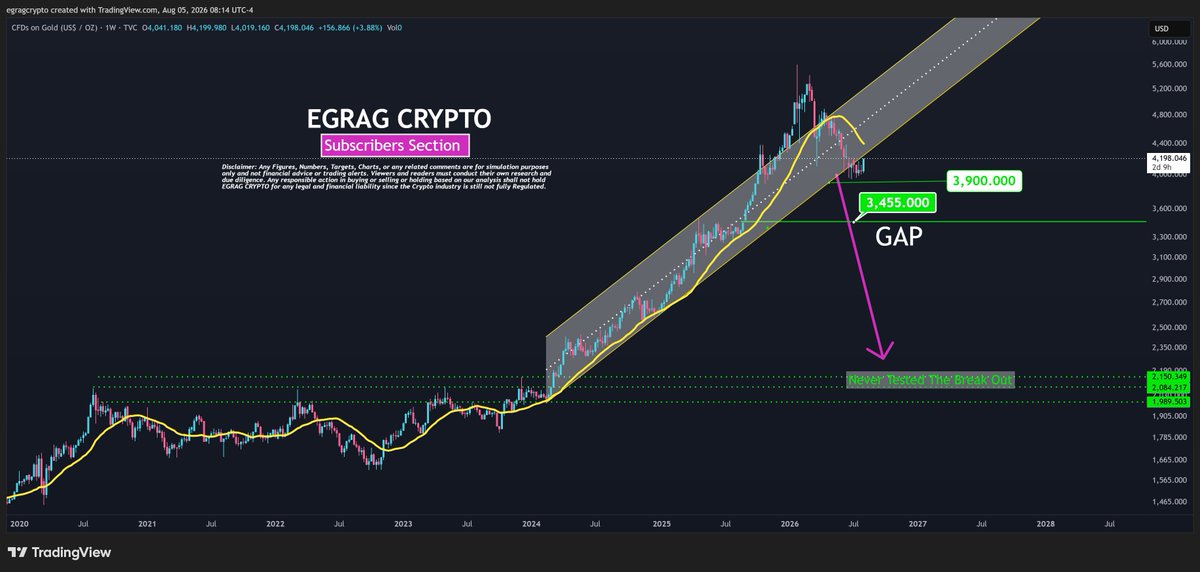
- •Independent analyst EGRAG CRYPTO outlined two scenarios for gold: a recovery above the 21-day exponential moving average could push prices toward $4,800, while failure to reclaim that level could see declines toward $3,900 and potentially $3,455.
Gold prices surged to approximately $4,255 per ounce during Thursday's Asian session, posting their strongest daily advance since February and reaching a six-week high. The rally came as renewed optimism surrounding US-Iran negotiations alleviated inflation concerns and diminished expectations for further Federal Reserve interest rate increases.
Investors reacted to reports that discussions aimed at reopening the Strait of Hormuz were advancing, driving demand for the precious metal amid shifting monetary policy outlook. The Strait of Hormuz is one of the world's most critical energy transit chokepoints, with roughly a fifth of global oil consumption routinely passing through it, making any disruption or resolution there a key variable for energy costs and inflation expectations worldwide.
Strait of Hormuz Negotiations Drive Rally
Gold extended its gains after Iran indicated that an agreement with Oman on a shipping route through the Strait of Hormuz was being "finalised." Iranian Foreign Ministry spokesperson Esmaeil Baghaei cautioned that risks from the United States and Israel still persisted for vessels operating in the region.
US President Donald Trump stated that "a deal could be reached" as diplomatic efforts continued. US Secretary of State Marco Rubio and Treasury Secretary Scott Bessent confirmed that negotiations had made progress, reinforcing expectations that talks would continue.
Reduced geopolitical tension weighed on crude oil prices and alleviated concerns about elevated energy costs. Markets responded by dialing back expectations for aggressive Federal Reserve policy tightening later this year.
Fed Policy and Labor Data in Focus
Softer oil prices dampened inflation expectations, prompting traders to pare back forecasts for future rate increases. Market pricing now signals fewer anticipated hikes compared with prior expectations, offering additional support for gold, which tends to benefit from a lower-interest-rate environment. Gold's appeal as a non-yielding asset typically strengthens when real interest rates fall, as the opportunity cost of holding the metal declines.
Attention has shifted to the US July employment report scheduled for release on Friday. Economists project Nonfarm Payrolls to rise by approximately 80,000 jobs, with the unemployment rate forecast to hold at 4.2%. A stronger-than-expected labor report could bolster the US dollar and dampen gold demand, while a weaker reading could reinforce expectations that the Federal Reserve will maintain a less restrictive monetary policy stance.
The US Dollar Index traded near 99.70 during the session, lending support to dollar-denominated commodities including gold.
Gold Market Capitalization Expands Amid Technical Milestones
Gold's rally boosted its market capitalization by roughly $1.3 trillion to approximately $30 trillion during the session. The metal has appreciated more than 24% over the past year, having traded near $3,376 an ounce at the same point in 2025. Sustained central bank gold purchases, particularly from emerging-market economies diversifying reserves away from the dollar, have been a structural driver of demand alongside geopolitical and monetary policy factors.
Some market analysts identified the latest breakout as a significant technical development. Independent analyst EGRAG CRYPTO noted that gold had broken below its long-term rising channel and outlined two potential scenarios (Source: X).
According to the analyst, reclaiming the previous trend and closing above the 21-day exponential moving average could pave the way for another advance toward "$4,800." Conversely, failure to recover that level could drive prices toward "$3,900" before testing the "$3,455 gap."

