Gold's West-to-East Shift in One Picture: Asian Demand Hits Records as U.S. Buying Slumps
Key Takeaways
- •Global retail gold purchases reached a 12-year high of 1,374.1 tonnes in 2025, with more than half of the demand coming from China and India combined.
- •Chinese year-to-date bar and coin demand climbed to a record 393 tonnes, with spending of $59 billion already exceeding every full year in the World Gold Council's data series.
- •U.S. bar and coin demand dropped 40 percent year-on-year to 8 tonnes in the third quarter, marking the weakest quarter for American retail gold purchases since the fourth quarter of 2019.
- •Hong Kong launched a gold settlement system last summer to challenge Western dominance of the trade, while the Monetary Authority of Singapore announced plans this week for a vaulting service to hold bullion for foreign central banks.
- •Intraday analysis showed gold rose 12.9 percent during Asian trading hours in the first half of the year while falling 15 percent during North American trading hours, leading the World Gold Council to describe Asia as the engine of price support.
By Mike Maharrey | Originally published on GoldSeek
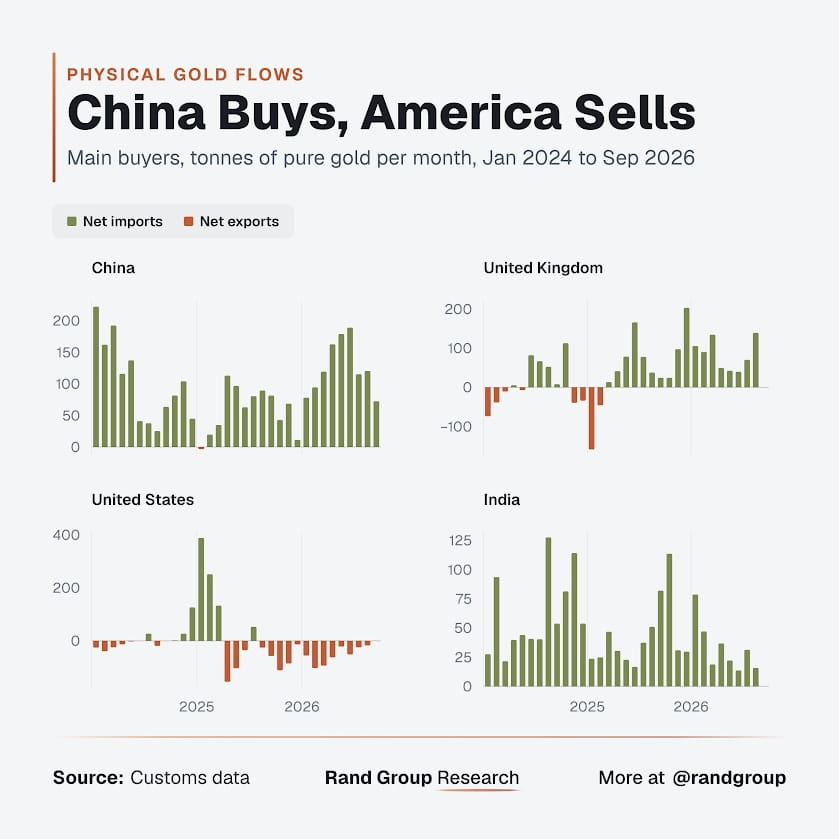
Mike Maharrey has written extensively about gold moving from Western hands into Eastern ones, and a single chart tells the story. The picture needs little explanation: over the past two years, buyers across Asia have been absorbing the metal that investors in the West, particularly Americans, have been selling.
The shift is playing out in market infrastructure as well. Over the last couple of years, Hong Kong and Singapore have built out systems to support the growing gold trade — the settlement and storage plumbing that anchors where bullion sits and where trades are cleared. Last summer, Hong Kong launched a gold settlement system, hoping to challenge Western dominance of the gold trade, long centered on hubs such as London. And just this week, the Monetary Authority of Singapore announced plans for a vaulting service to hold bullion for foreign central banks. Judging by global gold flows, these efforts appear to be paying off.
Official demand data point in the same direction: Asian and Indian investors continue to buy gold even as Westerners, particularly Americans, sell.
Chinese bar and coin demand rose 7 percent year-on-year in the third quarter to 79 tonnes. Year-to-date demand of 393 tonnes stands as the highest on record, 11 percent above the 2013 peak. In value terms, Chinese physical demand is even more striking: year-to-date spending of $59 billion already exceeds every full year in the World Gold Council's data series, and third-quarter spending alone surged 32 percent to $11 billion.
Indian demand had been muted by government efforts to limit imports, including a significant increase in import duty. Even so, buying picked up early in the fall festival season — a stretch spanning Diwali and the wedding season, when gifting gold is a longstanding tradition in India — despite higher prices.
The picture on the Western side of the trade is starkly different. U.S. bar and coin demand fell 40 percent year-on-year to 8 tonnes, the weakest quarter for coin and bar demand since the fourth quarter of 2019. The pattern is not new. Even during last year's spectacular gold bull market, American investors generally stayed on the sidelines until late in the year.
Globally, physical gold investment surged in 2025, with coin and bar demand hitting a 12-year high of 1,374.1 tonnes. Bar and coin is the World Gold Council's gauge of retail purchases of physical metal, tracked separately from jewelry, central bank buying and ETF flows. More than half of global coin and bar demand came from just two countries: China and India.
The East-West split became even starker in the first half of last year. Chinese bar and coin demand grew 44 percent year-on-year, as investors picked up 115 tonnes of gold bars and coins in the second quarter alone, the strongest first half for physical gold buying since 2013. Americans, by contrast, kept selling. Year-on-year bar and coin purchases plummeted 53 percent in the first half, and second-quarter demand of just 9 tonnes marked the lowest quarterly level since the fourth quarter of 2019.
Intraday trading data reveal the same phenomenon. Through the first six months of the year, gold rose 12.9 percent during Asian trading hours. During North American trading hours, the yellow metal fell 15 percent. European sessions split the difference, with gold slipping a modest 1.3 percent.
The World Gold Council called Asia "the engine of price support."
"Interestingly, intraday analysis suggests that the bulk of gold's movements have been linked to activity during Asian and U.S. trading hours. Many of the pullbacks occurred during US hours and, conversely, gold's rebounds generally occurred during Asian hours."
Concrete signposts to watch include the rollout of Singapore's central-bank vaulting service, the uptake of Hong Kong's settlement system, and the World Gold Council's quarterly demand reports, which will show whether the East-led buying pattern holds.
It will be interesting to see what happens when Western investors figure out what the Asians see in gold.
This article was originally published on GoldSeek.

