Global Refining Crunch Could Keep Fuel Prices High Into 2027
Key Takeaways
- •Global refinery outages in the Middle East and Russia are expected to keep fuel prices high into next year because other regions cannot offset the lost supply.
- •IEA data shows July refinery crude throughput at 80.9 million bpd, nearly 5 million bpd below year-ago levels.
- •Phillips 66 executive Brian Mandell said about 7 million bpd of refining capacity is down in Asia and the Middle East and another 1.4 million bpd in Russia, with repairs likely to take a long time.
- •Ukrainian strikes on Russian refineries prompted Russia to ban diesel exports, while Iranian and Houthi attacks on Persian Gulf facilities cut regional supply.
- •Prolonged tightness in diesel markets is expected to feed into higher freight and logistics costs for the global economy.
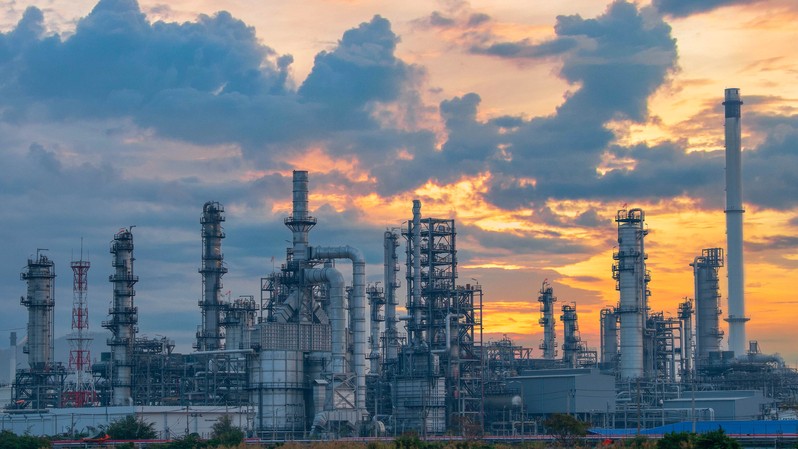
Damaged refineries in the Middle East and Russia, combined with insufficient refining capacity elsewhere to offset the supply disruptions, will likely keep global fuel prices elevated into next year, analysts say.
The Middle East conflict and the Iranian and Houthi strikes on Persian Gulf facilities have slashed fuel supply and deliveries from the region, while intensified Ukrainian strikes on Russian refineries have prompted a ban on diesel exports out of Russia.
As a result, global fuel markets are tightening — also because capacity elsewhere, including in the United States, cannot offset the loss of refined product flows. The squeeze comes at a time when refining capacity in developed markets has been shrinking rather than growing: several refineries in the United States and Europe have shut in recent years, and new large-scale capacity additions have been concentrated in Asia and the Middle East — the very regions now hit by outages.
"Refining capacity will not come back so soon," Nikhil Agarwal, managing director of Globestar Energy, said at Energy Trading Week Middle East in Dubai, as carried by The National.
"Bapco is gone, the GTL Qatar is gone, Russian refineries are gone. It will take years to build them back and bring them on board," the expert said.
"Crude is surplus globally, but there is no refining capacity available to refine it and bring it to market," Agarwal said, echoing other experts who say that the fuel — especially diesel — markets show the real stress in the oil complex. Diesel is the workhorse fuel of the global economy, powering trucks, ships, farm machinery and industrial equipment, so prolonged tightness in middle distillates tends to feed into freight and logistics costs.
Refinery crude throughputs in July remained nearly 5 million barrels per day (bpd) below year-ago levels, at 80.9 million bpd, "with capacity elsewhere in the system currently unable to offset product supply bottlenecks," the International Energy Agency (IEA) said in its monthly report in August.
Refining fundamentals are very tight and getting tighter with the issues in Russia and the Middle East, Brian Mandell, Executive Vice President of Marketing & Commercial at Phillips 66, said on the Q2 earnings call in early August.
"We have 7 million barrels a day of refineries down in Asia and the Middle East and another 1.4 million barrels down in Russia. And the refineries, depending on the damage and the ability to get spare parts, are going to take a good long time to get back online," the executive added.
What to watch in the coming months is the pace of refinery repairs — which depends on damage assessments and access to spare parts, as Mandell noted — along with monthly IEA throughput data and any easing of Russia's diesel export restrictions, all of which will determine how quickly the product bottleneck loosens.
By Tsvetana Paraskova for Oilprice.com
