Fort Knox Gold Audit Remains in Question After Bessent Says Holdings Are Accounted For
Key Takeaways
- •Scott Bessent said he has not visited Fort Knox, but that staff members have and that all gold is present and accounted for.
- •Critics argue Fort Knox has not had a meaningful public audit since at least the 1970s.
- •The article says a 1974 government opening of one vault compartment was presented as an audit, but critics view it as insufficient verification.
- •Critics say a real audit would require counting every bar, matching serial numbers, testing purity, and publishing the results.
- •The Treasury says it later inventoried compartments and installed tamper-evident seals, but critics say those steps did not meet transparency or accounting standards.
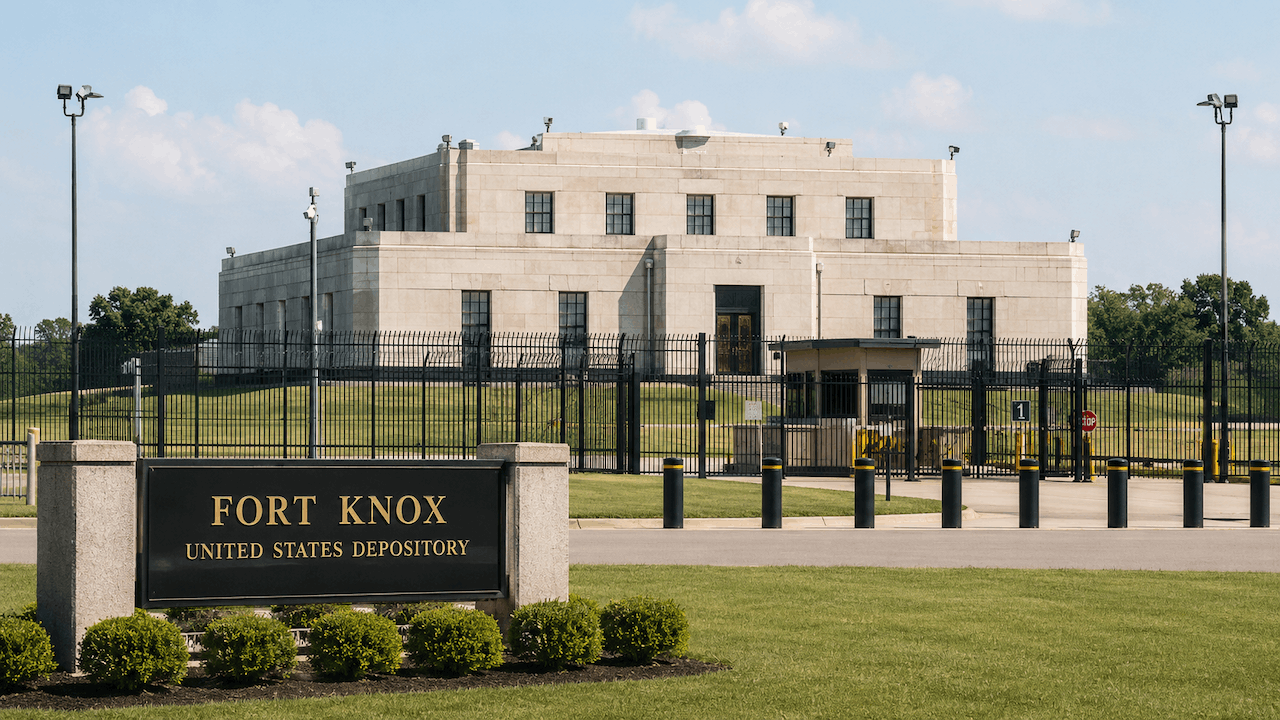
Fort Knox Gold Audit Remains in Question After Bessent Says Holdings Are Accounted For
Mike Maharrey
Treasury Secretary Scott Bessent has said the gold at Fort Knox is present and accounted for, but questions about a full, independent audit of the U.S. gold reserve remain unresolved.
In an interview on Fox News, host Jesse Watters asked Bessent directly, “Have you visited Fort Knox?” Bessent replied, “I haven't. People on my staff have. The treasurer has been to Fort Knox, and I'm happy to say all gold is present and accounted for.”
That assurance has not satisfied critics who argue that Fort Knox has not undergone a meaningful external audit in decades, leaving a basic question of verification unresolved even as the reserve remains a symbolic store of U.S. monetary history.
Audits are intended to do more than confirm that assets exist. They also help catch honest mistakes and provide assurance that those responsible for custody and reporting are acting properly. In that view, any institution controlling valuable assets should be subject to regular, rigorous external review.
No Real Audit
Supporters of the current system often say the gold has already been audited. Critics dispute that claim, saying there has been no meaningful public audit since at least the 1970s.
They point to a 1974 government event that opened just one of the 15 Fort Knox vault compartments to politicians and reporters. The Treasury presented the event as an audit, but critics say it was closer to a publicity stunt than a real accounting review.
Matthew Cortez described the event this way:
For about two hours, multiple film and camera crews and smiling politicians filed into a hallway for the chance to hold a gold bar and peek into a room full of gold stacked up to the ceiling.
On their way out, each visitor had to pass by a metal inspector to ensure that none of the gold bars were being snuck out in the process.
Notably, throughout the visit, none of the bars being passed around were matched to a serial number, assayed or tested for purity, or even verified as part of the United States’ holdings. (Foreign countries have at times stored gold there as well.)
Critics say a proper audit would require every bar to be counted and inspected, serial numbers to be matched against records, and the gold to be assayed to verify weight and purity. They also say the results should be published for public inspection.
The U.S. Treasury has said that after the 1974 event it carried out a multi-year process of opening and inventorying vault compartments and then installing new tamper-evident seals on each compartment door. But critics argue those reviews did not meet basic transparency or accounting standards.
They also say that some reports have since gone missing, there is no public record of comprehensive assaying, weighing, or transaction history, and there is evidence that seals have been broken over the years, bars have been moved for unknown reasons, and seals have been re-affixed without a fresh audit. According to that view, later annual reviews of seal schedules merely obscured earlier discrepancies.
In short, critics say the Treasury’s handling of the U.S. gold reserve includes audit practices that would not be acceptable at a properly run private depository, which is why Bessent’s assurance has done little to settle the broader dispute over transparency.
If You Have Nothing to Hide
Maharrey also argued that opposition to a Fort Knox audit is itself suspicious. He said that whenever people call for a review of the gold, government defenders respond by insisting it is unnecessary and by attacking the idea as unreasonable.
He said that if an audit were rejected for practical reasons such as cost, that would be understandable, but that anger over the mere suggestion of verification is not.
In his view, a depository that had nothing to hide should welcome an audit, especially if the goal were to reassure the public. He said the only reason to resist such a review would be to conceal something.
Maharrey concluded by asking whether the public should simply accept Bessent’s word or whether someone would finally move forward with a proper audit of the gold at Fort Knox.

