Ethanol Emerges as a Marine Fuel with Big-Name Backing
Key Takeaways
- •Shandong Shipping's May order, underwritten by a long-term charter to Vale, is the world's first for ethanol-fuelled two-stroke engines.
- •Brazilian 'second growth' corn ethanol became the first biofuel to have greenhouse gas emission factors approved in the IMO's Lifecycle Analysis Guidelines, at 20.8gCO2eq/MJ — more than four times lower than VLSFO.
- •Brazil and the US together account for roughly four-fifths of global ethanol supply, and the fuel is priced nearly competitively with conventional ship fuels.
- •FuelEU Maritime, in force since January 2025, currently does not credit emissions reductions from biofuels made from food crops, unlike the EU Emissions Trading System.
- •Maersk has ordered more than 20 methanol dual-fuel container ships since 2023, and WinGD's existing methanol engines can be prepared for ethanol use with a very simple modification.
Shipowners are placing their first investments in ethanol-fuelled ships, and engine technology is well prepared for the growing uptake of the biofuel, writes Andrea Lazzaro, head of business intelligence at WinGD.
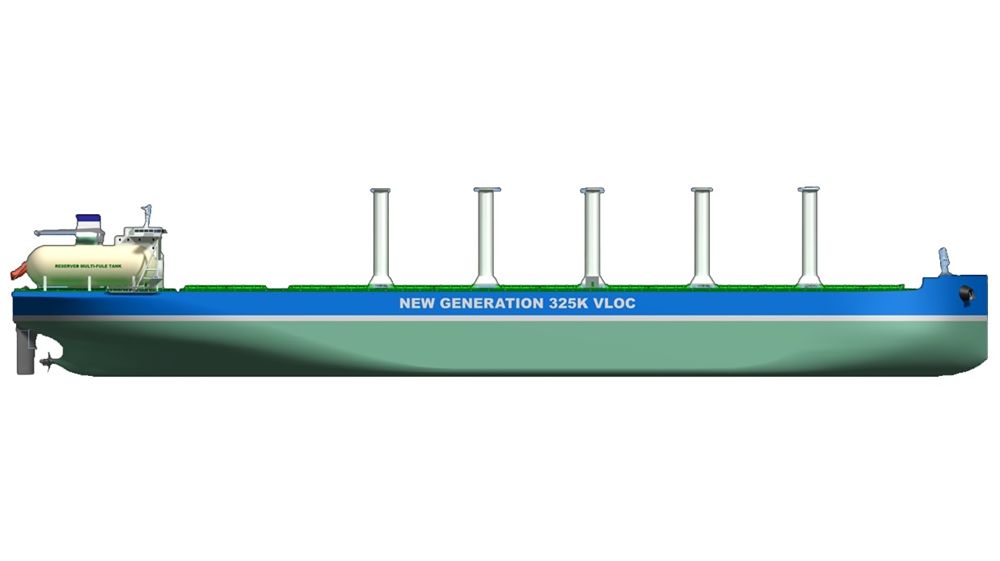
When one of the world's biggest dry bulk charterers backs a new alternative fuel type, the industry takes notice — all the more so in a sector that accounts for roughly 3% of global greenhouse gas emissions and is working towards the IMO's revised goal of net-zero by or around 2050. But to anyone paying attention over the past decade, the emergence of ethanol as a viable marine fuel will have come as no surprise — even before Shandong Shipping's order in May for the world's first ethanol-fuelled two-stroke engines, underwritten by a long-term charter to global mining giant Vale.
Although WinGD commercialised its methanol engine first, it was another alcohol fuel — ethanol — that was the subject of the company's first tests back in 2014. The two fuels share many combustion and fuel-handling characteristics, so while the X-DF-M methanol engine was the first to be ordered by shipowners, there was little doubt that adapting the same technology for use with ethanol would be eminently achievable — at the right time.
For Vale, that time is now. It is perhaps a fortunate coincidence that, the month before the engines were ordered, the IMO's Marine Environmental Protection Committee approved the inclusion of greenhouse gas emission factors for Brazilian 'second growth' corn ethanol in its Lifecycle Analysis Guidelines for Marine Fuels (LCA) — the first biofuel to achieve this milestone.
The approval means that any vessel using the fuel will benefit from its low emissions factor of 20.8gCO2eq/MJ under any future IMO regime — more than four times lower than VLSFO and a significant step towards net-zero. Vale has not yet spoken about its fuel plans for the Newcastlemax vessels, but as the ships will deliver iron ore from Brazil to China, Brazilian-produced ethanol is one candidate.
It is not only the emissions profile that makes ethanol an attractive choice. Large-scale production, together with slower-than-expected uptake in the automotive market, means the fuel is already widely available in Brazil, the US and other markets — the two countries together account for roughly four-fifths of global ethanol supply — and at a price that is nearly competitive with conventional ship fuels, and will be much more so once carbon pricing takes effect.
Already available — and affordable
Just as Vale's case depends on the specific details of the intended trade, fuel availability and pricing, so will other cases for using ethanol. Operators whose routes touch Brazil, the US or any other markets with large-scale ethanol production would do well to consider the fuel. Each case, however, will also depend on how the specific source of ethanol is certified under the regulatory regime to which the vessel will be exposed.
The IMO's recognition is welcome, but one challenge for ethanol suppliers and potential maritime users will be certification under FuelEU Maritime. Unlike the EU Emissions Trading System, which began phasing in shipping emissions at the start of 2024, FuelEU Maritime — in force since January 2025 — currently does not credit emissions reductions from the use of any biofuel made from food crops or the byproducts of food production. Fuel suppliers are petitioning against this, arguing that modern techniques mean ethanol production does not compromise food production or food security.
As only around 20% of the global merchant fleet is exposed to European emissions legislation, ethanol's status under FuelEU Maritime will not concern all ship operators. Until the issue is resolved, ships touching ports in the European Economic Area will be able to benefit from reduced emissions under the EU Emissions Trading System, but not under FuelEU Maritime.
Even where ethanol is not expected to be the main fuel, there are other cases where it may be used as part of a cost-effective decarbonisation plan. One of the most significant of these — given that WinGD engines can run on a blend of alcohol fuels — is the combined use of ethanol and green methanol.
Green methanol is made from renewable electricity and captured carbon, so it can qualify as a truly zero or near-zero emissions (ZNZ) fuel, with a GHG intensity below the 14gCO2eq/MJ threshold in the IMO's draft Net Zero Framework, which is scheduled to be put to a vote at an extraordinary IMO session later this year. At present, however, green methanol is not a feasible solution for most ships: it is not widely available while many projects remain under development, and where it is available it is vastly more expensive than other fuels.
Balancing the cost of green fuel
For owners that intend to opt for decarbonisation via green methanol — but face either limited supply or high costs initially — using ethanol through the same engine is a potentially useful strategy. With fuel costs that will quickly undercut conventional fuel under any carbon pricing regime, ethanol can already deliver steep reductions in emissions. As carbon pricing regimes tighten beyond the GHG savings that currently approved forms of ethanol can offer, using more green methanol will allow operators to stay in compliance — and by that stage the penalties for exceeding GHG intensity limits will likely be higher than any additional cost paid for green methanol.
The latest Maersk vessel to feature a WinGD methanol-fuelled X-DF-M engine is the 9,000 TEU Terma Maersk, the newest of more than 20 methanol dual-fuel container ships the carrier has ordered since it began the programme with the delivery of the pioneering Laura Maersk in 2023. While the engine is intended for methanol use, its inherent ethanol compatibility offers Maersk a technology platform that is both ready for zero or near-zero emissions fuels and adaptable to whatever realities emerge in the marine fuels market. Thanks to the similar properties of the two alcohol fuels, previously installed methanol engines can also be prepared for ethanol use with a very simple modification.
Ethanol's evolution as a marine fuel will depend on many factors, not least the future shape of global regulations and accounting around GHG emissions. But with widespread availability at competitive prices already in some markets, there is little doubt that — after the initial moves from Vale and Maersk — owners and charterers will be paying even closer attention to ethanol in the future.
Source: Splash247

