In-Line 30 Bcf Storage Injection Leaves Natural Gas Futures Adrift
Key Takeaways
- •The EIA reported a 30 Bcf natural gas storage injection for the week ended August 28, in line with market expectations.
- •Total working gas in storage now stands 5.2% above the five-year average, reflecting ample production and steady injections.
- •The East and Midwest regions posted the largest storage injections for the week.
- •Natural gas futures drifted lower after the release, as the unsurprising print gave traders little new information with prices hovering near $3.
- •Escalating US-Iran hostilities have raised concerns about Strait of Hormuz disruptions and could increase demand for American LNG exports into winter.
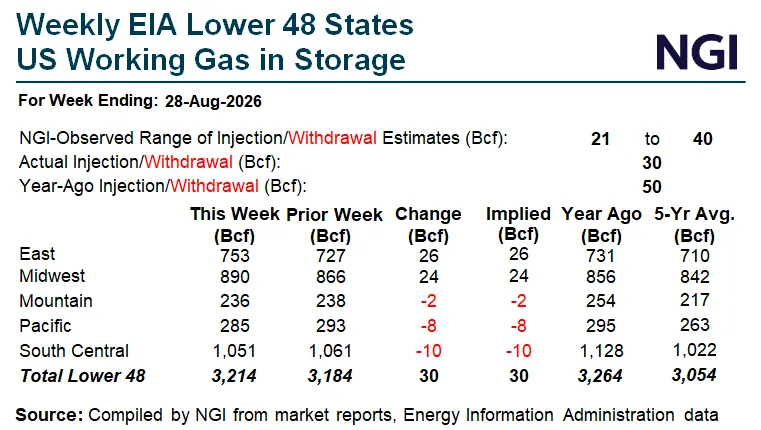
US utilities and other operators injected 30 Bcf of natural gas into underground storage during the week ended August 28, the US Energy Information Administration (EIA) reported on Thursday. The build matched market expectations and, at least initially, took some air out of natural gas futures.
At a Glance
- EIA prints 30 Bcf storage build
- East and Midwest lead by region
- Storage stands 5.2% above the five-year average
The weekly EIA storage report, published each Thursday at 10:30 a.m. ET, is among the most closely watched data points in the natural gas market, because inventory levels heading into the winter heating season shape expectations for demand and supply adequacy. Injections typically continue through the summer and fall before withdrawals begin with winter heating demand, so each weekly print is compared against the five-year average as a gauge of the supply cushion available for the colder months.
The latest result landed in line with consensus forecasts. By region, the East and Midwest recorded the largest injections for the week. Total working gas in storage now sits 5.2% above average levels, reflecting a year of ample production and healthy injections. A surplus of that size generally signals a comfortable supply buffer, though market participants continue to weigh it against weather-driven demand and export flows in setting prices.
Because the print offered no surprise, traders had little new information to act on, and futures drifted lower in initial trading after the release. The market had been bracing for the report with prices hovering near $3, after buyers stepped up early Thursday in anticipation of a bullish update on gas stored underground ahead of winter.
The storage report arrives amid a broader backdrop of crosscurrents for natural gas. Earlier in the week, physical gas prices were mixed as Tropical Storm Edouard came ashore near the Texas-Louisiana border: Gulf Coast hubs surrendered roughly two-thirds of Monday's surge past $7 before recovering some of those losses as the storm faded over East Texas and building heat supported demand from the Mississippi Valley into the Ohio Valley.
On the international side, escalating US-Iran hostilities raised fresh concerns about prolonged disruptions to energy shipments through the Strait of Hormuz, adding to simmering worries about global LNG supply. Analysts noted the tensions could increase demand for American LNG exports — and affect pricing — should the conflict drag into the winter months. With the United States ranking among the world's largest LNG exporters, domestic storage levels and overseas demand have become increasingly linked, since strong export pull can tighten the home market even when inventories are ample.
Source: Natural Gas Intelligence
