Drone Strike Damages Two Gas Tankers Near Suez Canal, Raising Energy Security Concerns
Key Takeaways
- •A drone strike damaged two gas tankers in Egyptian waters near Damietta, with no group claiming responsibility for the attack.
- •The location of the strike represents a notable expansion of maritime risk beyond the Red Sea and Bab al-Mandab chokepoints where attacks have surged since late 2023.
- •The Suez Canal and SUMED pipeline are critical infrastructure for global energy distribution, making the incident strategically significant for energy security.
- •Prediction market participants have increased pricing of the likelihood of Iranian military action against a Gulf state following the attack.
- •Hundreds of commercial vessels have already diverted around the Cape of Good Hope in response to earlier Red Sea attacks, adding ten to fourteen days to typical Asia-Europe journey times.
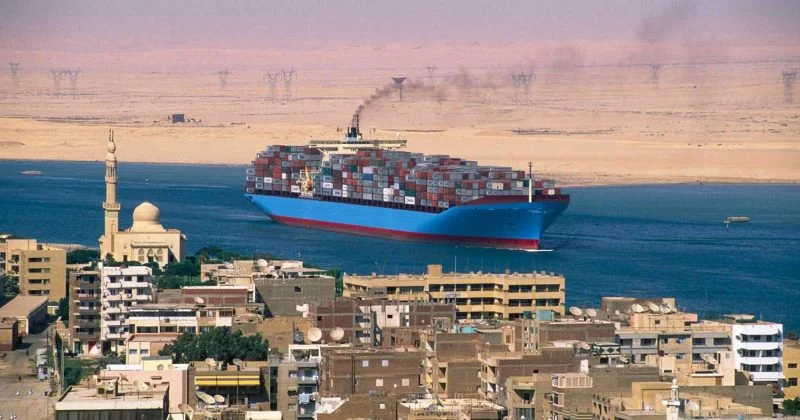
A drone strike has damaged two gas tankers in Egyptian waters near Damietta, amplifying energy security concerns around the Suez Canal and the adjacent SUMED pipeline. No group has claimed responsibility for the attack, which occurred in a critical area for global energy transit. The location near Damietta, situated on the Mediterranean coast north of the Suez Canal's northern entrance, marks a notable extension of maritime risk beyond the Red Sea and Bab al-Mandab chokepoints where attacks on commercial shipping have surged since late 2023, largely attributed to Houthi forces in Yemen.
The incident is connected to broader regional maritime tensions involving Iran and the United States that have already disrupted shipping routes in the Red Sea and the Bab al-Mandab strait. The Suez Canal, which connects the Mediterranean Sea to the Red Sea, is one of the world's most heavily trafficked shipping lanes and a vital artery for global energy distribution. The SUMED pipeline, running parallel to the canal between Ain Sukhna on the Gulf of Suez and Sidi Kerir on the Mediterranean coast, serves as a crucial alternative route for crude oil shipments when the canal is unable to accommodate fully laden vessels.
The strike near Damietta has prompted heightened alertness due to the strategic importance of these energy infrastructure assets. Gas tankers, particularly those carrying liquefied natural gas (LNG), represent a specialized segment of maritime trade requiring dedicated loading and regasification terminals, making rerouting more logistically complex than for crude oil shipments. Egypt's waters and the surrounding region have increasingly found themselves at the intersection of geopolitical tensions that extend well beyond their shores.
Market pricing on prediction platforms has shown movement consistent with an increased perceived likelihood of Iranian military action against a Gulf state, with YES odds for July 31 rising notably. Prediction-market participants appear to be pricing in elevated geopolitical risk following the attack.
The incident underscores the vulnerability of major global chokepoints. The Bab al-Mandab strait, which links the Red Sea to the Gulf of Aden, is itself a critical maritime passage through which a substantial share of global seaborne oil trade transits. Hundreds of commercial vessels have already diverted around the Cape of Good Hope in response to earlier Red Sea attacks, adding roughly 10 to 14 days to typical journey times between Asia and Europe.
Observers are closely monitoring potential official responses from Iran, the United States, and regional actors including Saudi Arabia and the United Arab Emirates. Any retaliatory measures or diplomatic interventions could shift market expectations regarding the likelihood of further military action. The situation remains fluid, with attention focused on any new statements or military activities that could affect energy security across the region.

