Crude Oil Falls Over 6% After U.S. Pauses Iran Strikes and Diplomacy Resumes
Key Takeaways
- •Brent crude fell more than 6% to about $90.93 per barrel, while WTI settled 6.1% lower at $83.83 per barrel.
- •The United States paused further strikes on Iranian military targets after nearly two weeks of bombardment.
- •Iran announced a temporary halt to retaliatory operations against neighboring countries as long as Washington maintains its military pause.
- •Maritime traffic through the Strait of Hormuz and Bab el-Mandeb remained disrupted despite the pause in fighting.
- •Analysts warned that shrinking petroleum reserves and ongoing shipping risks could leave oil markets vulnerable if disruptions worsen.
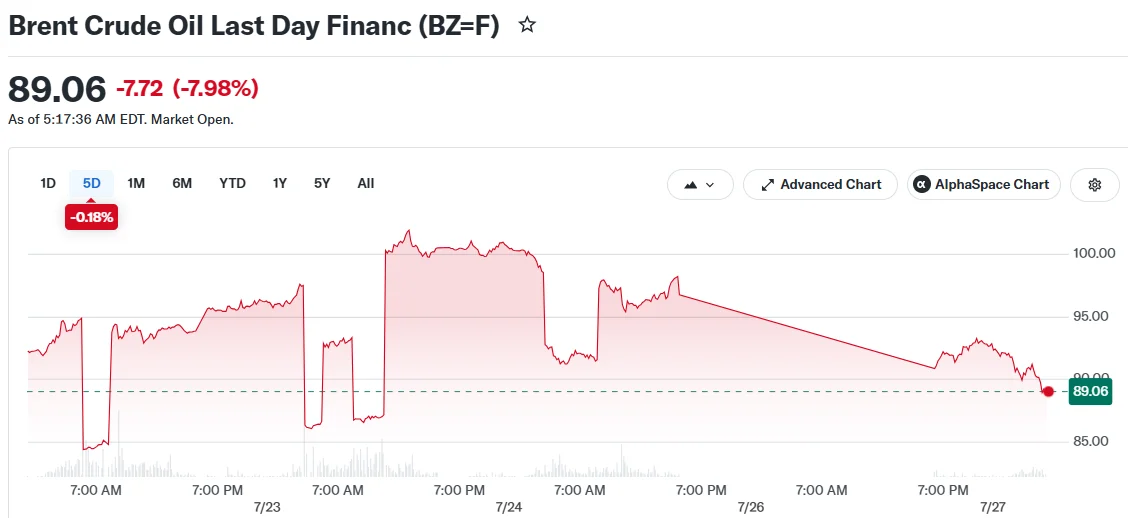
Crude oil prices fell sharply Monday after Washington said it would suspend ongoing military operations against Iran, removing part of the conflict-related premium that had recently pushed prices back into triple digits.
Brent crude, the global benchmark, dropped more than 6% to about $90.93 per barrel. West Texas Intermediate, the main U.S. benchmark, fell by a similar margin, declining 6.1% to settle at $83.83 per barrel. Both benchmark contracts briefly moved below key technical support levels before recovering modestly.
The decline followed a volatile week in which Brent temporarily climbed above $100 per barrel for the first time since May. That move came as hostilities between Washington and Tehran expanded from the Strait of Hormuz area into Red Sea waters, heightening concern over energy flows through major maritime chokepoints used by crude exporters and fuel shippers.
U.S. Halts Further Strikes
The United States did not launch additional strikes after nearly two weeks of continuous bombardment targeting Iranian military installations. President Trump’s United Nations representative said the administration was “providing diplomatic channels some breathing room.”
BREAKING: US oil prices crash over -8% after the US and Iran halt strikes amid reports of new negotiations. pic.twitter.com/TXVSNrZdqH — The Kobeissi Letter (@KobeissiLetter) July 26, 2026
BREAKING: US oil prices crash over -8% after the US and Iran halt strikes amid reports of new negotiations. pic.twitter.com/TXVSNrZdqH
— The Kobeissi Letter (@KobeissiLetter) July 26, 2026
Tehran responded by announcing a temporary halt to retaliatory operations against neighboring countries, provided Washington maintains its own military pause. Both countries warned that fighting could resume quickly if negotiations fail.
Iranian officials also reported meaningful progress in consultations with Oman aimed at securing safe maritime transit through the Strait of Hormuz. Separately, reports said Pakistan was considering helping facilitate renewed U.S.-Iran peace negotiations, reportedly with encouragement from Beijing.
Analysts at ING said Monday’s price move showed how quickly traders had priced conflict risk into crude valuations, and how rapidly that premium was reduced once signs of de-escalation appeared.
Sally Auld of National Australia Bank said crude oil moving above $100 per barrel may have encouraged both sides to reassess their positions. She said weekend developments added support to that view.
Shipping Disruptions Continue
Despite the pause in military operations, maritime traffic through key waterways remained disrupted. Weekend data showed reduced cargo ship movement through the Strait of Hormuz. Traffic through Bab el-Mandeb also slowed after Houthi militant strikes on Saudi petroleum infrastructure.
Those routes matter because delays or security risks can raise freight, insurance, and rerouting costs even when physical oil supplies are not immediately lost. That can keep risk premiums in crude and refined-product markets elevated while traders wait for clearer evidence that shipping lanes are normalizing.
ANZ warned that the factors currently helping absorb supply chain disruptions—including weaker Chinese crude demand, releases from emergency reserves, and alternative Saudi export routes—are nearing their limits.
The bank said commercial petroleum reserves are shrinking while government strategic stockpiles are continuing to decline. It warned that this combination leaves markets exposed to sharp price increases if disruptions intensify.
ING also cautioned that it is too early to conclude the conflict has been resolved. Washington has not provided a full explanation for the operational pause, and military forces on both sides remain on heightened alert.
The pullback in oil prices also supported equity markets Monday. Lower crude prices can ease inflation pressure by reducing fuel and transportation costs, which had contributed to speculation about possible additional Federal Reserve rate increases. The central bank meets this week, with most market observers expecting interest rates to remain unchanged.

