Crude Oil Rises as Iranian Strikes Disrupt Strait of Hormuz Shipping
Key Takeaways
- •Brent crude climbed 0.9% to $89.28 per barrel and U.S. West Texas Intermediate gained 0.2% to $82.60, building on Brent's rise of more than 5% the previous week.
- •Strait of Hormuz transits fell from five vessels on Saturday to zero on Sunday, a sharp drop from the more than 130 ships per day the waterway handled before U.S.-Israeli operations against Iran began in late February.
- •Iran's foreign minister said Tehran has no active direct negotiations with Washington, while U.S. officials threatened additional sanctions and have imposed a naval blockade around Iranian ports that could remain indefinitely.
- •ANZ analysts identified diesel as the most supply-constrained segment of the oil market, warning that availability could deteriorate further due to Gulf refining disruptions and Ukrainian attacks on Russian petroleum infrastructure.
- •Iran and Oman are reportedly moving toward an arrangement on Hormuz administration that excludes the United States, even as Washington insists on unrestricted access to the waterway.
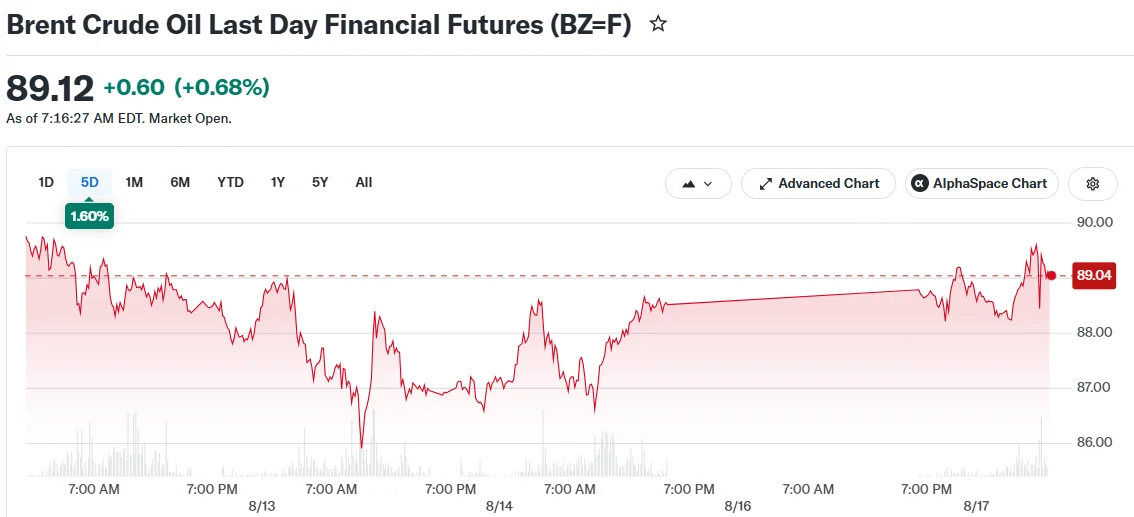
Crude oil extended its gains on Monday as escalating geopolitical tensions in the Middle East and severe disruption to a major global shipping route continued to pressure markets.
Brent crude futures rose 0.9% to $89.28 per barrel in early trading. U.S. West Texas Intermediate crude added 0.2% to $82.60 per barrel. Brent had already climbed more than 5% last week.
The latest move higher was driven largely by intensifying hostilities between the United States and Iran, which have raised concerns about the movement of petroleum and natural gas through key transit routes. The market reaction reflects the Strait of Hormuz’s role as a chokepoint for energy flows, where even short-lived disruptions can quickly ripple through crude and refined-product pricing.
Strait of Hormuz traffic nearly shuts down
The Strait of Hormuz, which previously handled more than 130 vessels a day, has seen a sharp collapse in traffic after Iranian military actions targeting tankers attempting to pass through the waterway. Commercial shipping has effectively been deterred.
JUST IN: Strait of Hormuz shipping falls to ZERO on Sunday ahead of today’s US-Iran ceasefire expiry. — Coin Bureau (@coinbureau) August 17, 2026
JUST IN: Strait of Hormuz shipping falls to ZERO on Sunday ahead of today’s US-Iran ceasefire expiry. — Coin Bureau (@coinbureau) August 17, 2026
Reuters, citing maritime tracking data from Kpler, reported that only five ships passed through the strait on Saturday. By Sunday, that number had fallen to zero.
Before the combined U.S.-Israeli military operations against Iran began in late February, the strait was one of the world’s busiest passages for crude oil and liquefied natural gas shipments.
The United States has also imposed a naval blockade around Iranian ports, and officials have said the measure could remain in place indefinitely.
In weekend remarks, Iran’s foreign minister said Tehran currently has no active direct negotiations with Washington. U.S. officials responded by threatening additional economic sanctions aimed at pushing Iran toward talks.
ING analysts said the attacks on vessels are increasing fears of supply disruption and making a diplomatic resolution between the U.S. and Iran more difficult.
Diesel markets face tighter supply
While crude prices held firm, refined products have come under even greater pressure. ANZ analysts said diesel is currently the most constrained part of the oil market, which matters because shortages there can affect transport, agriculture, and industrial fuel costs even when headline crude benchmarks are the main focus.
Refining disruptions across Gulf regions have limited diesel output and export volumes, even as global demand for the fuel remains strong.
The Ukraine war has added to the strain, with Kyiv continuing to target Russian petroleum infrastructure and further tightening supply chains.
ANZ analysts warned that diesel availability could worsen in the coming months if operational conditions do not improve.
Despite these supply concerns, both OPEC and the International Energy Agency lowered their 2026 global oil demand forecasts last week. Those reduced projections have so far had little effect on prices.
Reports also indicate that Iran and Oman are moving toward an arrangement on Strait of Hormuz administration. The United States is not included in those discussions, while Washington continues to insist on unrestricted access to the waterway.
MUFG analyst Soojin Kim said geopolitical instability and threats to key shipping corridors continue to support an embedded risk premium in crude valuations.

