Congress Blocks Pentagon From Executing Trump's Venezuela Oil Plan
Key Takeaways
- •Congress told the Pentagon's Office of Strategic Capital that it lacks legal authority to take equity stakes in private companies, after rejecting Pentagon proposals that would have granted such power.
- •Trump used the Office of Strategic Capital, created to finance military-relevant technologies, to take an equity stake in Venezuela's second-largest oil firm.
- •Experts say Venezuela's heavy crude requires specialized refineries and its deteriorated infrastructure could take years to repair.
- •Analysts estimate the plan could exert at most modest long-term downward pressure on fuel prices, with no effect for 10 to 15 years.
- •U.S. refineries are operating at about 97% capacity, and the Strategic Petroleum Reserve continues drawing down its roughly 290 million remaining barrels.
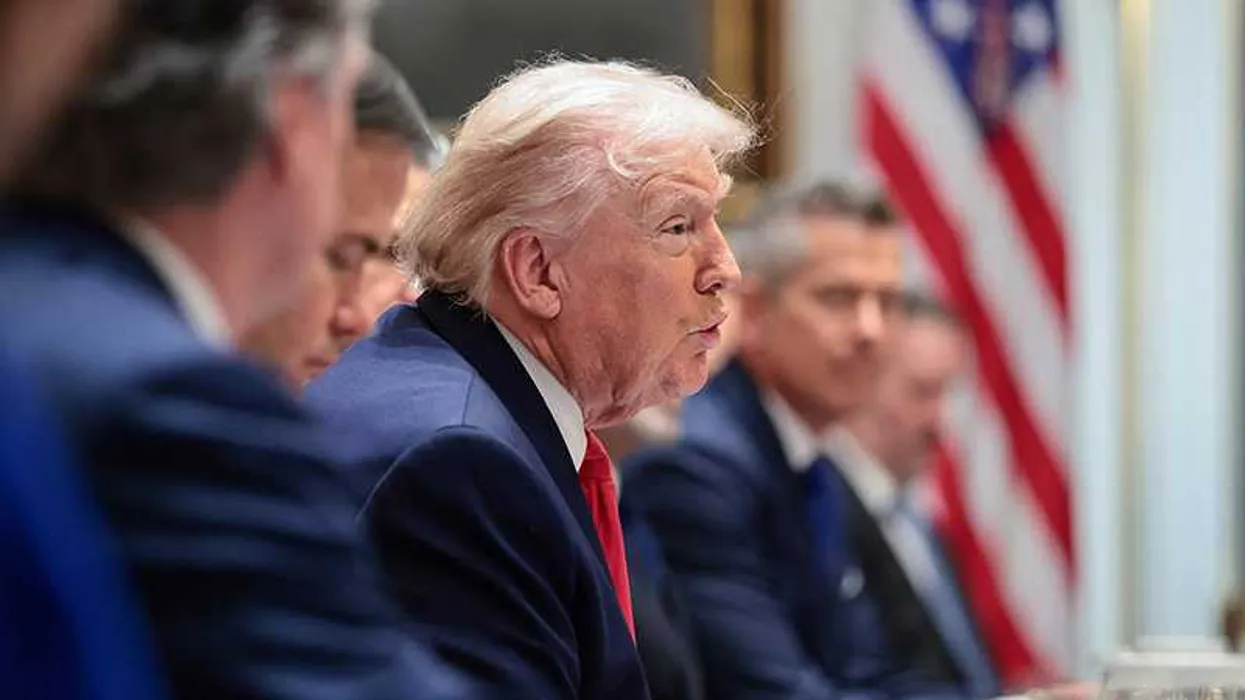
Congress has told the Pentagon that President Donald Trump's new plan to reduce fuel costs ahead of the election — announcing that he would take some of Venezuela's oil — is not legal, Semafor reported Thursday.
According to a person familiar with the matter cited by Semafor, Congress informed the Pentagon's Office of Strategic Capital that it lacks the authority to take an equity stake in a private company. Trump had used the Office of Strategic Capital to take an equity stake in Venezuela's second-largest oil firm.
The Office of Strategic Capital was established by the Pentagon to make loans and other financial commitments to companies developing technologies of interest to the U.S. military, and using it to acquire ownership in a foreign oil producer would be a significant departure from that original mission.
"It did so by declining to pass legislative proposals that would have granted the office the legal authority to seek equity stakes that were submitted by the Pentagon in recent years," the person told Semafor.
Skeptical lawmakers on both sides of the aisle are asking the Trump administration for information about the effort and how it would work.
Beyond the legal question, experts have pointed to significant practical obstacles. Venezuela holds the world's largest proven oil reserves, but the thick, tar-like oil in its fields requires specialized refineries to process it into usable fuel — a reason much of Venezuela's crude has historically been shipped to Gulf Coast refineries equipped to handle heavy grades. There is also a major infrastructure problem: the country lacks the upgrades needed to extract the oil from its fields. Venezuela's infrastructure has suffered years of under-investment and deterioration, CNBC reported. Repairing pipelines, power systems, drilling equipment and making upgrades could take years.
Oil reserves also are not the same as barrels currently being produced. Experts agree that, at most, Trump's plan could put modest downward pressure on prices over the longer term, but it likely would not affect fuel prices for 10 to 15 years, the report said.
The more immediate issue is accessing oil elsewhere, such as Iran. Analysts said the Iran conflict and disruptions in global oil routes are exerting a much greater short-term influence on prices than Trump's Venezuela scheme.
U.S. pump prices respond to worldwide crude prices, refinery capacity, transportation costs, seasonal demand and geopolitical disruptions, because oil trades on the global market. Even flooding the U.S. market with oil from the Strategic Petroleum Reserve (SPR) can only go on so long. The Reserve continues to draw down its nearly 290 million remaining barrels in an effort to soften the blow of soaring gas prices.
U.S. refineries are currently operating at near capacity — 97 percent — the Wall Street Journal reported this week. More oil does not automatically mean more gasoline if there is not enough refinery capacity to process it. Venezuelan oil would be only one additional source of supply and could not control the global market on its own.
