Chinese Yuan Reaches Strongest Level Against U.S. Dollar in Over Three Years
Key Takeaways
- •The Chinese yuan has reached its strongest exchange rate against the U.S. dollar in over three years, with both the onshore and offshore segments showing broad-based strength.
- •The yuan's appreciation has been driven primarily by the Federal Reserve's rate-cutting cycle, which reduces the yield advantage of dollar-denominated assets, combined with broader selling pressure on the dollar.
- •The People's Bank of China manages the yuan through a daily reference rate system that permits onshore trading within a two percent band, giving authorities substantial influence over currency conditions.
- •A stronger yuan lowers import costs for Chinese companies purchasing dollar-priced commodities and raw materials but squeezes profit margins for exporters who receive revenue in foreign currencies.
- •Despite the yuan's gains and China's efforts to promote its international use, the U.S. dollar remains the world's leading reserve currency, accounting for the largest share of global foreign-exchange reserves according to IMF data.
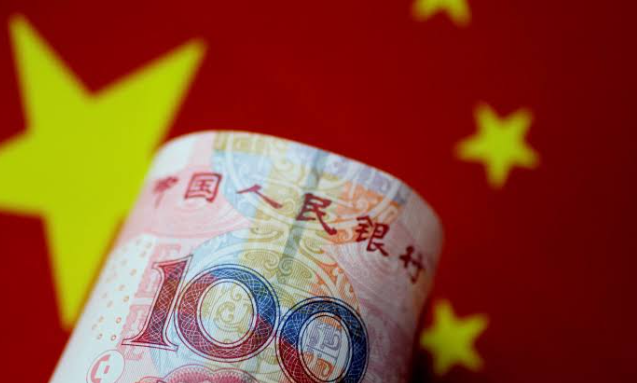
Chinese Yuan Reaches Strongest Level Against U.S. Dollar in Over Three Years
The Chinese yuan has climbed to its strongest level against the U.S. dollar in more than three years, marking a significant shift in global currency markets and underscoring evolving expectations surrounding China's economic outlook and the future trajectory of the dollar.
The development, highlighted by XBRICS News, has drawn close attention from investors and economists alike. The yuan's exchange rate is widely monitored as a barometer of China's financial conditions, trade competitiveness, and broader economic policy stance. The move comes as global markets continue to reassess the relative positioning of the U.S. dollar against other major currencies. China's currency trades in two main markets — the onshore yuan (CNY), which is subject to the PBOC's daily reference rate and trading band, and the offshore yuan (CNH), which trades more freely outside mainland China. Both have firmed against the dollar, signaling broad-based strength.
Yuan Reaches a Major Milestone
The yuan's latest advance places the Chinese currency at its strongest level against the dollar in over three years, illustrating how sharply exchange-rate expectations have shifted compared with previous periods of broad dollar strength. Currency markets are shaped by a wide range of factors — including interest-rate expectations, capital flows, economic growth, inflation, and central-bank policy — and the yuan is no exception. Its value reflects both domestic economic conditions within China and developments across the wider global economy.
Why the Yuan Is Strengthening
Several factors are contributing to the yuan's appreciation. One of the most significant is the relative outlook for U.S. and Chinese interest rates. When investors anticipate that U.S. interest rates will decline while Chinese monetary conditions remain comparatively stable, the interest-rate advantage of dollar-denominated assets narrows. That dynamic can reduce demand for the dollar relative to other currencies. Importantly, expectations about future monetary policy can influence currency markets well before central banks actually adjust rates. The Federal Reserve's recent rate-cutting cycle has been a particular focus, as declining U.S. yields reduce the return advantage that has historically supported the dollar.
The Dollar's Recent Weakness
The yuan's rise is also tied to broader movements in the U.S. dollar. The dollar has experienced periods of selling pressure as investors have recalibrated their views on U.S. monetary policy and economic growth prospects. A weaker dollar automatically makes other currencies appear stronger by comparison. For the yuan, this relationship carries particular weight because China's currency is managed within a policy framework that permits market forces to influence its value while authorities maintain significant control over exchange-rate conditions through active capital controls that limit cross-border capital movement.
China's Central Bank Remains Pivotal
The People's Bank of China (PBOC) plays a central role in determining how the yuan trades. Unlike freely floating currencies such as the U.S. dollar, the yuan operates within a managed exchange-rate system. The central bank sets a daily reference rate — known as the midpoint or fixing — and permits the onshore yuan to trade within a specified band around that level, currently plus or minus two percent. This mechanism gives China's monetary authorities substantial influence over currency conditions.
The PBOC must balance several competing priorities. A stronger yuan can lower the cost of imported goods and commodities, but an excessively strong currency can also render Chinese exports more expensive for overseas buyers, potentially eroding trade competitiveness.
A Stronger Yuan Could Benefit Importers
One of the clearest advantages of a stronger yuan is cheaper imports. China ranks among the world's largest importers of commodities, energy products, and industrial materials. When the yuan appreciates against the dollar, dollar-priced goods become less expensive in local-currency terms, reducing costs for Chinese companies that depend on imported raw materials. It can also help ease pressure on consumer prices.
Exporters Face a Different Equation
For Chinese exporters, however, a stronger yuan presents challenges. Chinese firms selling goods overseas frequently receive revenue in dollars or other foreign currencies. When those earnings are converted back into yuan, a stronger domestic currency reduces the value of the proceeds, potentially squeezing profit margins. Export competitiveness is therefore one of the primary reasons China's policymakers monitor currency movements so closely. The objective is generally not to maximize the yuan's strength but rather to seek a level that supports economic stability while avoiding excessive volatility.
The Yuan's Expanding Global Role
The latest move also coincides with China's ongoing efforts to expand the international use of the yuan. Beijing has actively promoted the currency for cross-border trade and investment, signing currency agreements with other nations and encouraging companies to settle more international transactions directly in yuan. A notable milestone came in 2016, when the International Monetary Fund added the yuan to its Special Drawing Rights (SDR) basket alongside the dollar, euro, yen, and pound — formally recognizing it as a global reserve currency. The broader aim is to reduce reliance on the U.S. dollar in certain areas of international commerce. While the yuan still trails the dollar by a wide margin in global financial markets and accounts for a small share of international payments, its international role has expanded meaningfully over time.
BRICS and the De-Dollarization Debate
The yuan's strength is attracting particular attention amid the wider discussion about de-dollarization. BRICS nations have increasingly explored expanding the use of local currencies in trade, with China emerging as one of the most vocal supporters of efforts to reduce dollar dependence for certain international transactions. XBRICS News has highlighted the yuan's latest move as part of this broader conversation about global currency competition. Nevertheless, a stronger yuan does not automatically imply that the dollar is losing its dominant position; the international monetary system is shaped by far more than exchange rates alone.
The Dollar Remains the World's Leading Reserve Currency
Despite periodic weakness, the U.S. dollar continues to serve as the dominant global reserve currency. It occupies a central role in international trade, banking, investment, and financial markets. U.S. Treasury securities remain among the world's most important financial assets, and the dollar is deeply embedded in global payment systems. According to IMF data, the dollar accounts for the largest share of global foreign-exchange reserves, though its proportion has gradually declined over the past two decades. Altering that structure would require profound shifts in international finance. The yuan's ascent therefore represents a meaningful development, but not necessarily a signal of imminent dollar replacement.
Investors Are Watching China's Economy
Currency traders are also closely tracking China's economic performance. The Chinese economy has confronted multiple challenges, including weakness in the property sector, uneven consumer demand, and shifting global trade conditions. At the same time, China remains a major manufacturing power and a critical node in global supply chains. Any improvement in economic activity could lend support to the yuan, while a significant slowdown could place renewed pressure on the currency.
Interest Rates Remain a Key Driver
Interest-rate expectations will likely remain among the most significant factors influencing the yuan-dollar exchange rate. Investors continuously compare expected returns across major economies. If U.S. yields decline, dollar-denominated assets may become less attractive relative to alternatives. Conversely, if Chinese economic conditions improve while monetary policy remains stable, the yuan could receive additional support. Currency markets tend to price in these expectations well before economic data confirms them.
Trade Relations Could Influence the Yuan
U.S.-China trade relations constitute another important variable. The two economies are deeply interconnected through global commerce, yet their relationship has grown increasingly competitive. Tariffs, export controls, technology restrictions, and supply-chain decisions can all shape currency expectations. Any major shift in trade policy could affect demand for Chinese exports and, by extension, the yuan.
A Stronger Currency Could Reshape Capital Flows
Currency appreciation can also affect international investment flows. Foreign investors may grow more interested in Chinese assets if they anticipate continued yuan strengthening. For instance, an investor purchasing Chinese bonds or equities could potentially benefit from both the performance of the underlying asset and currency appreciation. However, currency movements can also cut in the opposite direction — investors must weigh exchange-rate risk whenever they hold assets denominated in another currency. China's bond market has been gradually opened to foreign participation through schemes such as Bond Connect and Stock Connect, channels that link mainland markets with Hong Kong.
The Yuan and Global Commodity Markets
As a major consumer of energy and industrial commodities, China's purchasing power for dollar-denominated commodities improves when the yuan strengthens, with potential implications for global commodity markets. The magnitude of any effect depends on the scale and persistence of currency movements, as well as broader shifts in commodity demand. For oil, metals, and agricultural products, China's import demand remains a significant market driver.
What It Means for the U.S.
A stronger yuan does not necessarily constitute adverse news for the United States. For American consumers and companies, a stronger yuan can make Chinese imports relatively more expensive in dollar terms, though the broader effect depends on trade flows, tariffs, and supply-chain configurations. For financial markets, the more pertinent question may be what the yuan's strength signals about the relative economic outlooks of China and the United States.
Currency Markets Are Looking Beyond Traditional Signals
Investors increasingly factor geopolitical developments alongside economic data. The global economy is undergoing substantial changes as countries reassess supply chains, trade relationships, and reserve assets. China's drive to expand the international use of the yuan forms one part of this broader transformation, lending the currency's recent strength significance that extends beyond the daily foreign-exchange market.
Could the Yuan Continue Rising?
The trajectory ahead will depend on several factors. A continued decline in the dollar could provide further support, as could stronger Chinese economic data. Interest-rate differentials between China and the United States will remain important, as will China's monetary policy stance. However, policymakers may resist excessively rapid appreciation if it threatens export competitiveness, suggesting the yuan's path may not be a straight line upward.
China Continues to Prioritize Currency Stability
Beijing has historically emphasized stability in the foreign-exchange market. Sharp currency movements can generate uncertainty for businesses and investors, and China's policymakers may therefore prefer gradual adjustments rather than sudden appreciation or depreciation. The latest move will be closely monitored for indications of how authorities intend to respond.
Implications for Bitcoin and Crypto Markets
The yuan's movement has also drawn interest from cryptocurrency investors. Currency volatility and concerns about the global monetary system can influence appetite for alternative assets. Bitcoin is sometimes viewed by investors as a potential hedge against currency debasement or monetary uncertainty. However, there is no straightforward relationship between a stronger yuan and higher cryptocurrency prices. Crypto markets respond to a multitude of factors, including liquidity conditions, interest rates, regulation, and investor risk appetite.
A Changing Global Financial Landscape
The yuan's latest strength arrives at a moment when the global financial system is undergoing significant change. The U.S. dollar remains dominant, but China is actively working to expand the yuan's international role, and other countries are also exploring alternatives to complete reliance on the dollar. The eventual result could be a more diversified international monetary system — though such a transformation would likely unfold over years rather than months.
Final Outlook
The Chinese yuan reaching its strongest level against the U.S. dollar in more than three years constitutes a significant development in global currency markets. The move reflects shifting expectations around interest rates, dollar strength, China's economic outlook, and the country's expanding role in international finance. A stronger yuan could reduce import costs for Chinese companies and consumers while posing challenges for exporters. It could also bolster Beijing's efforts to promote the currency for international trade settlement.
At the same time, the dollar remains deeply entrenched as the world's leading reserve currency, meaning the yuan's advance should not automatically be interpreted as the beginning of the end of dollar dominance. For investors, the central question is whether the yuan's strength represents a temporary currency-market fluctuation or the start of a longer-term trend — an answer that will hinge on economic growth, monetary policy, trade relations, and the future direction of the U.S. dollar. For now, the milestone stands as another reminder that the global currency landscape is evolving, and China's yuan is becoming an increasingly important part of that story.

