China's EV Expansion Erodes Strategic Leverage of the Strait of Hormuz
Key Takeaways
- •China's electric vehicle fleet displaced approximately 1.35 million barrels per day of oil demand during the first half of 2026, equivalent to roughly 6% of a full year of Chinese crude imports.
- •China sold over 13 million electric cars in 2025, representing nearly 55% of new-car sales and bringing the national EV fleet to an estimated 44 million vehicles by year-end.
- •Electric heavy-freight trucks reached 28% of Chinese heavy-truck sales in 2025, with EV-related oil displacement from semi-trailers surging approximately 150% year-on-year in the first half of 2026.
- •The IEA projects that electric vehicles will eliminate more than 4 million barrels per day of Chinese oil demand by 2035, offsetting over a quarter of the crude volumes that passed through Hormuz in 2025.
- •India has pursued transport electrification at a significantly slower pace than China, meaning the same Hormuz chokepoint threat produces uneven consequences between the two largest importers.
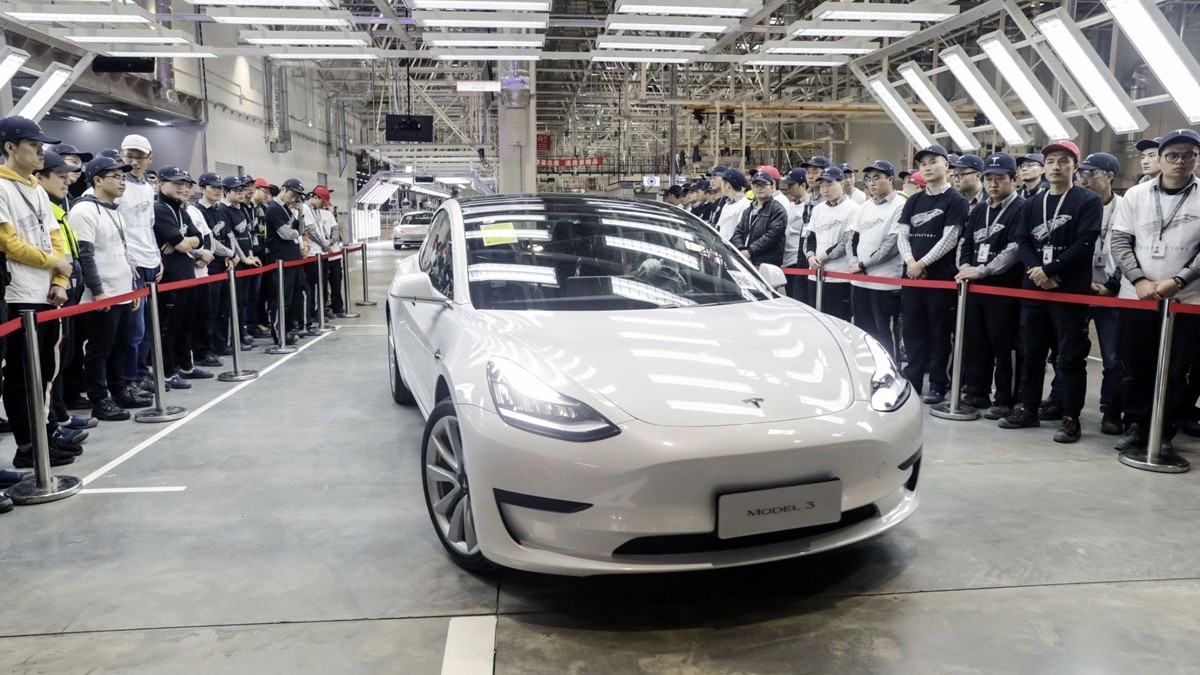
The prevailing assessment of the Hormuz crisis casts China as trapped in an energy dilemma. As the world's largest crude importer, Beijing relies on the Gulf for a significant share of supply, with an estimated 45–50% of Chinese crude imports typically transiting the Strait of Hormuz. When traffic through the strait slows, replacing those barrels overnight is not feasible. That vulnerability is genuine — but it is only part of the picture.
China entered the crisis with substantial strategic and commercial inventories, a diversified supplier base, and the operational flexibility to reduce refinery throughput. More significantly, it possessed an asset that no previous oil-importing economy had during earlier supply shocks: a transport system undergoing rapid electrification that is already eliminating more than one million barrels per day of potential oil demand.
Strategic reserves buy time. Electrification alters the balance permanently.
The Missing 1.35 Million Barrels Per Day
During the first half of 2026, China's electric vehicle fleet displaced an estimated 34 million tonnes of oil. Converted to crude-equivalent volumes, that amounts to approximately 1.35 million barrels per day — more than 1% of total global oil consumption.
Measured against Chinese imports, the figure is even more striking. The oil displaced over six months equates to roughly 6% of a full year of Chinese crude imports. Sustained over twelve months, the rate would approach 12%.
This does not mean China can cleanly subtract 1.35 million barrels from its current import bill. Oil demand is shaped by refinery margins, petrochemical feedstock needs, broader economic activity, and product exports. The displacement figure represents a counterfactual: the fuel that comparable internal-combustion vehicles would have burned to deliver the same mobility. That is precisely what makes it consequential — those barrels are not languishing in a strategic reserve awaiting release. They no longer need to be purchased.
Related: Pentagon Scraps $300 Million Lithium Tender for Defense Stockpile
The scale is no longer marginal either. In 2025, nearly 15 million barrels per day of crude moved through Hormuz, with China and India together absorbing 44% of the flow. China's current EV-related displacement already equals close to one-tenth of all crude normally transiting the strait. It cannot neutralize a closure. It can soften the impact.
Notably, India — the co-dependent at Hormuz — has pursued transport electrification at a far slower pace, with electric vehicles still representing only a small fraction of new-car sales. That asymmetry means the same chokepoint threat produces uneven consequences: China retains a structural demand buffer that India does not yet possess.
Electrifying the Easy Vehicles First — Then Pushing Further
The trajectory explains why the effect is accelerating. Electric buses led the way. They follow predictable routes, maintain high utilization rates, and typically return to depots where charging is straightforward. The higher upfront investment could be amortized across extensive mileage, while cities benefited from improved air quality and operators cut fuel and maintenance costs.
Passenger cars followed. More than 13 million electric cars were sold in China in 2025, representing almost 55% of new-car sales. By year-end, China had an estimated 44 million electric cars on the road.
This was not accomplished by requiring consumers to absorb a permanent green premium. Competition, manufacturing scale, and cheaper lithium-iron-phosphate batteries transformed the economics. According to the IEA, 70% of battery-electric cars sold in China in 2025 were already cheaper than the average conventional vehicle.
Passenger cars now account for an estimated 54% of China's EV-related oil displacement. However, the next phase may carry greater significance for oil markets because it targets diesel.
Electric semi-trailer oil displacement reportedly surged approximately 150% year-on-year in the first half of 2026. That follows a breakthrough year in which electric heavy-freight trucks reached 28% of Chinese heavy-truck sales, up from 13% in 2024. By December 2025, their share approached roughly half of sales.
Long-haul trucking was widely expected to be among the last sectors to electrify. Batteries add weight, charging consumes time, and every lost tonne of payload carries a cost. Those objections remain valid for many routes.
China did not wait for a single battery-powered truck to handle every transport task. Instead, it concentrated on routes where electrification already works: ports, mines, industrial clusters, and fixed regional corridors. High utilization strengthens the financial case, depot charging simplifies infrastructure requirements, and battery swapping converts charging time from a technological barrier into an operational variable.
This reflects a defining characteristic of China's transition: it scales the viable niche first and expands outward as costs decline.
An Oil-Security Strategy Disguised as Industrial Policy
China's EV push is typically framed as either climate policy or an industrial challenge to Western automakers. It is undoubtedly both. But the Hormuz crisis reveals a third dimension: national energy security.
An internal-combustion vehicle locks in years of recurring oil dependence. An electric vehicle redirects that demand to a power system fed overwhelmingly by domestic generation.
That does not automatically render every kilometre emissions-free. Coal remains a major component of China's electricity mix, and electrification should not be conflated with full decarbonization. China also continues to rely on oil in aviation, shipping, petrochemicals, and heavy industry — vulnerabilities that EVs alone cannot resolve.
From an import-security standpoint, however, the distinction is decisive. Coal, nuclear, hydro, wind, and solar can all generate electricity without a tanker passing through Hormuz. Even a coal-charged EV substitutes domestically available energy for imported petroleum, and the emissions advantage improves as the grid cleans up.
That grid is transforming at remarkable speed. China added nearly 500 GW of renewable capacity in 2025, including approximately 370 GW of solar and 117 GW of wind. While this does not eliminate the need for coal or grid investment, it means new electricity demand from transport is increasingly backed by domestic renewable generation rather than imported oil or LNG.
The gas dynamic is more nuanced. EVs primarily displace gasoline and diesel, not natural gas. Yet electric trucks are now also competing with China's sizable LNG-truck fleet. Where battery trucks replace LNG models, electrification reduces exposure to gas markets as well. More broadly, every transport activity shifted directly to electricity avoids constructing a second imported-fuel dependency around gas.
Inventories Cushion Crises; Demand Destruction Weakens Chokepoints
China continues to bear the consequences of the disruption. The IEA reported that Chinese seaborne crude imports fell by 3.6 million barrels per day between February and April. Refineries cut runs, and inventories helped bridge the shortfall. These are emergency measures, not proof that China has exited the oil market.
Nor should the 1.35 million barrels per day figure be overstated. China remains a massive oil consumer and importer. Petrochemicals may absorb part of the demand lost from road transport, and a prolonged Hormuz closure would still inflict damage on Chinese industry through elevated freight, feedstock, and global commodity costs.
Energy security, however, is not binary. A country need not achieve oil independence before reduced demand becomes strategically valuable.
Every barrel displaced extends the lifespan of inventories, reduces the number of replacement cargoes needed from Russia or elsewhere, lowers exposure to freight and insurance costs, and dampens the inflationary transmission from crude prices to household mobility. The effect compounds because EVs sold this year will continue displacing fuel for years to come.
The IEA projects that EVs will eliminate more than 4 million barrels per day of Chinese oil demand by 2035 under both its current- and stated-policy scenarios. At that magnitude, electrification would offset more than a quarter of the crude volumes that passed through Hormuz in 2025.
That is not a forecast of Chinese oil independence. It is a forecast of diminishing leverage for oil chokepoints.
The lesson from Hormuz, therefore, is not that China moved too aggressively into electric vehicles. It is that other importing economies have underestimated the resilience that transport electrification confers.
Pipelines can bypass certain vulnerable sea lanes. Strategic stocks can cover a temporary interruption. Supplier diversification can redistribute risk. But only demand reduction removes the barrel entirely.
China's most potent response to the Hormuz crisis was not assembled after the first tanker was attacked. It has been rolling quietly onto its roads for years.
By Leon Stiller for Oilprice.com

