Agnico Eagle, Barrick Mining Top Ranking of Canada's Largest Miners by Market Value
Key Takeaways
- •Agnico Eagle Mines doubled its first-quarter net income to $1.69 billion, attributing record operating margins to historically high gold prices that peaked at $5,589.38 per ounce.
- •Agnico committed $10.2 billion to Ontario expansions and approved a $2.4-billion underground mine at Hope Bay in Nunavut, marking one of the largest domestic investment commitments by a Canadian gold miner in recent years.
- •Barrick Mining largely settled its tax dispute with Mali by paying $430 million, leading to the return of operational control at the Loulo-Gounkoto mine.
- •Cameco signed an approximately $1.9-billion agreement to supply nearly 22 million pounds of uranium to India over nine years starting in 2027, supporting India's nuclear power expansion.
- •Teck Resources received shareholder and government approval for its $53-billion merger with Anglo American, one of the largest mining-sector transactions on record.
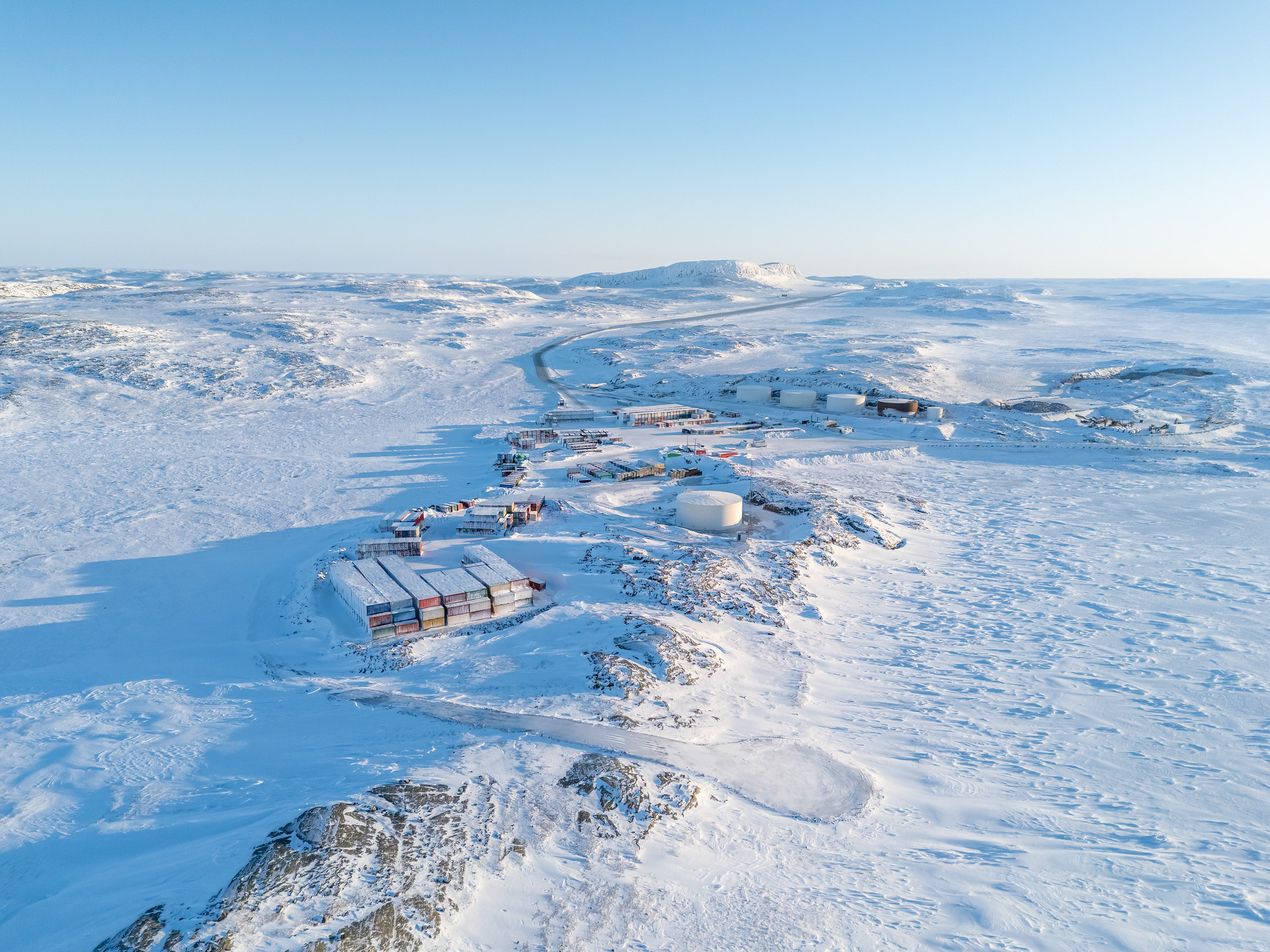
Agnico Eagle Mines (TSX, NYSE: NEM) ranks first among Canadian mining companies by market capitalization, with a valuation of $79.5 billion (C$112.8 billion). The company operates Canada's two largest-producing mines: Canadian Malartic and Detour Lake.
The company reported first-quarter net income of $1.69 billion for this year, more than double its earnings from the same quarter a year earlier. Agnico attributed the result to record operating margins driven by higher realized gold prices, which hit an all-time peak of $5,589.38 per oz. on Jan. 28. Gold's ascent has been fueled by sustained central-bank purchases and heightened geopolitical uncertainty, boosting demand for the metal as a store of value.
"We delivered a solid start to 2026, achieving record operating margins while production and costs tracked well to plan," Agnico President and CEO Ammar Al-Joundi said in a statement. "With gold production expected to be weighted to a stronger second half of the year, we are managing cost volatility through disciplined execution and asset optimization, supported by our regional operating model."
In May, Agnico approved construction of the $2.4-billion Hope Bay underground mine in western Nunavut. Production could begin in as few as four years, with the mine projected to yield 400,000 to 435,000 oz. of gold annually over an initial 11-year mine life.
Expansion Plans
Also in May, Agnico allocated $10.2 billion toward expansions, project development, and exploration activities in Ontario. Approximately $1.4 billion of that is designated for the Detour Lake underground project and the Upper Beaver gold-copper project. The spending marks one of the largest domestic investment commitments by a Canadian gold miner in recent years, reversing a sector-wide trend of underinvestment in new mine supply during the previous decade.
In Finland, Agnico is consolidating a district-scale gold camp in the Central Lapland Greenstone Belt, following the $2.1-billion acquisition of Rupert Resources, which was completed in June.
Barrick Mining (TSX: ABX; NYSE: B) holds the No. 2 position by market capitalization at $65.4 billion and ranks first in 2025 net income at $4.99 billion.
As Barrick continues transitioning toward a copper-gold portfolio and away from a purely gold-focused profile, the company produced 719,000 oz. of gold and 49,000 oz. of copper in the first quarter. Those figures represent a 4% increase in gold output and an 11% increase in copper compared with the same period last year. The diversification into copper aligns with projections from the International Energy Agency that copper demand will rise sharply over the coming decade, driven by electrification, renewable energy buildout, and grid expansion.
Former CEO Mark Bristow abruptly resigned in September after nearly seven years at the helm.
Mali Dispute Resolution
Barrick's protracted dispute with Mali over its Loulo-Gounkoto mine was largely settled in November, when the company reportedly paid $430 million to resolve a tax dispute. Barrick withdrew its arbitration case at the World Bank, and the Malian government returned operational control of the mine to the company. The resolution underscores a broader challenge for Western mining companies operating in resource-rich African nations, where governments have increasingly sought larger shares of mining revenue.
In Pakistan, Barrick's Reko Diq copper-gold project faced setbacks stemming from security concerns in the restive Balochistan province and broader regional instability tied to the war in Iran. Barrick extended the project's review period by one year, through next July. Reko Diq, with an estimated $9-billion capital expenditure, ranks among the world's largest undeveloped copper and gold resources.
Barrick also announced plans to spin off its Nevada Gold Mines joint venture with Newmont (TSX: NGT; NYSE: NEM) and the Pueblo Viejo mine in the Dominican Republic into a newly listed company by the end of 2026. The move forms part of a strategic shift away from what the company described as "risky" jurisdictions.
Cameco (TSX: CCO; NYSE: CCJ) ranks fifth by market capitalization at $43.2 billion and ninth by 2025 net income at $415.9 million.
The world's second-largest uranium producer, behind Kazatomprom (LSE: KAP), reported first-quarter net earnings of $92.4 million this year — an 87% increase over the same period last year. The improvement was driven by higher uranium prices and increased sales volumes. Uranium demand has strengthened as governments worldwide revive and expand nuclear power generation to meet clean-energy targets and rising electricity needs, including from data-center growth.
Cameco reaffirmed its 2026 production guidance of 19.5 to 21.5 million lb. of uranium oxide. However, in July the company temporarily suspended operations at its McClean Lake mill in Saskatchewan, which is operated by France's Orano. The mill processes ore from Cameco's Cigar Lake mine.
India Supply Agreement
In March, the Saskatoon, Saskatchewan–headquartered company signed a deal valued at approximately $1.9 billion to supply nearly 22 million lb. of uranium to India over nine years for use in the country's nuclear reactors. Deliveries are scheduled to begin in 2027 and continue through 2035. India has been steadily expanding its nuclear power capacity as part of its strategy to reduce reliance on fossil fuels and meet growing energy demand.
McClean Lake is among the world's largest uranium processing plants, with an annual production capacity of 24 million pounds. Cigar Lake, located 70 km southwest of the mill, is the world's highest-grade uranium mine.
Teck Resources (TSX: TECK.A, TECK.B; NYSE: TECK) holds the seventh position, with a market capitalization of $30.4 billion and 2025 net income of $767 million.
As Teck expands its portfolio toward greater production of critical metals, the Canadian government provided support in July through a potential C$400-million investment for its Trail, B.C. smelter. The funding is intended to help Teck increase its capacity for producing germanium and antimony and to add the capability to produce gallium. Germany, gallium, and antimony are among the critical minerals for which China has imposed export controls since 2023, prompting Western governments to accelerate efforts to secure alternative supply chains.
In December, Teck made history after shareholders and the federal government approved its $53-billion mega-merger with Anglo American (LSE: AAL) — one of the largest transactions in the mining sector's history. The merger is expected to close by the end of this year or in early 2027. The deal reflects a wave of consolidation sweeping the global mining industry as companies pursue scale and portfolio diversification to compete in an era of rising resource nationalism and surging demand for energy-transition materials.

