Editorial: The money is already here
Key Takeaways
- •Total equity capital raised on the TSX and TSXV reached $20.5 billion through July, up 50% from a year earlier.
- •Mining companies raised $10.1 billion on the TSX and TSXV through July, a 75% increase year over year.
- •The Toronto summit will bring together about 250 institutional investors, pension funds, sovereign wealth funds, CEOs and government officials.
- •Ottawa has linked the summit to a broader ambition of attracting roughly $1 trillion in investment over the next five years.
- •Mining, energy and infrastructure discussions are expected to focus on copper, lithium, uranium, nickel, rare earths and related industrial systems.
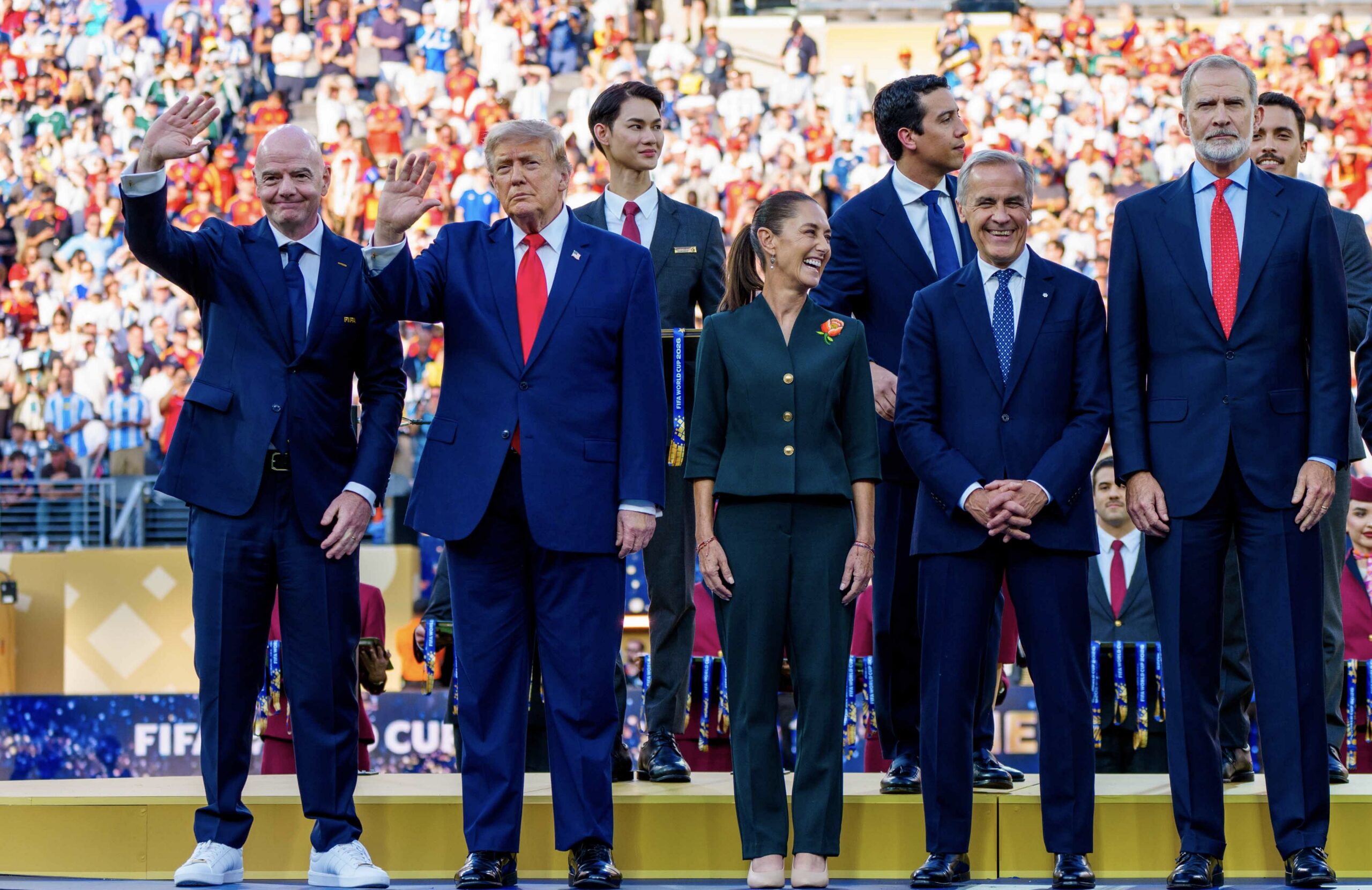
Despite a sharp escalation in the Canada-U.S. trade dispute, global investors are already voting with their wallets ahead of Prime Minister Mark Carney’s Sept. 14-15 investment summit in Toronto.
Total equity capital raised on the TSX and TSXV climbed 50% year over year to $20.5 billion (US$14.6 billion) through July, up from $13.7 billion, according to TSX reports.
Mining companies raised $10.1 billion on the TSX and TSXV through July, a 75% increase from the same period in 2025 and roughly half of every dollar of equity raised on Canada’s public markets this year.
Canada has become a magnet for international capital, Bloomberg News Editor-in-Chief Emeritus Matthew Winkler argued in August, citing stock markets that have soared 40% this year and outperformed exchanges in the U.S. and Europe.
America’s northern neighbour has attracted US$183 billion ($256 billion) in foreign capital to stocks and bonds over the past 12 months, he said. Winkler credited “reasonable policies” by Carney, “somebody the world knows very well” after leading central banks in Canada and the U.K. and giving a historic speech in Switzerland.
Carney’s Davos warning in January that the world was “in the midst of a rupture, not a transition” echoed a broader reassessment by global investors about where capital can be deployed safely and predictably.
“They look at Canada as a stable jurisdiction,” Lance Rishor, head of Macquarie Capital in Canada, whose boss will attend the summit, told The Northern Miner in an Aug. 20 interview.
“They look at it as having a good endowment of resources. Generally speaking, there’s decent infrastructure. The fact that Canada has a reasonable amount of green energy is a positive, and everybody would like the permitting process to go quicker.”
For mining, instability and taxation spikes in Africa, blockades in South America and Panama’s closure of First Quantum’s giant copper mine make Canada stand apart. Those comparisons help explain why investors and project sponsors are paying close attention to the summit, which is meant to translate interest in stable jurisdictions into concrete investment conversations.
“Parts of Africa have become more challenging from a security and a fiscal-regime standpoint,” Rishor said. “Companies prefer lower political risk, and equity markets reflect that in higher trading multiples.”
Questions remain
Canada’s success still raises several questions. Is this money being raised because investors are bullish on commodities? Or because capital increasingly wants exposure to secure Western supply chains?
There is also a paradox tied to the surging TSX data: many CEOs still complain that capital is scarce. If that is true, why has mining financing surged 75% and why have new mining listings nearly doubled? The answer may be that capital is not scarce; it is discriminating.
The summit is intended to convince global capital that Canada is once again a predictable place to invest after years of complaints about permitting delays, regulatory uncertainty and slow project approvals.
Invitations have gone out to about 250 of the world’s institutional investors, sovereign wealth funds, pension funds, major corporate CEOs and government officials.
Carney has also named Rio Tinto chair Dominic Barton to lead Invest in Canada, placing one of the mining industry’s most prominent corporate figures at the centre of Ottawa’s effort to attract global capital and advance major projects.
Mining will almost certainly be front and centre alongside energy and infrastructure, with discussions expected to focus on copper, lithium, uranium, nickel and rare earths. The country’s backbone of electricity transmission, nuclear power, liquified natural gas pipelines, AI data centres, ports, airports and railways are also expected to draw attention, underscoring that the investment pitch extends beyond mine sites to the wider industrial systems that move, power and process resources.
While the government has not said the summit itself will generate a specific dollar figure, officials have tied it to a broader ambition of catalyzing roughly $1 trillion of investment over the next five years into “nation-building projects.”
Pension challenge
One of the harder nuts to crack for mining will be the pension funds attending. Many tend to avoid mining because mines have finite lives while pension funds invest on multi-decade horizons.
One area of the industry that clearly needs massive injections of long-term capital is metal processing. With Western governments now consistently linking critical minerals to supply-chain security, defence, electrification and AI, pensions could have a role to play through inexpensive debt, although processing margins are typically narrow.
The state can play a role, though government guarantees to projects for certain metal price levels are problematic, Rishor said.
“A project has to have strong economics. You can’t make an uneconomic project economic simply through price floors,” he said. “There are more conventional ways to help projects, such as concessionary financing.”
When the vast majority of lithium and rare earths are processed in China, capacity should be broadened elsewhere, Rishor said.
“Government support is needed where the playing field needs adjusting for security of supply reasons, particularly around processing. There’s no need to onshore copper processing, but there is an opportunity to level the playing field for lithium and rare earths so the West has more control over those supply chains.”
Those 250 invitees will not determine Canada’s future on their own, but they will help decide where hundreds of billions of dollars are invested. Rishor said one obstacle has already been removed.
“The interaction we had with clients before Carney was that Canada had a leadership problem. Now, at least, there isn’t a problem in Canada from a leadership standpoint.”
