Cabral Gold Discovers New High-Grade Zone at Cuiú Cuiú in Brazil Ahead of First Gold Pour
Key Takeaways
- •Drill hole DDH411 returned 8.9 metres grading 5.8 grams gold per tonne, including 1.8 metres at 28.4 grams, outlining a new mineralized zone 200 metres south of the main zone at Jerimum Cima.
- •Cabral Gold plans to pour first gold in September from a heap leach oxide starter pit at Moreira Gomes, with commercial production targeted for the fourth quarter.
- •A prefeasibility study shows a post-tax internal rate of return of 78%, a net present value of about $74 million, initial capital costs of $37.7 million, and production of 113,000 oz. of gold over a 6.2-year mine life.
- •Cabral shares rose more than 2% to $1.38 in Toronto, valuing the company at $429.4 million, after more than tripling over the past year.
- •Cuiú Cuiú hosts indicated resources of 216,182 oz. of contained gold and inferred resources of 70,570 oz., with a global resource update planned later this year.
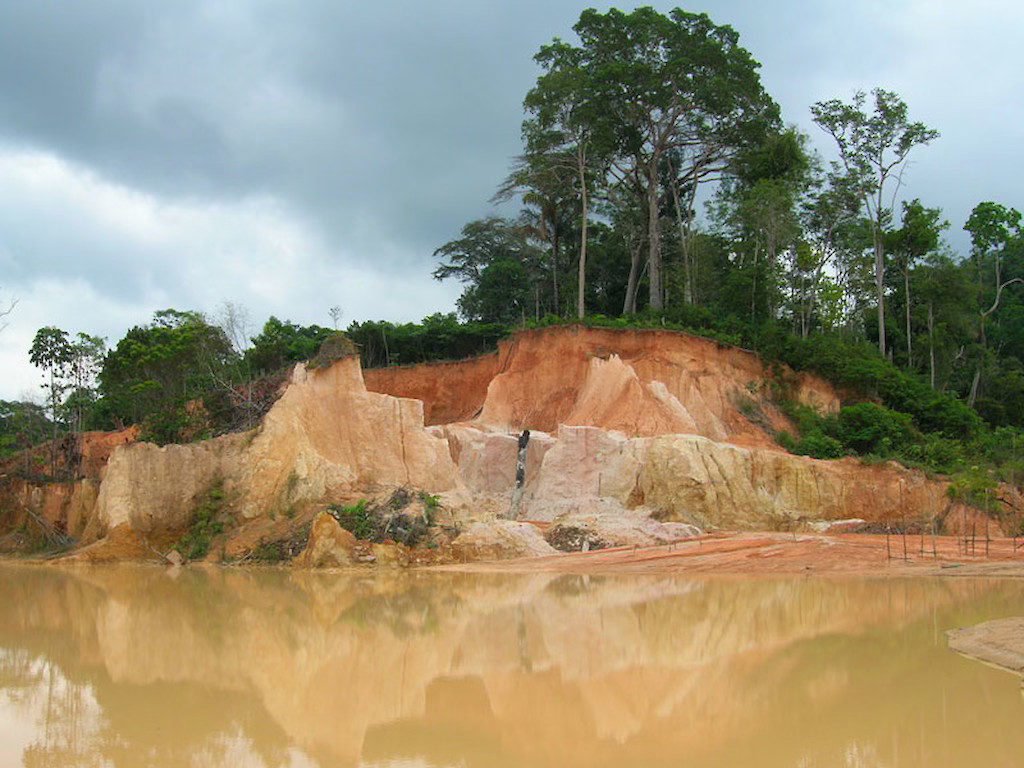
Drilling at Cabral Gold’s (TSXV: CBR; US-OTC: CGBZF) Cuiú Cuiú project in northern Brazil has returned high-grade results pointing to a new mineralized zone at the Jerimum Cima target, just as the company prepares to pour first gold in September.
Highlight hole DDH411 cut 8.9 metres grading 5.8 grams gold per tonne from 208 metres depth, including 1.8 metres at 28.4 grams gold, Cabral reported Thursday. The hole is regarded as outlining a new mineralized zone situated 200 metres south of the main zone at Jerimum Cima. The target lies within Cabral’s broader Cuiú Cuiú project in Pará state, roughly 2,500 km north of Rio de Janeiro.
“The identification of a new mineralized zone at Jerimum Cima . . . opens up the possibility of additional high-grade gold mineralization at the Jerimum Cima target which has already returned some spectacular drill results,” Cabral CEO Alan Carter said in a release, citing hole DDH385, which returned 9.5 metres grading 87.4 grams gold in June.
“Further drilling will be required to determine the extent and along strike continuity of this new mineralized zone which remains open to the east, west and at depth.”
Strong economics
Although Cuiú Cuiú’s deposit ranks as mid-tier in terms of size, it stands out for robust economics. According to an updated prefeasibility study released last year, the project carries a post-tax internal rate of return of 78% and a post-tax net present value (at a 5% discount) of about $74 million at a base case gold price of $2,500 per oz.
Initial capital costs are estimated at $37.7 million, with a payback period of 10 months. The project could produce 113,000 oz. of gold over a 6.2-year mine life.
Cabral intends to begin production in September from a heap leach oxide starter pit at the Moreira Gomes target within Cuiú Cuiú, with commercial production targeted for the fourth quarter. The heap leach starter-pit approach — processing near-surface oxidized material before deeper primary ore — is a low-capital pathway some junior miners use to generate early cash flow while continuing to drill and expand resources, and Cabral has positioned its campaign accordingly, with drilling at Jerimum Cima aimed at feeding a future resource and mine plan beyond the starter operation.
The company’s shares rose more than 2% to $1.38 apiece Thursday morning in Toronto, giving a market capitalization of $429.4 million. The stock has more than tripled over the past year, a period during which gold prices have risen to record highs, boosting investor interest in gold developers and producers.
Additional drill results
Another highlight hole, DDH393, returned 9.3 metres at 2.78 grams gold from 207 metres depth, including 10.2 metres grading 1 gram gold and 1.7 metres at 7.2 grams gold.
Hole DDH396 cut 8.9 metres at 0.5 gram gold from 195.6 metres depth, including 11.1 metres grading 0.58 gram gold.
Drilling at Jerimum Cima is aimed at gathering data for an initial resource covering the gold-in-oxide blanket and the underlying primary mineralized zones. Drilling is also underway at the Machichie Main deposit and the Machichie West target, and Cabral plans to update the global resource later this year — a milestone that will be closely watched, given that a larger resource base could underpin an extended mine life beyond the current 6.2-year starter plan.
Resource base
Cuiú Cuiú hosts 13.6 million indicated tonnes grading 0.5 gram gold for 216,182 oz. of contained gold. Inferred resources total 6.4 million tonnes at 0.34 gram gold for 70,570 oz. of contained metal.
The project sits in Pará’s Tapajós region, where artisanal miners flocked during a gold rush that ran from the late 1970s until the late 1990s, according to the Brazilian Department of Mineral Production. Cuiú Cuiú itself is estimated to have produced 1.5 to 2 million oz. of placer gold during the wider rush, which is credited with 20 to 30 million ounces in total. That history of widespread artisanal production has made the Tapajós one of Brazil’s most actively explored gold districts, though much of it remains under modern drilling.
Cuiú Cuiú lies about 25 km northwest of G Mining Ventures’ (TSX: GMIN; US-OTC: GMINF) Tocantinzinho project, which has itself advanced toward production in the district.

