Brazil's Congress Approves Bill Giving Government Power to Block Foreign Mining Takeovers
Key Takeaways
- •Brazil's Senate approved bill PL 2.780/2024, which is now awaiting signature by President Luiz Inácio Lula da Silva.
- •The law creates a council attached to the presidency with power to review and potentially block changes in ownership of companies holding mineral rights and their long-term supply contracts.
- •The bill includes a guarantee fund starting at 2 billion reais (about $393 million) and roughly 5 billion reais (about $980 million) in tax credits over five years for companies processing minerals in Brazil.
- •Brazil holds the world's second-largest rare earth reserves but has no commercial magnet plant, with a fully domestic ore-to-magnet chain not expected until between 2032 and 2035.
- •Industry figures, including Brazilian Mining Institute chief Pablo Cesario, warn the new scrutiny powers could deter the foreign investors Brazil is seeking.
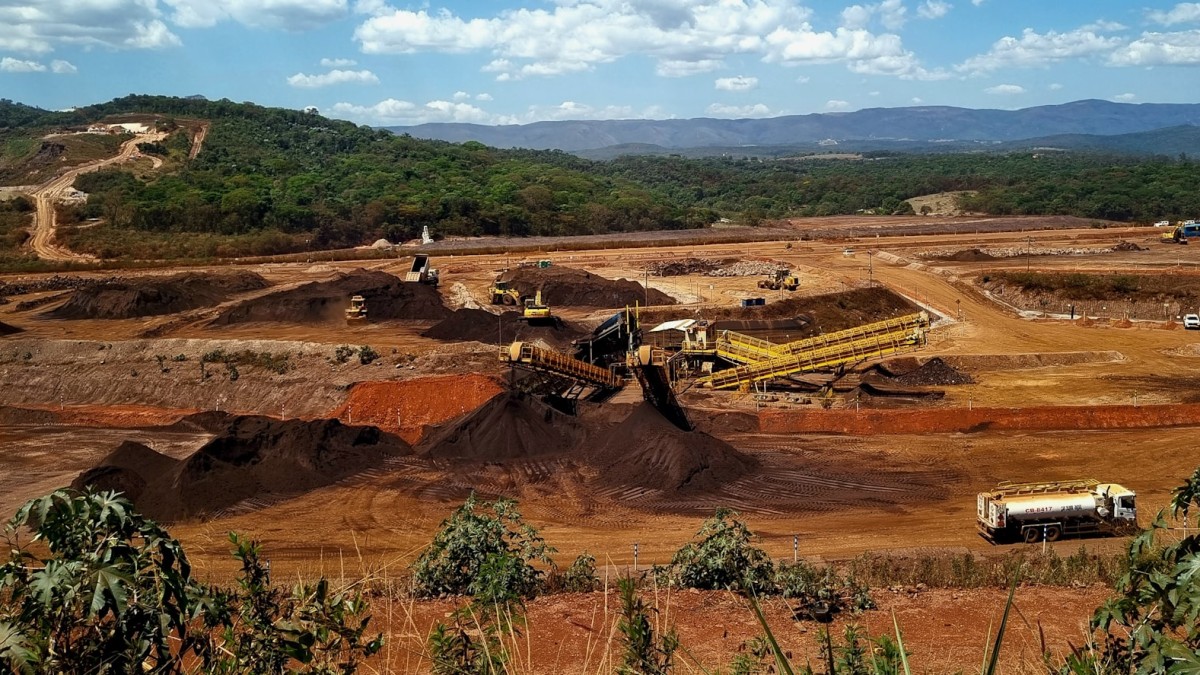
Brazil's Congress passed a bill on Wednesday that empowers the government to block foreign takeovers of mining companies and to scrutinize who gains access to the country's mineral reserves. Yet the country still cannot turn its rare earth ore into a single magnet, and will not be able to do so for years.
The move places Brazil among a growing set of resource-rich countries, from Indonesia with its nickel export restrictions to Chile with lithium policy, asserting more state control over strategic minerals as governments worldwide treat supply chains for batteries, magnets, and defense technologies as matters of national security.
The Senate approved PL 2.780/2024 by voice vote, sending the legislation to President Luiz Inácio Lula da Silva for signature. The bill creates a national policy on critical and strategic minerals, establishes a guarantee fund starting at 2 billion reais (about $393 million) to back mining loans, and provides roughly 5 billion reais (about $980 million) in tax credits over five years for companies that process minerals inside Brazil rather than shipping raw ore abroad, according to Rio Times.
However, the provision that has miners nervous sits elsewhere in the text. A new council attached to the presidency can review, and potentially block, changes in ownership of companies holding mineral rights, along with the long-term supply contracts that finance new mines. Bloomberg reported that the law hands Brasília broader scrutiny over mining deals, despite industry objections that the rules could scare off the very foreign capital Brazil is courting.
"If we scare off foreign investors, or any other investor, the sector locks up," Pablo Cesario, chief executive of the Brazilian Mining Institute, told the South China Morning Post. He said the council leaves too much discretion with the executive branch over decisions that used to be purely commercial.
In April, USA Rare Earth agreed to pay $2.8 billion for Serra Verde, the only company outside Asia mining the full set of magnet rare earths at commercial scale. Left-wing lawmakers pushed to fold the sector into a state-owned company modeled on Petrobras, nicknamed Terrabras. The Lula administration rejected that idea, but the new council was the compromise that survived, giving Brasília a say over the next Serra Verde-style deal without nationalizing anything outright.
What the law does not fix is Brazil's lack of downstream capacity. Brazil holds the world's second-largest rare earth reserves, but has no commercial magnet plant and refines almost nothing it mines. Andre Luis Pimenta de Faria, who runs the country's main magnet pilot plant for the industrial research group Senai, told a mining conference in Goiás state last week that Brazil could produce a magnet from imported inputs by 2028 at the earliest. A fully domestic chain, from ore to finished magnet, is more likely between 2032 and 2035, he said, in comments carried by the South China Morning Post.
Cesario called even that timeline optimistic, putting the average gap between a proven Brazilian reserve and first production at 17 years.
The fight Congress just settled — over who gets to buy into Brazilian mines and on what terms — is therefore a fight over ore, not industry. China still handles nearly all of the processing that turns Brazilian rare earths into anything usable, and Serra Verde itself still ships its concentrate to Chinese refiners under contracts it renegotiated only last December.
The immediate questions now turn on implementation: whether Lula signs the bill as passed, who sits on the new council, and how its review powers get defined in practice — the details that will determine whether the law functions as a targeted screening mechanism or a broader brake on foreign mining capital.
By Michael Kern for Oilprice.com
