Big Oil Warns Global Fuel Stocks Are Running Dangerously Low
Key Takeaways
- •Shell, ExxonMobil, and Chevron have all cautioned that pump prices will stay high regardless of crude oil price movements because of a structural shortage in global refining capacity.
- •Conflicts in the Middle East and Ukraine, combined with China's fuel export caps and Russia's diesel export ban, have effectively reduced global refining capacity by up to 10%.
- •Major U.S. refineries are operating at record utilization rates — ExxonMobil at 95%, Chevron at 97%, and Shell at 102% — levels that cannot be sustained without increasing operational risks.
- •Constructing new refining capacity typically takes five to seven years from investment decision to operation, meaning near-term supply relief from new projects is unlikely.
- •Analysts warn that the fall season could bring a diesel supply crisis as agricultural harvests, heating demand, and ongoing Middle East disruptions converge to strain an already tight market.
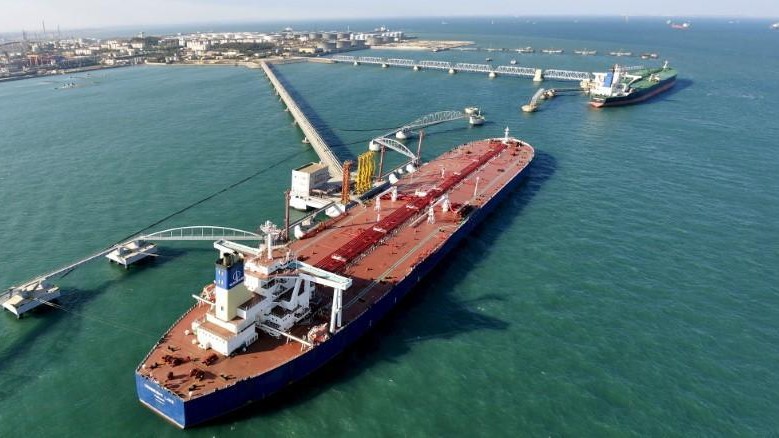
Global fuel supplies are running critically short, according to warnings now coming from the world's largest oil companies. Shell, ExxonMobil, and Chevron have all signaled that pump prices will remain elevated regardless of where crude oil prices trend, pointing to a refining bottleneck that has caught many market observers off guard. The warnings underscore a structural shift in global fuel markets: even as crude flows have adapted to wartime disruptions, the infrastructure that turns crude into usable fuel has not kept pace.
"The constraint pain point in the energy system is refining," ExxonMobil Chief Financial Officer Neil Hansen told Bloomberg in an interview. "Something that perhaps the market isn't fully focused on."
Most oil market observers have concentrated on futures prices, even as the gap between futures and physical oil prices has widened substantially due to export flow disruptions in the Middle East, which have spread from the Strait of Hormuz to the Red Sea. Futures prices have eased from the prior week's peak following President Donald Trump's latest announcement of peace talks, but physical markets — particularly for refined products — tell a starkly different story.
Bloomberg reported that the wars in the Middle East and Ukraine, combined with China's caps on fuel exports and Russia's ban on diesel exports, have effectively reduced global refining capacity by as much as 10%. The reduction comes on top of years of refinery closures across Europe and the U.S. East Coast, where aging facilities have shuttered faster than new capacity — concentrated largely in Asia and the Middle East — has come online.
As early as April, Energy Aspects and Rystad Energy warned that global fuel inventories were being squeezed by the Middle East conflict, noting that the region is not only a leading crude oil exporter but also a major exporter of refined products. Now, more analysts are sounding the alarm as the U.S. and Israeli military campaign against Iran enters its sixth month.
"We're in a diesel supply crunch right now because none of the Persian Gulf refineries can get product out," Rabobank senior energy strategist Joe DeLaura told the Wall Street Journal. "Crude oil is just the input, but diesel is the everything the industrial economy runs on. Everything in agriculture, everything in construction, everything in mining. Also everything on the supply and distribution side runs on diesel."
ExxonMobil's chief executive underscored the severity of the situation during a call with analysts, stating: "I've never seen the available capacity relative to demand as low as it is today." He added, as quoted by Bloomberg: "It's going to take a while for the industry to climb its way out of that hole." Building new refining capacity typically requires five to seven years from final investment decision to commercial operation, meaning any supply relief from greenfield projects is years away.
Shell CEO Wael Sawan told CNBC: "Today, what you're seeing is all the price signals that we are short on diesel and gasoline. Which means we need to be able to now reoptimize at the refining side."
Chevron Chief Financial Officer Eimear Bonner told Bloomberg: "The geopolitical uncertainty has tightened markets and is reinforcing the importance of reliable supply. The shock absorbers that have mitigated the volatility up until now, those continue to be drawn down."
Crack spreads — the margin refiners earn from processing crude into fuels like gasoline and diesel, and a key indicator of what consumers ultimately pay at the pump — are running at record highs. U.S. refineries are operating at record utilization rates. This presents a growing risk because the maintenance season typically begins in September and runs through October, bringing a reduction in processing rates. While refiners have postponed maintenance in the past to capture periods of stronger demand, doing so this time could prove risky.
According to Bloomberg, ExxonMobil's Gulf Coast refineries have been running at 95% utilization, while Chevron's have operated at 97%. Shell's refineries have exceeded 100% utilization, reaching 102% during the second quarter. Such rates cannot be sustained over an extended period without increasing the risk of adverse consequences, meaning maintenance — and the resulting dip in fuel production — is inevitable.
"Fall is particularly difficult, kind of like a perfect storm right now," a freight brokerage owner told the Wall Street Journal. "When we have the harvest and we have the early heating demand, and we also have the war, the tight squeeze on diesel is going to directly affect basically the entire economy," said Hannah Hurckes of Boss Lady Logistics.
Early in the war, some analysts predicted crude oil prices could reach $200 per barrel. That never materialized, in part because President Trump has made regular announcements regarding escalation or de-escalation, regardless of how events unfold on the ground. In physical markets, however, the squeeze on supply out of the Middle East has left a clear mark on fuel production, while demand has held firm given the fundamental role fuels play in every economy.
By Irina Slav for Oilprice.com

